

[비즈한국] Controversy has erupted over claims that Pastor Jeon Kwang-hoon of Sarang Jeil Church is recruiting subscribers for the budget phone (MVNO) brand ‘First Mobile’ through his organization, the ‘National Movement Headquarters for Standing Korea Right (Dae-guk-bon).’ Although these plans are more expensive than those offered by major mobile network operators (MNOs), sales and subscriptions are active, driven by the belief that they contribute to the ‘patriotic’ activities led by Pastor Jeon and Dae-guk-bon. The plan to offer a 1 million won pension to those who contribute to the recruitment of subscribers once the goal of 10 million users is reached is reminiscent of multi-level marketing (MLM).
In the budget phone market, sales tactics involving multi-level marketing despite irrational pricing are not uncommon. Budget phones, introduced to promote competition in the telecommunications sector, are open to small and medium-sized enterprises, and legal multi-level marketing firms are no exception. However, questions remain as to whether the market impact of multi-level marketing for budget phone plans is being adequately managed. Critics point out that surveillance functions, such as monitoring consumer damage cases, need to be strengthened.

Church Diversifies Revenue, Focusing on 'Budget Phones' for the Elderly
Pastor Jeon revealed his intentions for business diversification from the pulpit two years ago. The business Pastor Jeon introduced after stating, "I really love money," was the budget phone business. First Mobile is a budget phone operator effectively owned by Pastor Jeon’s daughter, which claims to be a brand specializing in services for seniors.
While the company touts free services like 'well-being check-ins' and hospital accompaniment in connection with the mobile app 'Annyeong Care,' the acquisition of subscribers is based on Pastor Jeon’s political mobilization power. Exclusive promotional booths were set up at anti-impeachment rally sites, and subscription consent forms were disguised as signatures opposing the impeachment to encourage participation from supporters.
In the case of First Mobile, its price competitiveness is considered too low to align with the purpose of a budget phone service. Budget phones, introduced to revitalize competition and reduce the burden of household telecommunications expenses, lease the networks of major carriers, which are mandatory wholesale providers. Since no basic infrastructure investment is required, it is possible to operate affordable plans. First Mobile, which uses the KT030200 network, had 9 plans when it launched in April 2023, and that number has now increased to 15.
The pricing of these plans is higher than KT's. For a 100GB LTE plan, First Mobile’s ‘First Data 100G + Blyse’ plan costs 65,000 won per month, which is 20,000 won more expensive than KT’s ‘LTE Direct 45’ (45,000 won). It is even less favorable when compared to KT’s subsidiary, KT M Mobile. Their ‘Moduda Mamkkeot 100GB+’ plan, which consists of three products, is sold for 38,200 to 41,700 won depending on included services such as e-book subscriptions, convenience store discounts, and online payment points.
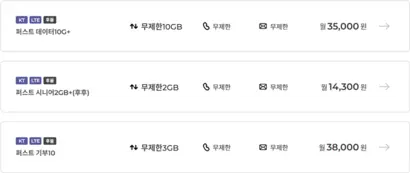
There are also plans that explicitly reveal their nature as a form of donation. ‘First Donation 10’ charges 38,000 won per month for 3GB of LTE data; even considering unlimited calls and texts, it is more than six times more expensive than KT M Mobile’s ‘Ultra Budget 3GB/100 minutes’ (5,900 won) plan.
Deep-Rooted Telecommunications MLM, Not an Exception for Price-Competitive Budget Phones
Why did budget phones become the target of ‘patriotic marketing’? Mobile phone plans do not have high unit prices compared to representative MLM products like cosmetics or health supplements. Because they are essential goods with little difference in usability, it is easy to attract people through MLM schemes. The barrier to entry for budget phones is also set low to encourage the influx of new businesses. If a company has 300 million won in paid-in capital, employs at least one technical professional (such as a professional engineer or technician in ICT/telecommunications), and submits user protection requirements to the Ministry of Science and ICT, they can register as a business.
Han Seok-hyun, head of the Citizens’ Mediation Office at the Seoul YMCA, explained, “Because multi-level marketing and commissions are involved, we end up with budget phones that don't look like budget phones in terms of price structure. It can be difficult to refuse when approached with a communication product that is a necessity. Since it is a government-supported policy and uses major corporate networks, it is seen as credible, reducing resistance.”
Finding and signing up for an ‘un-budget’ budget plan is difficult to understand from a general perspective. However, in the budget phone space where MLM firms have long been established, an irrational price structure is not a new phenomenon.
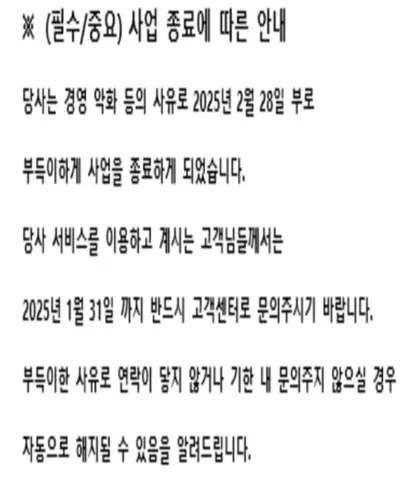
Although their scale is gradually shrinking, multi-level marketing companies such as ACN Korea (Flash Mobile) and NR Communication (N Telecom) are still operating normally. In the case of ‘W,’ operated by CN Communication, the business was terminated as of February 28 after the company closed at the end of last year due to worsening profitability. The official online channel for The One Platform’s ‘iPlusU’ can no longer be confirmed.
The mobile phone and telecommunications industry has been closely linked to multi-level sales from the beginning. Mobile phone MLM was a legal business method under the Door-to-Door Sales Act, but after the implementation of the Mobile Device Distribution Improvement Act, which reduced demand for number portability, the three major carriers increased their use of MLM, leading to numerous side effects. Due to overheated competition, problems erupted in the subscriber recruitment process, such as selling old devices at high prices, illegal rebates, and excessive commission issues. Entering the 2010s, the government put the brakes on this, and the three major carriers severed ties with MLM operators, but some of these practices were inherited by the budget phone market.
NR Communication, an MLM operator with 25 years of experience, focused on the telecommunications business from the start and entered the budget phone market in 2013 by signing a contract with KT. Looking at their plans, ‘LTE Postpaid Data 10G (100 min voice, 100 SMS)’ costs 34,200 won per month, which offers no price or benefit advantages compared to Iyagi Mobile’s ‘Iyagi K 5G Data Enough 10GB (200 min, 100 SMS)’ at 16,500 won, or Smart Telecom’s ‘Sweet 10GB+ (300 min, basic provision)’ at 28,600 won.
Flash Mobile is carrying out aggressive marketing linked to promotions such as affiliated card discounts and additional convenience store/data provisions. Nevertheless, the price for their ‘Starter 10GB’ plan, which uses LG U+ and KT networks respectively, is 29,700 won per month, which is slightly more expensive or similar to other companies' 10GB plans.
Market Flooded with Firms, but ‘Holes’ in Monitoring and Management
The problem is that in such a situation, it is difficult to expect qualitative growth for budget phones, and consumer harm may be left neglected. The budget phone business is a registration-based system, meaning that as long as requirements are met, one can operate a business without separate authorization. If budget phones, where price competitiveness is almost the only weapon, are distributed with high sales commissions attached, the purpose of the budget phone business—to reduce the burden of household telecommunications costs—cannot be achieved.
An industry official stated, “There are more than 50 to 60 budget phone operators, but only about half are operating properly. It is becoming clear that competition is not driven merely by the entry of new businesses.”
Although the Ministry of Science and ICT, the Fair Trade Commission (FTC), and the Korea Communications Commission (KCC) are the bodies that manage budget phone and MLM operators, they are considered negligent in terms of grasping the status or managing them. While the Ministry of Science and ICT handles the registration, establishment, and business practices of budget phone operators, the FTC manages MLM operations under the Door-to-Door Sales Act.
Under the current system, the Ministry of Science and ICT is not in a position to actively engage in the management of plan operations and sales practices. An official from the Ministry of Science and ICT explained, “For businesses with annual revenue of less than 80 billion won, there is no need to report plan terms and conditions. The Telecommunications Business Act does not contain provisions specifying sales methods.”
An official from the FTC stated, “If a company is both an MLM operator and a door-to-door sales business, it is subject to regulations from both sides,” adding, “We are aware that no damage reports related to this have been filed yet.” Furthermore, an official from the KCC stated, “We investigate and manage violations when prohibited acts occur under the Telecommunications Business Act. The KCC does not investigate MLM business practices.”
Critics point out that for the budget phone system to function properly, enhancing consumer welfare and managing overall services is essential. Han Seok-hyun noted, “Multi-level marketing is not illegal, but damages caused by multi-level sales must be prevented. Regardless of market entry regulations, it is necessary to continuously monitor what kind of damages occur during the sales process. When there are legal violations, sanctions must be taken.”
[Counter-report] Regarding "Why Have Budget Phone Services Become Targets for 'Patriotic Marketing'?"
On February 28, this media outlet reported under the title "Why Have Budget Phone Services Become Targets for 'Patriotic Marketing'?" that the business method of the budget phone retailer First Mobile is reminiscent of multi-level marketing.
In response, The P&L Co., Ltd., which operates First Mobile, countered, "As a legally registered budget phone telecommunications business, our budget phone business does not constitute multi-level sales under the requirements of relevant laws, and our subscription and sales methods are completely unrelated to multi-level sales."
This report is in accordance with the mediation of the Press Arbitration Commission.