

[비즈한국] South Korea and Taiwan, both considered strategic hubs between the U.S. and China, find themselves in a similar plight. The second Trump administration has demanded that Taiwan contribute defense costs amounting to 10% of its GDP, a crisis that will soon reach South Korea as well. The same applies to plans for imposing tariffs on semiconductors. Through the 'Reading the Korean Peninsula from Taiwan' series, BizHankook meets with key figures in Taiwan's politics, security, and economy to diagnose the current situation and analyze its impact on South Korea.
Samsung Electronics005930 considers the Taiwanese semiconductor foundry company TSMC its competitor. But does TSMC consider Samsung a "competitor"? TSMC holds a monopolistic position in the semiconductor foundry market. According to market research firm TrendForce, as of the third quarter of last year, TSMC held a 64.9% market share in foundries, while Samsung Electronics held 9.3%.
In an interview with BizHankook, Professor Wang Shin-Shi of the Department of Economics at National Chengchi University in Taiwan asserted, "TSMC possesses monopolistic technical prowess and an optimized environment for semiconductor production. It will be difficult for Samsung to catch up with TSMC." Professor Wang is a Taiwanese economist who specializes in industrial and financial economics.
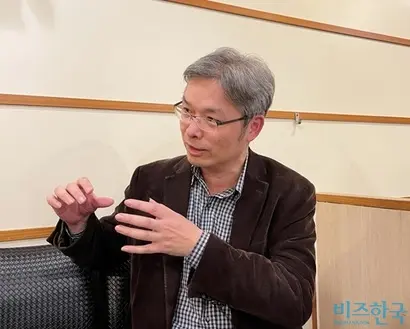
In the interview on the 11th, Professor Wang analyzed, "Currently, it is realistically very difficult for Samsung to catch up with TSMC. The gap is widening over time due to the accumulation of technology. TSMC has consistently maintained its lead and is moving toward the cutting edge. For Samsung to surpass this, it must find a path different from the one TSMC has taken. However, that is realistically difficult. Ultimately, they have a chance only if they target next-generation technology areas such as quantum computing."
In fact, recent analysis suggests that TSMC’s 2nm process has reached a level suitable for mass production. TSMC announced that its 2nm process yield (good product ratio) has exceeded 60% and that it plans to expand its production capacity target to over 100,000 wafers per month.
Professor Wang diagnosed that TSMC has also solved the problem of brain drain, which is the most important factor in the semiconductor industry. He said, "It is known that in 2015, Samsung recruited TSMC’s key engineers by having them pose as university researchers, only for them to move to Samsung after a certain period. There have also been cases where Chinese semiconductor companies offered 10 to 20 times the salary to poach talent from Samsung and TSMC."
Since then, TSMC has built an internal security system. "TSMC has broken down its semiconductor manufacturing process into granular segments. If the existing process was 10 units, it was broken down into 60 to 70 processes to ensure that no single engineer could know the entire process. It is a strategy to minimize damage even if personnel leak to the outside," Professor Wang explained.
He pointed out that the biggest task for the Taiwanese and Korean semiconductor industries is to prevent and address talent outflows. "In the high-tech industry, capital investment and land acquisition are relatively simple issues. The most critical factor is the movement of highly skilled talent. Unlike Samsung, TSMC does not send its top engineers to factories, even when building them in China."
He pointed out that new contractual conditions should be implemented for this purpose. According to Professor Wang, TSMC engineers cannot work for competitors for three years after resignation, and those who violate this are subject to penalties amounting to tens of times their existing annual salary.
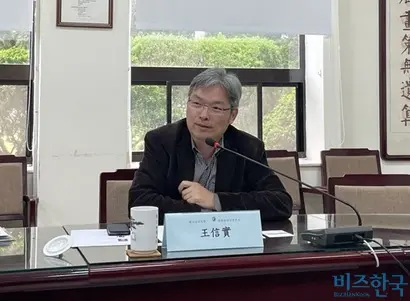
The problem is Trump. Professor Wang predicted that President Donald Trump's return to power would have a significant impact on the semiconductor industry. "Trump's goal is not simply to impose tariffs, but to use the semiconductor industry as a bargaining chip. Trump's ultimate goal is to revitalize U.S. manufacturing. To achieve this, it is highly likely that he will pressure the semiconductor industry to force the construction of factories in the U.S."
He analyzed, "As a negotiator, Trump will attempt to package the semiconductor industry with increases in defense spending. He will pressure the industry by creating conditions where U.S. support can only be received if two requirements are met: TSMC's investment in the U.S. and Taiwan's increase in defense spending."
It remains to be seen whether pressuring Taiwan will move a global corporation like TSMC. Regarding this, Professor Wang explained, "Although 80% of TSMC is foreign capital, with a significant portion being U.S. capital, it must be seen as a Taiwanese company. This is because the management and investors are separate, and the Taiwanese government provides direct and indirect support to TSMC."
Professor Wang pointed out that one should not underestimate Trump. "Trump may seem to negotiate in a haphazard way, but he is a very meticulous negotiator. He uses a strategy of identifying the opponent’s weaknesses, bringing them to the negotiating table, and getting what he wants. Especially unlike his first term, the ambiguity of his stance is decreasing. The U.S. position is becoming clearer as time goes by. The second Trump term blatantly demands that you choose between the U.S. and China," he said.
He advised that South Korea should refer to the way Japan negotiated with the U.S. "Japan actively utilized the relationship between former Prime Minister Shinzo Abe and Trump. Japanese Prime Minister Ishiba tried to gain an advantage in negotiations with Trump by emphasizing Shinzo Abe's legacy even before Trump took office. What is interesting is that former PM Abe and PM Ishiba are not politically close. However, diplomatically, Japan strategically inherited Abe's pro-Trump path to earn Trump's trust."
Ultimately, Professor Wang's analysis is that negotiating in the way Trump wants is the best method. "When petting a dog, you must stroke it in the direction of its fur. If you stroke it the wrong way, you might get bitten. Trump is the same. Because he is someone who negotiates only when he wants to, you must prepare and decide how to negotiate with Trump in advance. Then, when Trump demands negotiations, you must be ready to resolve them immediately."
In that sense, Korea's current situation is dangerous. Professor Wang warned, "Negotiating with Trump does not become more advantageous by stalling for time. You can only survive if you negotiate according to the timing Trump demands. Korea, which lacks a control tower at a time when countermeasures must be prepared, is in a dangerous situation."
Lastly, Professor Wang emphasized that when Korea negotiates with the U.S., it must properly recognize its 'strategic value.' He advised, "The U.S. knows very well that Taiwan and Korea are in extremely important geopolitical positions and are leading the high-tech industry. Trump’s strategy is to 'pretend not to know' this importance. Therefore, it is important to clearly understand our own strategic value when dealing with Trump."