

[비즈한국] Foreign investors continue to flee the domestic stock market. The proportion of foreign-held market capitalization has failed to recover to the 30% range since August 2024, and the total value of foreign holdings has shrunk from 738 trillion won at the end of 2023 to 666 trillion won in January 2025. Feeling a sense of crisis, the government has pushed for a "Value-up Program" to resolve the "Korea Discount," introducing the "Korea Value-up Index" composed of 105 undervalued blue-chip stocks. Every week, we select one stock from the Korea Value-up Index to analyze its management status and plans to enhance corporate value, determining if it is a promising stock that can prevent the "fall of the Korean market."
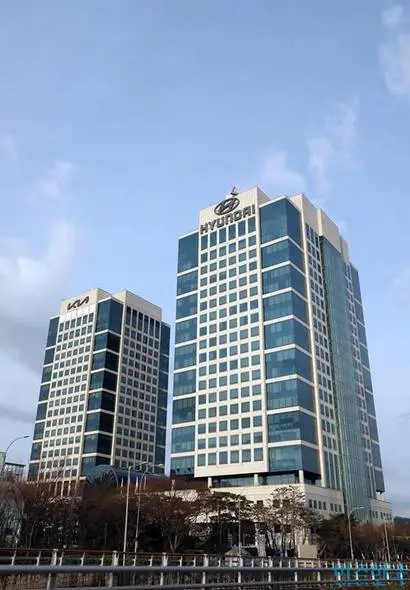
When discussing undervalued stocks in the domestic market, there is one company that is always mentioned: Hyundai Motor, which ranked in the top 3 of the Korea Value-up Index constituents (as of February 25). Hyundai Motor is cited as a representative stock in the domestic KOSPI market with a low Price-to-Book Ratio (PBR). As of February 24, Hyundai Motor's PBR stood at 0.59, still far below 1.
Hyundai Motor is a stock that receives both anticipation and disappointment from domestic market investors. Given its performance, shareholder return policy, and dividends, one would expect the stock price to rise, yet it has struggled to break out of a slump. The stock price hit an intraday high of 299,500 won on June 28, 2024, and has been on a downward trend ever since. As of 10:30 a.m. on February 25, the stock price remained at 203,000 won. Investor returns have also been poor. The stock's performance over the past year is -15.2%, with -18.0% over 6 months and -4.6% over 3 months.
Looking at the company's current status, while it achieved record-high revenue in 2024, its operating profit retreated. Revenue was 175.2312 trillion won, and operating profit was 14.2396 trillion won. In 2023, revenue was 162.6636 trillion won and operating profit was 15.1269 trillion won. During the same period, net profit increased (from 12.2723 trillion won to 13.2299 trillion won).
Vehicle sales also declined compared to the previous year. In 2024, sales volume reached 705,010 units domestically and 3,436,781 units overseas. Compared to 2023 sales, domestic sales (762,077 units) decreased by 7.5%, and overseas sales (3,454,603 units) decreased by 0.5%. Hyundai Motor has set its 2025 targets at 710,000 domestic sales and 3,464,000 overseas sales.
However, the group's strong will to boost the stock price is a positive factor. Hyundai Motor is a "top student" in the Value-up program. It garnered market attention last year by being the first among the top 10 groups to announce a plan to enhance corporate value. When it did not meet the eligibility criteria for the Korea Value-up Index due to its low PBR, it earned a special inclusion through an early disclosure of its value-up plan.
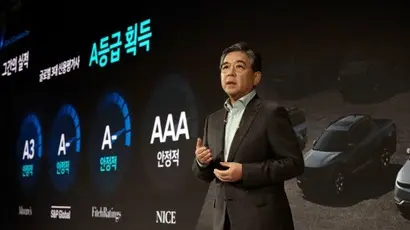
Hyundai Motor announced its Value-up program on August 28, 2024, at the "2024 CEO Investor Day." It proposed a virtuous cycle plan of achieving profitability targets through mid-to-long-term investments and sharing those profits through the Value-up program.
According to the mid-to-long-term investment plan, the company will invest a total of 120.5 trillion won over the next 10 years, including 54.5 trillion won in R&D, 51.6 trillion won in strengthening production capacity (CapEx), and 14.4 trillion won in future businesses. The largest expenditure is in facility investment. The company plans to invest 50.8 trillion won to build a "Hyper Casting" advanced manufacturing plant in Ulsan and to expand production capacity and electric vehicle infrastructure, such as charging stations.
To avoid losing profitability during the electric vehicle "chasm" (a temporary stagnation in demand), it will also invest 37.4 trillion won in developing hybrid electric vehicles (HEV) and extended-range electric vehicles (EREV), and in securing battery competitiveness. Based on this large-scale investment, the company has set a goal to grow its operating profit margin to 9–10% by 2027 and over 10% by 2030.
The shareholder return policy for 2025–2027 announced by Hyundai Motor to enhance corporate value is as follows: △Total Shareholder Return (TSR) of 35% or more △Targeting a 3-year average Return on Equity (ROE, a profitability indicator) of 11–12% △Minimum annual dividend of 10,000 won per share (2,500 won quarterly dividend) △Share buybacks worth 4 trillion won over the next 3 years △Expansion of shareholder returns through achieving a mid-to-long-term operating profit margin of 10% or more.
Securities firms predicted that Hyundai Motor's aggressive shareholder return policy would help boost the stock price. Lee Hyun-soo, an analyst at Yuanta Securities, assessed, "It is a stronger policy than the mid-to-long-term shareholder return plan announced in 2023," and added, "As a policy at a level higher than expected, it will likely draw a positive response from investors."
Hyundai Motor is implementing its measures to enhance shareholder value one by one. The company disclosed that it would purchase 4,665,868 shares of its own stock (common + preferred) between November 28, 2024, and February 27, 2025, using funds raised through the IPO of its Indian subsidiary. On February 18, it announced through a treasury stock acquisition report that it had completed the entire purchase.
However, because the stock price has been sluggish, the effectiveness of the Value-up program remains to be seen. On the day of the 2024 Investor Day (August 28), Hyundai Motor's stock price rose 4.7% compared to the previous day (247,500 won to 259,000 won), reflecting investor expectations, but it subsequently turned downward. On the day of the share buyback announcement (November 27), the stock price actually fell 1.1% compared to the previous day (223,500 won to 221,000 won), failing to show strength.
The dividend date for Hyundai Motor this time is February 28, and a stock price decline is expected on the ex-dividend date (February 27). The stock prices of common shares and three preferred shares (Hyundai Motor Pfd., Hyundai Motor 2nd Pfd. B, Hyundai Motor 3rd Pfd. B) have already begun showing red lights since the 25th. The dividend was set at 6,000 won (6,050 won and 6,100 won for preferred shares). Shin Yoon-chul, an analyst at Kiwoom Securities, analyzed, "If the share buyback had continued until February 27 as scheduled, it would have been expected to mitigate the impact of the ex-dividend date, but currently, there is no mitigation mechanism." He added, "If a new share buyback program is launched in February, we could expect a reduction in volatility."