

[비즈한국] As of 2025, the real estate market is entering a new phase. The nationwide apartment Jeonse-to-sales ratio has reached 68.0%, hitting its highest level in three years. This is not merely a numerical shift, but an important signal indicating structural changes in the real estate market and new investment opportunities.
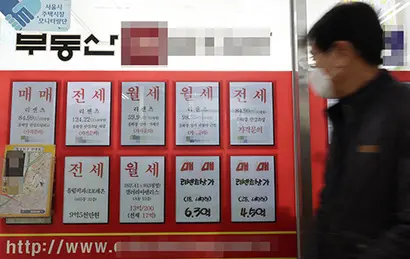
The rise in the Jeonse-to-sales ratio can be interpreted in various ways. While some view it as a crisis in the real estate market, cool-headed analysis and a strategic approach can turn it into a new investment opportunity. This column provides an in-depth analysis of what rising Jeonse prices signify and proposes 2025 real estate investment strategies based on these findings.
The Jeonse-to-sales ratio refers to the proportion of a Jeonse deposit relative to the property's purchase price. For example, if a home is priced at 1 billion won and the Jeonse deposit is 680 million won, the Jeonse-to-sales ratio is 68%. This index is used as a major leading indicator for the housing market and plays a crucial role in predicting the flow of the real estate market.
Four Scenarios for the Jeonse-to-Sales Ratio
There are four possible scenarios in a market with a rising Jeonse-to-sales ratio.
First is a market with rising Jeonse prices and falling or stagnant purchase prices. This is currently occurring in major cities including Seoul, as a result of a cooling sales market due to interest rate burdens and loan regulations.
Second is a market where Jeonse prices hold steady while purchase prices fall. This occurs when purchase prices undergo adjustments due to economic stagnation or policy changes, leading to a relative rise in the Jeonse-to-sales ratio.
Third is a market where both Jeonse and purchase prices fall, but purchase prices decline more sharply. This happens when market anxiety intensifies, causing both to drop, with the sales price falling further.
Fourth is a market where both Jeonse and purchase prices rise, with Jeonse prices rising at a faster rate. This phenomenon can emerge as the real estate market enters a recovery phase, and it is particularly prominent in regions with strong demand for Jeonse.
The Jeonse-to-sales ratio varies significantly by region. In Seoul, the ratio is relatively low, which is a result of high purchase prices and expectations for long-term price appreciation. On the other hand, while the ratio is relatively high in regional areas, this does not necessarily equate to high investment value.
What matters is not the ratio itself, but identifying areas where Jeonse prices are consistently rising. These areas have strong actual demand and are highly likely to lead to an increase in purchase prices over the long term.
Investment Strategies Using Rising Jeonse Prices
Let’s consider investment strategies that utilize rising Jeonse prices.
To do this, one must identify the characteristics of areas with rising Jeonse prices. Areas where Jeonse prices rise steadily possess the following traits:
Regions where new supply is limited. Areas with restricted supply, such as Gangnam in Seoul, Bundang, and Gwacheon, maintain consistent Jeonse demand. Regions with continuous population inflow. Areas like Sejong, Songdo in Incheon, and Pangyo are expected to see long-term Jeonse demand due to business attraction and transportation improvements. Regions with excellent school districts and living infrastructure. Areas with strong educational demand, such as Mok-dong, Daechi-dong, Haeundae, and Suseong-gu, have stable Jeonse demand.
It is also necessary to analyze the fluctuation patterns of the Jeonse-to-sales ratio. Examining past data shows that a rebound in the sales market often begins when the Jeonse-to-sales ratio, after a significant drop, breaks through its previous high. Currently, the ratio is rising in major metropolitan and regional cities, and in some areas, it is already surpassing previous highs.
In particular, apartment complexes in parts of Seoul and Gyeonggi-do where the Jeonse-to-sales ratio is surging can be seen as a signal of increasing investment value. The higher the Jeonse price growth rate, the stronger the actual resident demand, and the higher the likelihood of recovery after the sales market goes through an adjustment period.
Specific Investment Strategies Leveraging Jeonse Price Growth
Let’s look at specific investment strategies leveraging the rise in Jeonse prices.
One method is to target complexes where the Jeonse-to-sales ratio breaks through previous highs. Closely analyze the sales behavior of such complexes. These units are highly likely to become leaders in future purchase price appreciation.
Buy in areas with strong Jeonse demand. You should consider purchasing in areas with high Jeonse demand, focusing on school districts, proximity to subway stations, and new construction. These areas can be expected to provide stable rental income along with capital gains in the long run.
Another strategy is to simultaneously pursue rental income and capital gains. In areas with solid Jeonse demand, it is effective to aim for both simultaneously. To achieve this, you must continuously monitor regional Jeonse price trends and fluctuations in purchase prices.
Capturing rebound opportunities after a wave of move-ins is also a good strategy. When large-scale move-ins are scheduled in a specific area, Jeonse prices may temporarily drop. However, once these short-term supply issues are resolved, Jeonse prices are highly likely to rise again. Such periods can be utilized as buying opportunities.
Risks to Consider When Using the Jeonse-to-Sales Ratio
However, one must always weigh the risks.
First, consider the balance between the Jeonse-to-sales ratio and actual living value. Making an investment decision based solely on the Jeonse-to-sales ratio is dangerous. You must comprehensively consider actual residential value and the potential for regional development. For example, while the Jeonse-to-sales ratio in Seoul is relatively low, the potential for long-term value appreciation is high.
One must also pay attention to establishing strategies linked to interest rate fluctuations. Changes in interest rate policy significantly affect the Jeonse market. If interest rates fall, Jeonse demand may increase, requiring proactive strategies to respond to these changes.
Always keep in mind the risk of "tin can houses" (where the Jeonse deposit exceeds the property value) if the Jeonse-to-sales ratio is excessively high. Special caution is needed when the ratio exceeds 90%.
Keep in mind that the standards for Jeonse-to-sales ratios in Seoul and regional areas are different. This means that a high ratio in a regional area does not necessarily mean it has high investment value.
Remember that Jeonse prices can show volatility in the short term. Particularly in areas with large-scale move-ins scheduled, temporary drops in Jeonse prices may occur, necessitating a long-term investment perspective that accounts for this.
Continuously monitor changes in government real estate policies and rental-related laws, as these changes can significantly alter the structure of the Jeonse market.
In the 2025 real estate market, rising Jeonse prices are a signal of new opportunity, not a crisis. The rise in the Jeonse-to-sales ratio is an important indicator that provides mid- to long-term investment opportunities, rather than just market fluctuation.
As a rebound in sales prices is expected in areas where Jeonse prices continue to rise, it is worth considering strategic purchases. However, you should not base investment decisions solely on a high Jeonse-to-sales ratio. You must comprehensively consider the steady growth of Jeonse prices, actual residential value, and regional development potential.
Kim Hak-ryul, head of the SmartTube Real Estate Research Institute, well-known by his pen name "Pashong," previously served as the team leader of the Real Estate Research Division at Gallup Korea. He operates the Naver blog "Pashong's World Exploration" and the YouTube channel "Stew TV." He is the author of "The Power of Gyeonggi-do Real Estate (2024)," "The Absolute Principles of Seoul Real Estate (2023)," "The Future of Incheon Real Estate (2022)," "Kim Hak-ryul's Absolute Principles of Real Estate Investment (2022)," "The Future Map of South Korea's Real Estate (2021)," "From Now On, Only Places That Can Rise Will Rise (2020)," and "The South Korea Real Estate User Guide (2020)," among others.