

[비즈한국] Apple has unveiled the iPhone 16e. Initially expected to be the fourth generation of the iPhone SE, this price-conscious model has instead been added as an entirely new lineup alongside the iPhone 16. With this addition, the iPhone 16 series is now divided into three categories—Standard, Pro, and e—and is expected to see continuous upgrades based on market response.
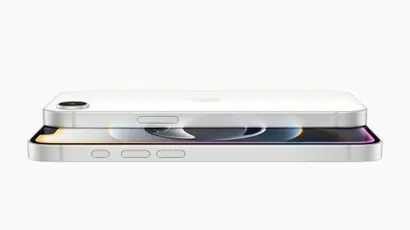
What does the 'e' in iPhone 16e stand for? Apple talks about cost-effectiveness. In English, they describe it as 'powerful performance at an appropriate price.' The letter 'e' is a common suffix in IT devices, usually signifying terms like economical, efficient, or entry-level.
Generally, Apple does not market its devices as low-cost or budget-friendly. Instead, they follow a policy of extending the lifespan of existing products, imbuing them with new meaning while lowering the price. It is the act of letting a carefully crafted product age to achieve a lower price point. They often do this by reducing the price of the previous iPhone standard model when a new series is released.
Apple's Budget Market Strategy Built on Time
It is not as if Apple has never released price-focused products before. The iPhone 5c, for instance, was a model with a distinct separation. Released alongside the iPhone 5s, it shared the same specs as the iPhone 5 but removed features like the 5s's Touch ID. The most significant difference was the use of a plastic shell instead of aluminum.
However, the iPhone 5c was not a model cheapened by low-quality parts. While it used plastic, it was high-quality material, and it created a new feel with its unique design and colors. Naturally, there was the concern that since the iPhone 5's performance was still solid and the aluminum case was luxurious, selling it as-is would hurt sales of the iPhone 5s. Consequently, it was a model that introduced a lower price point without undermining the marketability of the new flagship.
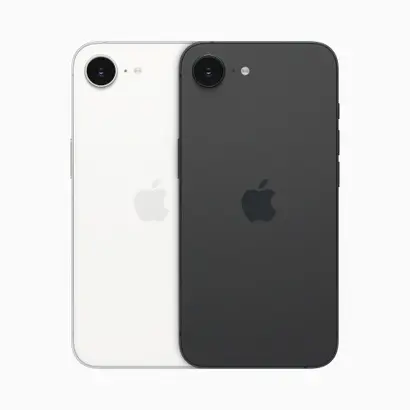
The most representative price-focused iPhone is the iPhone SE. Spanning three generations, it has enjoyed significant popularity, enough to carve out its own market. While the iPhone SE's strength is its price, it wasn't strictly built on the premise of being a 'budget model.' The first iPhone SE began because of persistent demand for a small, 4-inch iPhone. Many found the larger iPhones that had been growing since the iPhone 6 unfamiliar. Thus, the Special Edition (SE) was created based on the iPhone 5s form factor—small in size, but powered by the same processor as the flagship iPhone 6s of that time.
Subsequently, the iPhone SE established itself through the 2nd and 3rd generations as a model focused on size and the Touch ID home button. Since the iPhone X transitioned to a full-screen display and larger sizes, the SE served those who missed the compact iPhone and the signature home button. Because the performance was always kept on par with current-generation products and the form factor production costs were minimized, it naturally resulted in an attractive price point.
Price was the iPhone SE's greatest weapon. The 1st generation, launched in 2016, cost $399 (590,000 KRW in Korea). The 2nd generation in 2020 was $399 (550,000 KRW), and the 3rd generation in 2022 was $429 (650,000 KRW), surprising consumers with their performance-to-price ratio.
The 2nd generation, in particular, was very well-received as iPhone prices surged after the iPhone X. Ultimately, while the iPhone SE filled the budget lineup, Apple also positioned it as a special edition for fans who valued traditional features. Users accepted it not as a 'cheap' model, but as a choice based on factors like a one-handed display, a home button, and Touch ID. This approach is an excellent way to increase value without degrading the brand or product by simply labeling it as 'budget.'
The Market’s Clear Demand for ‘Price’ and the Lingering Regret
This is why the messaging of the iPhone 16e and its 'cost-effectiveness' feels a bit awkward; the focus is squarely on price. Yet, a product with this concept was bound to appear. Although the iPhone SE doesn't dominate conversations, it is a surprisingly steady seller. This is because it retains the Apple value while being compact, lightweight, and offering the value of an intuitive, fast Touch ID and home button.
Recently, as iPhone prices have steadily increased, demand for the iPhone SE has grown. The iPhone 16 Pro starts at 1.55 million KRW, and the standard iPhone 16 starts at 1.25 million KRW. Larger models are even more expensive, and storage upgrades only add to the burden. Therefore, the 4th generation of the iPhone SE needed to establish an appropriate price range.
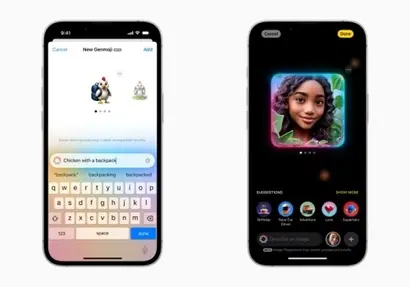
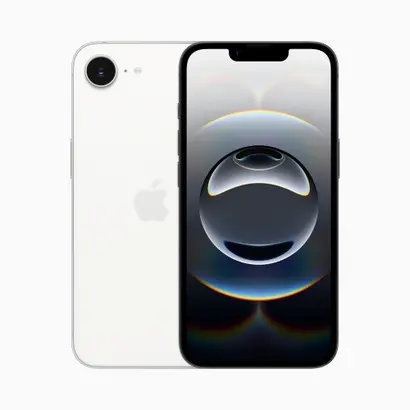
Thus, the goal of the iPhone 16e is clearly price. Basically, you can think of it as the iPhone 16 processor stuffed into an iPhone 14 chassis. From the 6.06-inch display to the notch design and the casing, everything is identical. The ultra-wide camera was removed in favor of a standard lens, which handles 2x zoom via a crop method.
Since Apple's goal was to provide an iPhone capable of running Apple Intelligence at a lower price, it uses the A18 processor. However, the GPU core has been reduced to 4 cores. While GPU performance is about 20% lower than the iPhone 16, it should still perform at a level comparable to the previous generation.
The two points receiving criticism are: first, the lack of MagSafe wireless charging. While 1st-generation Qi wireless charging works and it supports 20W charging via USB-C, the lack of MagSafe is a drawback. You could use a magnetic case to use MagSafe or Qi2 chargers, but the charging speed would be disappointing. Since MagSafe and Qi2 are standards Apple pushes and were present on the iPhone 14 form factor, it is puzzling that they went out of their way to remove them. Of course, they can remove anything if the goal is to cut costs.
The problem is that the price is not satisfyingly low. The base 128GB model is 990,000 KRW. The 256GB model, which feels more appropriate, is 1.14 million KRW. The standard iPhone 16 starts at 1.25 million KRW for 128GB and 1.4 million KRW for 256GB. It is a somewhat underwhelming price point. Comparing this to the iPhone 15, which is still being sold for 1.09 million KRW, makes things even more confusing. It looks like a lineup with three options clustered in a similar price range.
The 'Aesthetic of Subtraction' and the Complex Correlation with Exchange Rates
In terms of value, the iPhone 16e is supposed to be a device that utilizes the 'aesthetic of subtraction'—stripping away features from the iPhone 16 without damaging its core value. For about 250,000 KRW less, you lose the Dynamic Island, dual cameras, camera control, MagSafe, and several color options, which is a bit ambiguous. It is true that the thought 'If it costs over a million won, I might as well buy the iPhone 16' comes to mind first. Recalling that the iPhone SE was sold in the 500,000 KRW range, the gap is even more disappointing.
It is unfortunate that the ambiguous 990,000 KRW price is largely due to the exchange rate. While the iPhone SE2 was sold for 550,000 KRW at $399, the iPhone 16e is $599, which is a significant increase. Still, compared to the $799 price of the iPhone 16, there is a noticeable difference. We live in an era of exchange rates where $599 becomes 990,000 KRW.
If you roughly estimate the price by adding 10% VAT to the US price and dividing it by the Korean price, you can see the effective exchange rate used: about 1,420 KRW per dollar for the iPhone 16 and about 1,500 KRW for the iPhone 16e. The perceived difference is clearly different from the $200 gap between $599 and $799. If the iPhone 16e used the same exchange rate as the iPhone 16, it would be around 850,000 KRW, and with the exchange rate from the iPhone SE2 era, it would be in the 750,000 KRW range. The feel would be completely different from the price of the iPhone 16.
For Korean consumers, it feels better to just buy the iPhone 16. However, raising the price of the iPhone 16 to match that gap—like with the PlayStation 5—isn't a good move either. While 250,000 KRW is not a small amount, in the current situation in Korea, one might think it is better to invest the extra money.
Therefore, it seems the iPhone 16e will be a model sold through separate channels—specifically, mobile carriers—where they can respond flexibly to exchange rates and offer subsidies, rather than through Apple Stores or direct retail.
Some might say they would rather buy the iPhone 15, but I do not recommend it. While the iPhone 15 might have a better form factor, it cannot use Apple Intelligence. Apple Intelligence will be a standard that divides the iPhone experience for years to come. They say Korean support will be available in April.
Re-opening the Modem Independence Movement
Lastly, the iPhone 16e has one hidden mission: the modem. It contains a modem made directly by Apple. This has taken a long time, and there was much debate over whether they could even pull it off, but Apple has finally succeeded and included it in a product for the first time. They previously attempted 'modem independence' by acquiring Intel's modem business, but it was not easy.
The modem market is tightly controlled by Qualcomm, and it is difficult to bypass patent and technical barriers; modems from anyone other than Qualcomm have always faced performance issues. Apple likely believes it is feasible, and it seems they are beginning that experiment with the iPhone 16e. If it performs sufficiently, they might slowly move away from Qualcomm, potentially resolving the conflicts of the past decade. Qualcomm might think otherwise, of course.
Modems have been more difficult than processors for Intel, NVIDIA, and even Samsung to master, so I look forward to seeing whether Apple can show something in the modem market again.
For Apple, the iPhone 16e is a significant attempt in terms of both its price-focused lineup and the new modem. It is clear that this is a lineup Apple needs right now. However, it leaves a lingering aftertaste regarding what should have been subtracted from a budget model and how the distorted price balance caused by the unstable exchange rate should have been resolved.