

[비즈한국] As the legislation for Security Token Offering (STO) is delayed, a disconnect between the institutional framework and the industry is emerging. While many financial companies have selected security tokens as a new growth engine and invested in infrastructure development, the possibility of STO legalization in the first half of this year has diminished. Within the banking sector, NH NongHyup Bank was a preemptive player in the security token business, but it is now facing institutional limitations, such as being unable to operate its blockchain infrastructure despite receiving government support to build it.

Security tokens are a concept often discussed alongside fractional investments. Fractional investment refers to a method of investing by splitting ownership or equity in high-value tangible or intangible assets such as real estate, artworks, or Hanwoo beef. These fragmented rights are classified as new types of securities, such as investment contract securities or beneficiary certificates, and can be issued and distributed as security tokens. Security tokens refer to securities that have digitized assets using blockchain technology, while STO refers to the act of issuing these tokens without institutional intermediaries. Because security tokens are non-standardized securities that did not exist previously, the current Capital Markets Act lacks specific regulations for their issuance and distribution systems.
As the market grew outside the institutional framework, financial authorities announced the 'Regulatory Framework for Security Token Issuance and Distribution' in February 2023, demonstrating their intent to legislate. Consequently, many financial companies, led by securities firms, began entering the security token business. The banking sector also jumped in, with NH NongHyup Bank at the forefront.
In April 2023, NongHyup Bank formed an 'STO Banking Consortium' with Jeonbuk Bank and Suhyup Bank. The consortium also includes IBK Industrial Bank of Korea024110, KB Kookmin Bank, Shinhan Bank, Woori Bank, and fractional investment firms. However, it has been confirmed that there has been little activity within the consortium recently.
NongHyup Bank also operates a fund management service (fractional investment API) for online fractional investment platforms. In June 2022, NongHyup Bank became the first in the financial sector to start a segregated custody service for investment deposits. The service works by supporting fractional investment companies that have partnered with the API in separating and storing investor deposits from platform funds, issuing virtual accounts, and handling purchase payments and refunds, all while collecting fees. According to NongHyup Bank, there are currently 9 fractional investment companies that have signed a partnership for the fractional investment API.
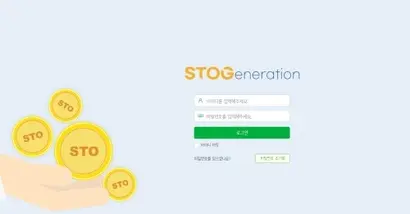
However, despite being early to enter the market, full-scale operations remain difficult. Even the infrastructure built with government support cannot be utilized properly. In June 2024, NongHyup Bank was selected as an operator for the '2024 Blockchain Private Sector Concentration and Expansion Project' by the Ministry of Science and ICT and the Korea Internet & Security Agency (KISA). NongHyup Bank formed a consortium with participating companies (such as B-Dgen) to build 'STOG,' a security token issuance platform.
STOG is a platform that allows fractional investment operators to easily issue security tokens without having to build their own separate platforms. It provides security token issuance functions that meet the requirements set by the Financial Services Commission's STO guidelines. By December 2024, NongHyup Bank had completed the blockchain functions and distributed ledger setup for STOs to a commercialization-ready level, but it has yet to begin official operations.
NongHyup Bank is considering collaboration with other financial companies with the goal of expanding its business as the legislative movement progresses. A NongHyup Bank official stated, "We will support security token issuance, focusing on fractional investment companies that have signed the fractional investment API contract," and added, "We are also reviewing a plan to include other financial firms as blockchain nodes (network participants) in our STO blockchain."
However, STO legislation has once again become a distant prospect. At the first subcommittee for bill review of the National Assembly's National Policy Committee held on February 20, the security token-related bill was not included on the agenda. The security token bills consist of amendments to the 'Capital Markets and Financial Investment Business Act (Capital Markets Act)' and the 'Act on Electronic Registration of Stocks and Bonds (Electronic Securities Act),' with both ruling and opposition parties having proposed similar bills.
The core of the Capital Markets Act amendment is the formation of a distribution market for non-standardized securities like beneficiary certificates or investment contract securities, subjecting them to distribution regulations similar to other securities and forming an over-the-counter market. The amendment to the Electronic Securities Act defines distributed ledger technology and security tokens, and requires security token issuers to undergo registration with the Financial Services Commission. Representative Kim Jae-seob of the People Power Party proposed the bill in October 2024, while Representative Min Byung-duk of the Democratic Party of Korea proposed it in November.
As the bills failed to pass the National Policy Committee's subcommittee, passage in the first half of the year has become difficult. With early presidential elections anticipated, discussions are likely to be pushed back to the second half of the year. Previously, during the 21st National Assembly, former lawmaker Yoon Chang-hyun and others also proposed bills, but they were scrapped without passing committee review.
Financial authorities maintain that they will continue to work toward legalization. On February 13, at the 3rd Virtual Asset Committee meeting, Kim So-young, Vice Chairman of the Financial Services Commission, stated, "As there is active global discussion on the tokenization of financial assets and the utilization of blockchain infrastructure, we will devise various policies, such as supporting security token issuance through legislation and expanding blockchain investment in the financial sector," and added, "As related legislative amendments have been proposed for security tokens, we will actively support parliamentary discussions for their swift passage."