

[비즈한국] With 'Physical AI' emerging as the next phase of generative artificial intelligence (AI), Big Tech companies are rushing to enter the humanoid robot business. The US and China have already secured an early lead in the ecosystem. While the US has gained an advantage centered on major corporations solving technical challenges, China is leveraging its robust supply chain to compete on scale and speed. Amid the race for technological hegemony between the two superpowers, South Korea—once hailed as a 'robot powerhouse'—has quietly fallen behind. Even Japan, a traditional leader in robotics, shows a clear gap in the humanoid sector. Consequently, large South Korean corporations have recently begun their pursuit through the acquisition of robotics firms.
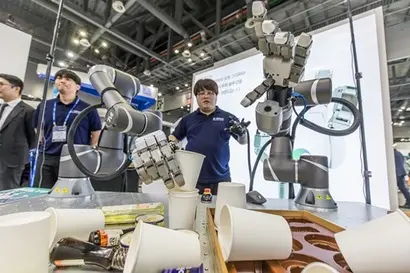
Korea's Hubo chased Japan's ASIMO—where do things stand now?
The movement toward the commercialization of humanoid robots—machines that can walk, talk, and grasp or move objects like humans—is gaining momentum. Much like the AI sector has been in the spotlight for the past two years, forecasts suggest a global humanoid robot development craze will follow in the coming years. While industrial robots, starting with high-intensity simple tasks, are already being used in manufacturing sites, the ripple effect of human-like robots infused with AI flexibility is difficult to predict. Experts believe that once humanoids equipped with autonomy and intelligence are fully deployed, they will shake the very foundations of industrial sites.
The US is focusing on robot platforms, led by Big Tech giants like Tesla. The overarching vision is to dominate by building everything from the hardware and software (SW) to the operating system (OS), similar to the iPhone ecosystem. China possesses tens of thousands of companies related to the robotics supply chain, including component manufacturing and prototype design. They are preparing for a turnaround through a thick supply chain, manufacturing capabilities, and comprehensive policy support from the Chinese government.
What is the situation in South Korea? Until the 2010s, Korea was a standout in the humanoid field. In late 2004, the bipedal walking robot 'Hubo,' developed by researchers at the Korea Advanced Institute of Science and Technology (KAIST), began chasing 'ASIMO' from Japan, then the world’s strongest nation in intelligent robotics. A decade later, the evolved Hubo won the disaster robot challenge hosted by the US Defense Advanced Research Projects Agency (DARPA).
Lee In-ho, a professor of Electrical and Electronic Engineering at Pusan National University, diagnosed the situation: "During the 2011 Fukushima nuclear disaster, even Japan failed to respond physically using robots, which raised doubts about the utility of robot technology and systems. The DARPA challenges held in 2013 and 2015 significantly influenced the direction of robotics development." He added, "Doubts about the utility of humanoids were also raised in the US for a time. Expectations were high, but the conclusion was that existing technologies were insufficient for practical application. After the competitions, major research funding didn't flow into humanoid robot research. However, with recent advancements in follow-up technologies and major corporations jumping into development, humanoid robots, which had experienced a slump, are once again in the spotlight."
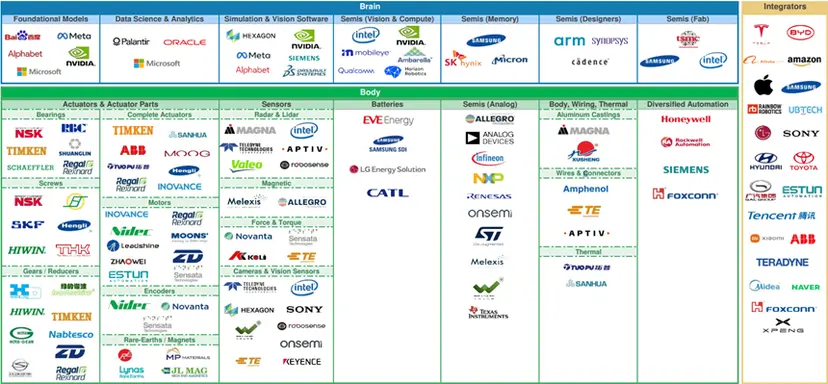
Japan's strength is in 'Industrial/Collaborative Robots,' Korea's is in 'AI'
Currently, South Korea appears stagnant, failing to show notable achievements in the global market. Kang Hee-jin, an analyst at Samsung Securities, analyzed the cause: "Major corporations that initially expressed investment intent have not solidified their roadmaps for the robot business, and domestic companies have failed to stand out in the humanoid industry, which is considered the culmination of advanced robotics and AI technology."
Japan still boasts high technical prowess in industrial and collaborative robots. While China is a threatening leader in production capacity, it still has limitations in quality. However, Japan has long fallen behind the US and China in the humanoid robot field, which it once led.
According to a technical patent report released by the People’s Daily Research Institute of China in late 2023, Japan’s cumulative number of humanoid robot technology patent applications reached 6,058, widening the gap with China in first place (6,618). Analysis by the Korean Intellectual Property Office on patents related to AI-applied robots filed at major patent offices worldwide shows that Japan (235) ranked 4th, trailing behind China (3,313), South Korea (1,367), and the US (446).
South Korea is considered to be slightly ahead of Japan in the AI field, another pillar of humanoid robots. However, it is not enough to catch up with the rapidly growing AI and robotics innovations. Kim Sun-woo, a professor at the College of Software Convergence at Sungkyunkwan University, pointed out, "The rules of the game in almost every industry are being rewritten due to disruptive innovation in humanoid robots and renewable energy," adding, "The 'golden time' has not passed yet, but there isn't much time left."
Strategies of the companies leading the Korean-style humanoid
At this year's CES, there was a fierce competition ranging from Nvidia's robot development software to new humanoid technologies from Chinese robot companies. During the CES 2025 press conference, Han Jong-hee, Vice Chairman of Samsung Electronics005930, said, "It cannot be called very fast, but we are making efforts, including investments, to secure robot technology." This statement highlights South Korea's current standing.
Samsung Electronics and LG Electronics066570 have entered the final countdown to the humanoid robot market by acquiring or securing management control of specialized robotics firms. Late last year, Samsung Electronics acquired 'Rainbow Robotics277810,' founded by members of the Hubo research team. Professor Oh Jun-ho, known as the father of Hubo, will join the Future Robot Strategy Team directly under the CEO. While specific plans have yet to be revealed, the vision is to focus on research and development of robots to implement unmanned processes in semiconductor plants by 2030.
At the end of last month, LG Electronics acquired an additional 30% stake in 'Bear Robotics,' an autonomous mobile robot company, securing a total 51% stake and management control. Bear Robotics possesses technical capabilities in fields such as swarm control, which moves multiple robots along optimized paths using a robot software platform, and cloud control solutions.
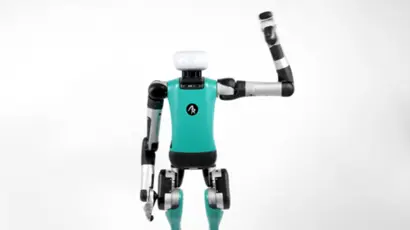
Hyundai Motor Company005380 is monitoring the timing for commercialization, centering on 'Atlas,' a humanoid from its group affiliate Boston Dynamics. Atlas is the only humanoid in Korea linked to the development of Nvidia's robot development platform, 'COSMOS.' Hyundai Motor has set a goal to increase the proportion of advanced robots in its business portfolio to 20% by 2030. Boston Dynamics, with 34 years of business history, started as a venture firm at the Massachusetts Institute of Technology (MIT) and was acquired by Hyundai Motor in 2021. Its nature differs somewhat from the two robot companies acquired by Samsung and LG.
Naver is also attracting attention as it possesses various core technologies, ranging from the Large Language Models (LLM) that make up AI robots to cloud and robot operating systems (OS). Naver was recently included in the 'Top 100 Humanoid Companies' report released by global investment bank Morgan Stanley. Its potential was highlighted alongside seven other Korean companies, including Samsung Electronics, LG Electronics, SK Hynix, and Hyundai Motor. Naver has embarked on the development and production of various forms of robots, such as the autonomous service robot 'Rookie,' the dual-arm robot 'Ambidex,' and the robot 'M2' used for digital twin creation. The Morgan Stanley report also listed Japanese electronics giants Sony, carmakers Honda and Toyota, and the robot firm ASIMO.
However, some in the securities industry are cautious, fearing an overheated market, as technological progress or commercialization could be slower than expected.
The government has started providing support to establish an ecosystem. According to industry sources, the Ministry of Trade, Industry and Energy is preparing to launch a 'Humanoid Robot Alliance (tentative name).' The participants include large companies that manufacture finished robot products, small and medium-sized enterprises (SMEs) that produce robot components, and software companies developing AI models. The main purpose of the Robot Alliance is for the various companies that make up the humanoid robot ecosystem to gather and explore ways to commercialize products efficiently.