

[비즈한국] South Korea and Taiwan, both considered strategic hubs between the U.S. and China, find themselves in a similar plight. The second Trump administration has demanded that Taiwan contribute defense spending amounting to 10% of its GDP, a crisis that will soon face South Korea as well. The same applies to plans to impose tariffs on semiconductors. Through the ‘Reading the Korean Peninsula from Taiwan’ series, BizHankook meets with key figures in Taiwan’s politics, security, and economy to diagnose the current situation and analyze the potential impact on South Korea.
On February 7, U.S. President Trump and Japanese Prime Minister Ishiba held their first summit. Among East Asian nations, Japan appears to be taking the lead in negotiations with Trump. The joint statement from the U.S.-Japan summit included support for Taiwan’s participation in international organizations and reaffirmed the trilateral partnership between South Korea, the U.S., and Japan regarding North Korea. Recently, with reports that Japan has requested an exemption from U.S. steel tariffs, some are evaluating the summit as a success.

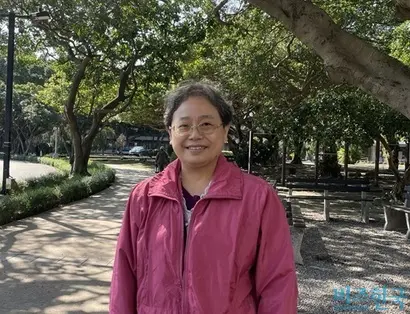
How should we view the results of the U.S.-Japan summit? On February 10, I met with Chair Professor Ho Szu-shen and Professor Ko Yu-chih of the Center for East Asian Studies at Fu Jen Catholic University in Taiwan. Professor Ho, a scholar specializing in Japanese studies, has researched Taiwanese foreign policy and Korea-Japan relations, and serves as the deputy director of the Kuomintang’s Department of International Affairs. Professor Ko is an expert on U.S. and Latin American studies.
“We are currently in a situation where major powers are destroying the global order.” Professor Ho pointed out that there is a high possibility that the second Trump term will add new variables to existing international relations. “Trump does not follow the traditional diplomatic bureaucratic system; he operates policy based on his own impulsive decisions. Even within the U.S., there is talk that no one can predict what Trump will do,” Ho said.
Professor Ko also assessed, “As major powers choose a realist path, the global order is collapsing. The U.S., China, and Russia are all acting based on the logic of power, and Japan is in a situation where strong leadership, like that of Shinzo Abe, is absent.”
The diplomatic style of the U.S. Trump administration poses a significant burden on allies. South Korea, Japan, and Taiwan are all unable to avoid Trump’s pressure. The Trump administration also demanded that Japan increase its defense spending. Japan’s stance is to increase defense spending to 2% of its GDP by 2027. In 2025, Japan’s defense budget is approximately 78.2 trillion won, which is about 1.4% of its GDP.
Regarding this, Professor Ko analyzed, “Japan did not resist the demand for increased defense spending at all.” She explained that Japan has treated the U.S. demand as an opportunity, noting that there had previously been limits to increasing defense spending due to anti-war public opinion within Japan.
“From the perspective of the Japanese right wing, they can use external pressure from the U.S. to create a breakthrough. Japan has the task of narrowing the military gap with China and keeping North Korea in check. There is a recognition that they should not rely solely on the U.S.,” Ko explained. However, she noted that one must watch the situation, including whether the Japanese Prime Minister is replaced, to see how much of Trump’s demands will be accepted.
The Trump administration is also strongly demanding that Taiwan increase its defense spending. In response, Professor Ko analyzed, “South Korea and Taiwan may follow a Neorealist diplomatic path that prioritizes national survival above all else. Even if the U.S. does not intervene immediately, they will increase defense spending to acquire defensive capabilities. In the past, if Taiwan increased its military power, it could have been interpreted as an ‘attempt at independence,’ but now it appears to be following U.S. demands. There will be changes in China’s attitude accordingly.” She added, “Of course, it is questionable whether increasing defense spending can truly guarantee national security.”
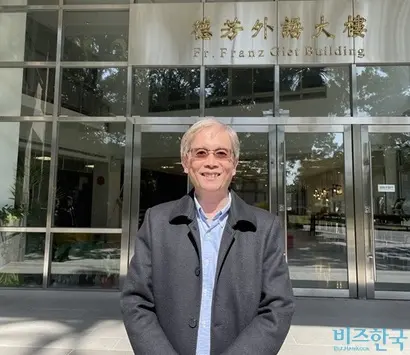
Professor Ho assesses that Trump’s demand for increased defense spending is realistically unattainable. “If Taiwan were to increase its defense spending to 10% of its GDP, it would have to spend 60% of its national budget on defense. This is realistically impossible. It is also impossible for Japan to increase spending to the 3% of GDP that Trump demands,” Ho said.
Taiwan’s response strategy is bound to be limited. Professor Ko explained, “To maintain relations with the U.S., Taiwan could approach the situation by importing more U.S. energy or increasing direct investment within the U.S. However, there is little room to respond to direct demands like increasing defense spending.”
South Korea is in a similar situation to Taiwan. Professor Ho stated that South Korea is in a particularly difficult spot. “Japan, Taiwan, and South Korea are all countries with weak leverage in great power politics. But South Korea is in an even more difficult position because it has not had direct dialogue with President Trump. It lacks negotiating power and will find it difficult to close deals.”
In the current situation, what response strategy should South Korea adopt? Both professors advised in unison that South Korea must engage in ‘direct’ dialogue with Trump. Professor Ho said, “A model of direct dialogue with Trump is what Trump prefers most. Japan utilized this method well. Former Japanese Prime Minister Abe established a close relationship with Trump and made that relationship visible. The problem is that Taiwan is not recognized as a nation, and South Korea does not have a [stable] president.”
Professor Ko advised, “While there is a need for Japan, Taiwan, and South Korea to unite to strengthen collective bargaining power, it is highly likely that individual negotiations with the U.S. will be more effective in reality. You must talk directly to the U.S. You should have options such as importing U.S. energy and investing directly in U.S. industries.”