

[비즈한국] It has been confirmed that an employee at the Export-Import Bank of Korea (Korea Eximbank), which ranks among the highest-paid public institutions in the country, embezzled over 100 million won from the rental deposit of their own company-provided housing into a personal bank account, a fact only discovered after the employee passed away. Previously, in 2020, the Export-Import Bank uncovered and disciplined employees who engaged in "gap investing" while living in company-provided housing and dormitories meant for those who do not own homes. Critics point to a significant loophole in the housing welfare management system of a public institution that spends 20 billion won annually on providing employee housing.
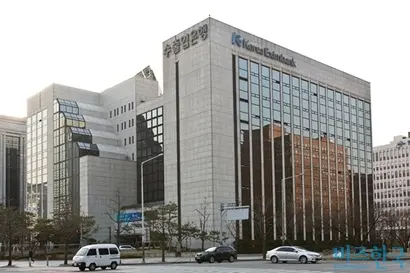
According to the Export-Import Bank of Korea, an employee identified as A, who was in charge of rental housing in the bank's Maritime Project Finance Department, received a 120 million won deposit into their personal account from the landlord in March 2023, when the lease on their own company-provided housing expired. Employee A passed away last January, ten months after misappropriating the bank's deposit. The Export-Import Bank remained unaware of this until they attempted to recover the housing deposit ten days after A's death, only then discovering the incident.
Fortunately, the full amount was recovered. While the bank filed a complaint against A for the embezzlement, local police decided not to forward the case to the prosecution in February of last year, citing the suspect's death as the reason for closing the case. Consequently, the Export-Import Bank recovered A's group insurance payouts, condolence money, and severance pay, and initiated civil mediation procedures with the heirs for the remaining balance. The deposit was finally recovered in full last December, one year and nine months after the incident occurred.
At the time of the incident, the Export-Import Bank lacked proper conflict-of-interest regulations or follow-up verification procedures for employee housing. Despite the clear conflict of interest when an employee in charge of housing applications requested housing for themselves, there were no measures to designate a substitute for the duty, and it is reported that there were no sufficient procedures to verify whether employees were actually living in the provided housing.
Upon realizing these facts, the audit department of the Export-Import Bank issued a warning regarding the rental housing incident at the end of last year and requested institutional improvements from the relevant departments. While the manager and general affairs team leader overseeing the rental housing department at the time were found to have been negligent in their supervision, and the head of general affairs was cited for inadequate handling of contract signing and post-management, the disciplinary action was limited to a "warning" given that the full amount of money had been recovered. The Human Resources Department was notified to improve systems to strengthen management of rental housing duties.
An official from the Export-Import Bank of Korea explained, "Currently, we operate company housing mainly for junior staff in the early stages of their careers or employees stationed in regional areas to provide residential stability." The official added, "Since the occurrence of this incident, we have implemented measures to ensure that if a housing manager uses company housing themselves, a proxy must handle the administrative tasks, and we are now verifying residency through on-site visits to prevent any recurrence of such incidents."
This is not the first time that poor management of the Export-Import Bank's housing has been exposed. Previously, in 2020, the bank disciplined five employees with a "reprimand" for engaging in gap investing (purchasing homes while relying on jeonse deposits) while living in company-provided housing or dormitories for non-homeowners. Two employees used company-provided rental housing, and three used company dormitories while acquiring their own homes.
According to the Export-Import Bank's private contract data, the bank has spent 42 billion won (194 cases) on securing employee housing over the past two years. This includes 34.2 billion won (154 cases) in jeonse deposit contracts and 7.8 billion won (40 cases) in purchase contracts. In the last year alone, the bank spent 19.3 billion won (92 cases) on housing, consisting of 13.5 billion won (62 cases) for jeonse rental contracts and 5.8 billion won (30 cases) for purchase contracts. Excluding the 4.4 billion won (10 cases) spent on residences for high-ranking officials such as branch managers, all other expenditures were for employee rental housing or dormitories.
The Export-Import Bank of Korea is a public institution under the Ministry of Economy and Finance that provides financial support for exports, imports, and overseas investments. While providing necessary financing for foreign economic cooperation—such as capital goods exports, resource imports, overseas investments, and overseas resource development—it also operates and manages the Economic Development Cooperation Fund (EDCF), the Inter-Korean Cooperation Fund, and the Supply Chain Stabilization Fund. As of the fourth quarter of last year, there were a total of 1,322 full-time executives and regular employees.
The salaries of Export-Import Bank employees are among the highest in public institutions. According to the Public Institution Management Information Disclosure System, based on the 2024 budget, the average annual salary per employee at the Export-Import Bank was 101.32 million won, ranking 9th overall. An analysis of the '2025 Public Institution Recruitment Fair' directory book by HR tech firm Incruit found that the starting salary for new employees at the Export-Import Bank was 49.67 million won, ranking 7th among all public institutions.