

[비즈한국] Controversy continues over the relocation of the National Agricultural Cooperative Federation (NongHyup) headquarters. The National Assembly has recently proposed bills for the relocation of the NongHyup headquarters. However, there is strong opposition within NongHyup itself regarding the move.

Moon Keum-ju, a Democratic Party of Korea lawmaker, proposed an amendment to the Agricultural Cooperative Act on January 23. The main point of the amendment is to change the current clause, "The National Agricultural Cooperative Federation shall have its principal office in Seoul," to "The location of the principal office of the National Agricultural Cooperative Federation shall be determined by the articles of association." The amendment proposed by Rep. Moon also includes a provision stating that "the National Agricultural Cooperative Federation must consider balanced national development when determining the location of its principal office or establishing branch offices."
Rep. Moon explained, "Opinions have been raised that additional relocation of government ministries or public institutions concentrated in the metropolitan area is necessary for balanced national development," adding, "As of 2023, Seoul had 13,667 farm households, the fewest among the 17 metropolitan governments nationwide."
Rep. Cho Kyoung-tae of the People Power Party also proposed a similar amendment to the Agricultural Cooperative Act on February 7. Rep. Cho stated, "Opinions are being raised that there is a need to place the principal office of the National Agricultural Cooperative Federation in a regional area for the sake of balanced national development," and added, "It is intended to resolve regional imbalances and contribute to balanced national development."
The relocation of the NongHyup headquarters shares some similarities with the relocation of the Korea Development Bank (KDB) headquarters. The Yoon Suk-yeol administration has been pushing to move the KDB headquarters to Busan. Like NongHyup, the relocation of the KDB headquarters requires an amendment to the Korea Development Bank Act. The current KDB Act stipulates that the bank's headquarters must be located in Seoul.
However, the KDB Act has not yet been amended. This is because the opposition Democratic Party of Korea has shown a passive attitude. Im O-kyeong, then-spokesperson for the Democratic Party of Korea (currently a lawmaker), pointed out in November 2022, "Relocating KDB to Busan is a hasty move that does not consider the current situation at all," and added, "Given KDB's status and influence in the Korean economy, a cautious approach and discussion are needed." Lee Soo-jin, then-floor spokesperson for the Democratic Party, criticized in March 2023, "Did they consider the reality that 69.2% of the companies dealing with KDB and 72.2% of listed companies dealing with KDB are located in the metropolitan area?" and asked, "Have you thought about how to bridge the confusion and work gaps surrounding the relocation amidst the growing global financial crisis?"
In the case of NongHyup, neither the Democratic Party nor the People Power Party is publicly opposing the relocation of the headquarters. In fact, there is an atmosphere within the Democratic Party that favors the relocation, with many lawmakers, including Rep. Moon Keum-ju, proposing amendments to the Agricultural Cooperative Act.
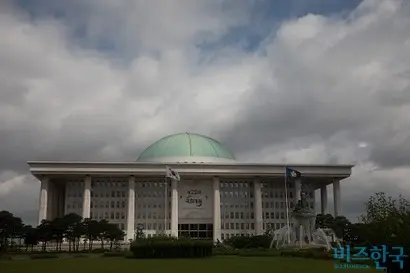
However, even if the National Assembly amends the Agricultural Cooperative Act, it is difficult to relocate the headquarters without the cooperation of NongHyup. The proposed amendment states that the headquarters must be placed in a "location determined by the articles of association," not a specific region. Therefore, it would not be a problem if the NongHyup headquarters remained in Seoul even after the amendment.
Unlike KDB, which is a public enterprise, NongHyup is strictly a private entity. While the KDB chairman is appointed by the government, the NongHyup chairman is elected by the members within the organization. On the surface, it is a structure where neither the government nor the National Assembly can intervene in the management of NongHyup. From the perspective of NongHyup, there is little need to relocate the headquarters without any compensation.
Internal resistance within NongHyup must also be overcome. Many NongHyup employees are reportedly against the relocation. The Federation of Korean Financial Industry Trade Unions (FKFIU) opposed the move, stating, "It is difficult to expect additional balanced development effects simply by moving the headquarters to a specific region," and added, "Rather, the relocation cost amounting to trillions of won will lead to a decline in agricultural competitiveness and make the lives of farmers even more difficult."
The NH NongHyup branch of the financial union argued, "The attempt to force a change in the headquarters location, causing trillions of won in relocation costs and encroaching on the freedom of residence for tens of thousands of employees and their families, is unconstitutional and illegal," adding, "Since the damage that the relocation of the NongHyup headquarters to the provinces will bring is clear, the management must do everything in its power to stop the legislation."
There are even suspicions of "legislative trading." The Federation of Korean Trade Unions (FKTU) pointed out, "The purpose of relocating the NongHyup headquarters is not based on agricultural development or practical feasibility, but rather on the political interests of lawmakers eyeing votes in their respective constituencies," and added, "In particular, suspicions have been raised that there is a political trade involved in the promotion of this bill, such as guaranteeing consecutive terms for the NongHyup chairman."
Coincidentally, discussions regarding the consecutive terms for the chairman have recently taken place within NongHyup. Under the current Agricultural Cooperative Act, it is impossible for the NongHyup chairman to serve consecutive terms. An amendment to the Act is required to allow it. At the 13th regular board meeting of NongHyup held in October last year, a plan to propose an amendment to the Agricultural Cooperative Act was reported. The plan included allowing consecutive terms for the NongHyup chairman and implementing an acting-duty system when the incumbent chairman runs for re-election.
In response, Rep. Yoon Joon-byeong of the Democratic Party pointed out last October, "As Kang Ho-dong, the NongHyup chairman, was also a participant in the board meeting and the relevant documents were distributed in advance, he must have been aware that the proposal included amendments to the Agricultural Cooperative Act to allow for a 'self-serving' consecutive term."
The parties involved strongly deny these suspicions of legislative trading. An official from Rep. Moon Keum-ju's office explained, "If you look at the bills proposed in the 21st National Assembly, bills related to the relocation of the NongHyup headquarters and consecutive terms for the chairman were proposed at the same time," and added, "We did not propose any bill related to consecutive terms for the NongHyup chairman, and there has been absolutely no discussion with NongHyup regarding legislative trading."
Even if there was no legislative trade, the view toward the National Assembly is not positive. A business sector official criticized, "How can they just propose a bill recklessly without any discussion or countermeasures?" adding, "It can only be seen as an attempt to build a track record by attracting the NongHyup headquarters to their own constituency."
Even if they overcome the opposition, there is no guarantee that the bill will actually be passed. If discussions on the relocation become concrete in the future, the possibility that lawmakers whose constituencies are in Seoul will oppose the move cannot be ruled out. In the case of KDB, most lawmakers with districts in Seoul oppose the relocation of the headquarters. NongHyup has not released an official position on this matter.