

[비즈한국] The exodus of foreign investors from the domestic stock market continues. Foreign ownership of total market capitalization has failed to recover to the 30% level since August 2024, and the value of foreign-held assets dropped from 738 trillion won at the end of 2023 to 666 trillion won by January 2025. Sensing a crisis, the government pushed for a "Value-Up Program" to resolve the "Korea Discount" and introduced the "Korea Value-Up Index," composed of 105 undervalued blue-chip stocks. We select one company from this index each week to analyze its management status and corporate value enhancement plans, determining whether it is a stock with the potential to prevent the "fall of the Korean market."
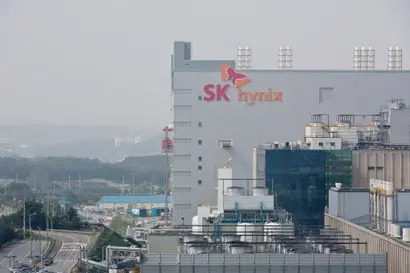
SK Hynix, which has maintained its position as the second-largest component of the Korea Value-Up Index, is, along with Samsung Electronics005930, one of the two pillars of the semiconductor sector and a market leader with a market capitalization exceeding 100 trillion won. As of February 17, SK Hynix's stock price was 212,000 won, with a market capitalization of approximately 156 trillion won.
Market indicators are favorable. As of February 17, SK Hynix shareholder returns were 41.2% compared to a year ago, 12.5% compared to six months ago, and 7.7% compared to a month ago. Although the stock price surged to the 240,000 won range in July 2024 before plummeting to the 140,000 won range during trading in September of that year, it has now recovered to the 200,000 won range.
SK Hynix is the SK Group's semiconductor specialist. Its primary products are memory semiconductors, specifically DRAM (volatile memory) and NAND flash (non-volatile memory), while it also engages in the production of system semiconductors like CIS (CMOS Image Sensors) and foundry business. As of the first half of 2024, its global market share was 34% for DRAM and 23% for NAND flash.
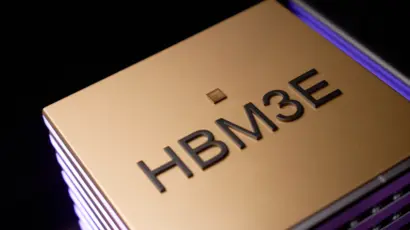
SK Hynix is gaining attention in the semiconductor market for its High Bandwidth Memory (HBM). HBM, which vertically connects multiple DRAM chips, offers faster data processing speeds than conventional DRAM and is used in artificial intelligence (AI) deep learning. SK Hynix was the first to launch 1st-generation HBM in 2013 and is the first company to mass-produce the 5th-generation HBM (HBM3E), a high-performance AI memory. SK Hynix is focusing on capturing the premium, high-value-added HBM market. Currently, HBM accounts for over 40% of the company's DRAM revenue.
SK Hynix recorded its best-ever performance in 2024, with revenue of 66.193 trillion won, operating profit of 23.4673 trillion won, and net profit of 19.7969 trillion won. Despite the semiconductor market downturn, it achieved strong results driven by the popularity of HBM and enterprise SSDs.
SK Hynix quickly joined the Value-Up Program at the group level. This began when the holding company and various subsidiaries announced their corporate value enhancement (Value-Up) plans between October and November 2024. SK Hynix disclosed its Value-Up plan on November 27, 2024. The plan is broadly divided into △Company Overview △Current Status Diagnosis △Goal Setting △Plan Establishment. Based on the disclosure, we examined SK Hynix's current status and Value-Up measures.
SK Hynix projected that the AI memory market size would surge within 3 to 4 years. While AI memory accounted for 5% of the market in 2023, it is expected to reach 61% by 2028 as demand expands across various fields, including servers, PCs, smartphones, and robots. As a leader in the HBM market, SK Hynix expressed confidence in its corporate value growth based on this trend.
The company noted, "Over the past 10 years, the Price-to-Book Ratio (PBR) has been between 0.9 and 1.9 times, but in 2024, it exceeded the previous range to surpass 2 times." Indeed, SK Hynix's PBR has been on an upward trend, rising from 1.82 at the end of 2023 and 1.84 in September 2024 to 2.73 (KRX) as of February 17.
To increase corporate value, SK Hynix set a goal of "strengthening financial stability." Since the memory semiconductor industry is cyclical, the plan is to enhance competitiveness through timely investments, offer high-profit premium products, and increase profits by meeting customer needs. The company stated, "By securing financial stability, we can continue future investments regardless of short-term profit fluctuations, thereby establishing a virtuous cycle."
Specifically, it proposed plans to strengthen financial stability through: △Executing a balanced Capital Expenditure (CapEx) Discipline to secure cash flow △Preempting demand for next-generation products by preparing future technologies in DRAM, HBM, and NAND △Improving asset efficiency through debt reduction, increased investment, and the sale of non-core assets.
SK Hynix also announced a new shareholder return policy to be applied for three years, from 2025 to 2027. It plans to increase the fixed dividend from 1,200 won to 1,500 won and, if financial stability goals are met, return an additional amount within the range of 50% of the 3-year cumulative Free Cash Flow (FCF). With the increase in fixed dividends, the previous policy of paying out 5% of annual FCF has been changed to prioritize strengthening financial stability.
In summary, while not radical, the plan is positive in the long term. The securities industry viewed SK Hynix's Value-Up plan as a necessary, albeit slightly disappointing, move. Ryu Young-ho, an analyst at NH Investment & Securities, noted, "I consider this shareholder return policy a foundational step for creating a stable business environment," adding, "It is expected to improve the financial structure, which has been a weakness." Kim Rok-ho, an analyst at Hana Securities, analyzed, "There might be a disappointed reaction to the Value-Up plan. However, one must pay attention to the stabilization of shareholder returns despite the volatile industry conditions," adding, "Strengthening financial stability will lead to stronger shareholder returns in the mid-to-long term."
The problem is the earnings. With SK Hynix's first-quarter performance expected to decline, there is a possibility that the stock price could also plummet. In its fourth-quarter 2024 earnings call, SK Hynix stated, "We expect first-quarter shipments to decrease by 10% for DRAM and by the high 10% range for NAND." This is due to the off-season for the semiconductor industry and a drop in prices and shipment volumes for legacy semiconductors caused by a supply glut from China.