

[비즈한국] Since its establishment in 1956, the Korea Exchange (KRX) has been the nation’s sole securities trading market for nearly 70 years, but its monopoly is about to end. Investor interest is rising as the alternative trading system (ATS), NexTrade (NXT), is scheduled to launch on the 4th of next month. This means there will be an additional exchange alongside the Korea Exchange where stocks can be traded. As a result, trading hours are expected to increase, and competition between exchanges is anticipated to improve costs and services while boosting trading volume.
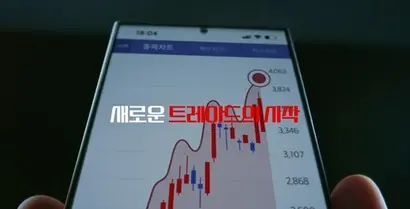
The most significant change brought by the launch of the ATS is the trading hours. Until now, the Korea Exchange has opened at 9:00 AM and closed at 3:30 PM. However, with the ATS, stock trading is expected to become possible before work and after hours. With the operation of a pre-market (8:00 AM – 8:50 AM) and an after-market (3:30 PM – 8:00 PM) before and after regular trading hours, total daily trading time will extend to 12 hours.
However, to prevent confusion in calculating opening and closing prices and to deter market manipulation, ATS trading will be temporarily suspended during the 10-minute simultaneous quote sessions held before 9:00 AM and from 3:20 PM. Furthermore, stocks traded on the ATS will be excluded from the Korea Exchange's after-hours single-price market, which operates from 4:30 PM to 6:00 PM.
In the early stages of the launch, trading will be limited to top market-cap stocks and select high-trading-value stocks through 28 brokerage firms (15 firms participating in the entire market, and 13 participating only in pre/after-markets). KOSPI stocks include Lotte Shopping023530, Cheil Worldwide030000, Kolon Industries120110, LG Uplus032640, and S-Oil010950. KOSDAQ stocks include Golfzon, Dongkook Pharmaceutical, SFA, YG Entertainment, and Com2uS.
New types of quotes are also being introduced. Currently, there are four types of limit orders: market price, best bid/offer, most favorable price, and conditional. Added to these will be a "mid-point quote," which automatically adjusts to the median price of the best bid and ask, and a "stop-limit order," which places a limit order once a specific price is reached.
Notably, NexTrade's fees (0.00134%–0.00182%) are lower than those of the Korea Exchange (0.0023%). For example, on a 1 million won trade, the Korea Exchange fee would be 23 won, while the fee on NexTrade would be approximately 13.18 won. Consequently, cost efficiency and convenience are expected for investors sensitive to fees and time.
Brokerage firms participating in multiple markets will implement a Smart Order Routing (SOR) system to automate the best execution of investor orders. This system allows the brokerage to select the more favorable exchange to execute the trade, supporting the best possible execution based on investor-specified conditions such as execution probability or trading volume. However, as the timing of system implementation varies by brokerage, investors are advised to check beforehand.
As before, investors can use their specific brokerage's Home Trading System (HTS) or Mobile Trading System (MTS) to trade stocks. They simply need to select their preferred exchange—either the Korea Exchange or the ATS—within the quote window when placing an order.
The ATS does not perform market surveillance or clearing and settlement functions; it only handles trade execution. Additionally, tradable securities are limited to exchange-listed stocks and Depositary Receipts (DRs). Accordingly, experts point out that for the ATS to gain long-term traction with investors, it will need to differentiate itself by expanding the scope of tradable financial products.
In Japan, the Proprietary Trading System (PTS)—an ATS equivalent—was introduced in 1998, but the long-standing habit of exchange-centric order execution delayed the settlement of the ATS and market development.
Kang So-hyun, a senior research fellow at the Korea Capital Market Institute, stated, "Large brokerage firms with institutional demand are likely to build systems through additional investment and consider multiple trading markets. However, some firms may have an incentive to continue executing orders on a single exchange as they have done for decades."
Kang also emphasized, "Small and medium-sized brokerage firms will feel the burden of system investment and facility construction to fulfill the duty of best execution across multiple markets. To expand investor choice and ensure the stable settlement of multiple trading markets, an environment must be created where financial investment firms are encouraged to consider diverse trading markets rather than avoiding the use of ATS."