

[비즈한국] Germany will hold early general elections on February 23. This comes just three years after the previous general election in 2021. Following the 2021 election, the Social Democratic Party (SPD) led by Chancellor Olaf Scholz formed a coalition government with the Free Democratic Party (FDP) and the Green Party. However, late last year, Chancellor Scholz dismissed Finance Minister Christian Lindner of the FDP due to conflicts over economic policy and called for a vote of confidence. When the vote resulted in a loss of confidence in Scholz, German President Frank-Walter Steinmeier confirmed the dissolution of parliament and set the date for early elections. In these times, when talk of an economic crisis in Germany is heard every day, confusion is mounting as the approval ratings for far-right parties rise, adding insult to injury.
The German far-right party, AfD (Alternative for Germany), has recently gained about 20% support in opinion polls, becoming Germany's second-largest party after the Christian Democratic Union (CDU). This is the highest figure since the AfD entered parliament with 12.6% of the vote in the 2017 federal election. In March 2021, the German Federal Office for the Protection of the Constitution (BfV) designated the AfD as a suspected extremist group and placed it under surveillance.
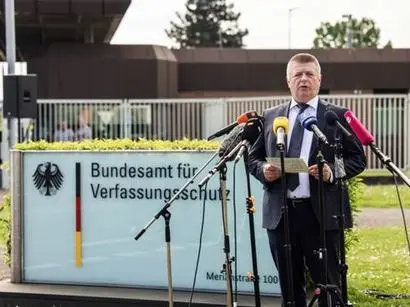
For these reasons, most mainstream German parties have refused official cooperation with the AfD and have clearly drawn a line against far-right forces. However, recently, Friedrich Merz, leader of the Christian Democratic Union, caused a stir by making remarks suggesting potential cooperation with the AfD to strengthen immigration policy.
Just as anxieties were heightening due to the rising approval ratings of far-right parties, Elon Musk appeared as an "unwelcome guest," turning all of Germany upside down. Musk appeared via video link at an AfD campaign event to deliver a speech of support and even contributed an article to German media claiming that "the AfD is Germany's last hope." The German technology industry and investors have begun to express grave concerns about this situation. Even VCs, who generally keep their political views to themselves, are now actively voicing their opinions.
Why are far-right party approval ratings rising?
Why are far-right party approval ratings rising in Germany, a country that has reflected on its historical mistakes and made multifaceted efforts to ensure such events do not repeat? The German economy has recently struggled with low GDP growth, inflation, and an energy crisis. As economic instability has deepened, the German public has become increasingly dissatisfied with the government and has tended to support parties that offer extreme solutions. In particular, a series of major incidents and accidents involving immigrants has strengthened the rhetoric of the AfD, which advocates for hardline anti-immigration policies.
Germany is one of the countries in Europe that has accepted the most refugees, and the inflow of refugees and immigrants has continued to rise since 2015. The logic that "social unrest is caused by immigrants" has quietly taken hold, and the backlash has led to the rise in AfD's approval ratings.
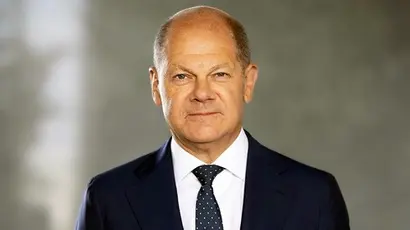
Responsibility is also being placed on Chancellor Olaf Scholz, who has failed to show clear leadership since the 16-year tenure of former Chancellor Angela Merkel. In particular, his inability to provide clear solutions for economic and energy policies and his constant conflict with other parties in the coalition have had a major impact on voters losing faith in existing political forces and moving toward the AfD.
The time for maintaining an apolitical stance is over
This political instability is also having a major impact on the startup and venture investment industry. German VCs are concerned that not only the AfD's anti-constitutional actions but also its anti-EU and anti-globalist stance will have a highly negative impact on the German startup ecosystem. In particular, it could hinder cooperation with overseas investors and have a direct impact on attracting the talented foreign professionals essential to building a startup ecosystem. The industry is taking this seriously. A consensus has formed that they can no longer maintain political apathy and must actively voice their concerns.
In particular, the German VC industry shares a sense of crisis that "without policies to support the technology industry, Germany's future competitiveness will weaken." In the current situation where Germany and Europe's technological sovereignty is being crushed in the US-China hegemony war, this serves as a serious alarm.
The VC firm PT1 recently invited several politicians to an event aimed at bridging the gap between startups and policy. PT1 is a Berlin and London-based VC that focuses on real estate, infrastructure, and energy. The event was attended by Thomas Jarzombek of the CDU, Dr. Franziska Brantner of the Green Party, and former Finance Minister Christian Lindner.
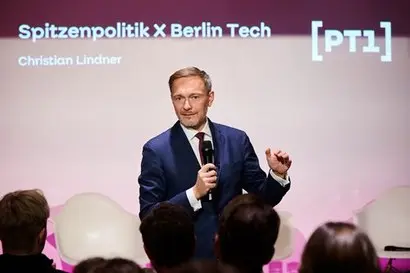
The event featured heated discussions on how to secure the "3Ts" for the future—Tolerance, Technology, and Talent—what economic conditions Germany offers in the international community, whether the differences between the Green Party and the FDP are truly insurmountable, and what political measures are needed to stop the expansion of the AfD.
Nikolas Samios, managing partner at PT1, emphasized that day that "we can no longer maintain an apolitical stance" and that the startup industry must actively engage in policy proposals. He argued, "We must clearly convey to politicians that the technology industry is the core of Germany's economic growth, and if the government does not support it properly, Germany will be left behind in global competition."
Verena Pausder, chairwoman of the German Startup Association, also actively engaged with the political sector to urge the strengthening of startup support policies. She emphasized with a strong voice that "Germany is suffering from structural problems such as bureaucracy, a lack of growth capital, and a talent shortage, so reform is essential," adding, "We must make the government recognize startups not just as small companies, but as the 'core of future industries.'"
Economic instability and political changes have a significant impact on the startup market. Because regulations, state subsidies, and many other factors have a direct impact, it is not easy for startups to be disconnected from politics. Therefore, it is a very natural trend for the industry to raise its political voice and demand policies from the government. German VCs feel a sense of crisis that the US and China are moving ahead in AI and the tech industry while Europe is lagging behind. In the midst of this competition, the government and the private sector must work together to find a strategy to secure global competitiveness.
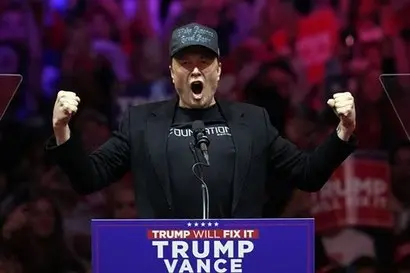
The startup industry, which talks about innovation, seems far removed from a far-right party that evokes regression to the past, isolationism, and fascism. Innovation leaders are particularly confused now that Elon Musk, once an idol of innovators, is supporting a far-right party. Let's ask the question: What reason could he have for doing so?
If Musk's influence on European politics grows, he will gain business advantages. It is possible that the tightening of European regulations has an impact on his social media platform X, and he is therefore aligning with political forces that seek deregulation. Perhaps there are political and economic benefits to be gained by "grinding down" Silicon Valley developers, telling them that they must work 120 hours a week to live a successful life like his. There must be a reason for erasing history and, just like recoding a program, repeatedly calling for "anti-immigration, anti-EU, and strengthened military power" while aligning with the German far-right party.
Whatever the reason, it is in a direction very far from innovation. It is time for the startup industry to get its act together and start asking questions.
The author, Lee Eun-seo, majored in law in South Korea and studied theater in Berlin. Based in Berlin, a city of art and a European startup hub, she leads 123factory, bridging the startup ecosystems of Korea and Germany while growing alongside the city.