

[비즈한국] On February 12, the Seoul Metropolitan Government announced it would begin the full-scale lifting of Land Transaction Permit Zones (hereinafter referred to as "Permit Zones"). This measure is intended to abolish regulations that restrict citizens' exercise of property rights and to inject vitality into the real estate market. In particular, the city plans to immediately lift restrictions on 291 apartment complexes, excluding the International Exchange Complex (Jamsil, Samseong, Daechi, and Cheongdam-dong), as well as 6 sites under the Rapid Integrated Planning initiative. It also aims to sequentially remove 59 areas from regulation by 2027. However, 14 apartment complexes pursuing reconstruction, major redevelopment sites, and areas prone to speculative overheating will continue to be subject to the Permit Zone rules.
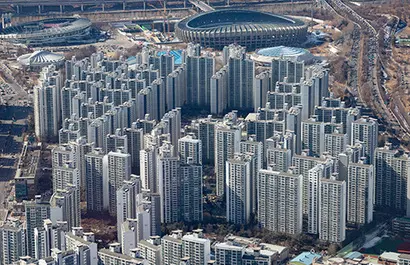
Can this "partial lifting" policy effectively protect citizens' property rights while stabilizing the real estate market? Instead, issues concerning constitutional property rights infringement and potential market distortions remain in the areas where regulations are maintained. Furthermore, as Seoul itself has acknowledged, research indicates that the Permit Zone system has only short-term effects and that its utility diminishes over the long term. Let us analyze the background of this policy, forecast its impact on the real estate market following the lifting of restrictions, and examine the problems associated with the remaining regulations.
The Land Transaction Permit system is a regulatory mechanism introduced in the late 1970s to curb real estate speculation. It forced individuals to obtain prior approval for large-scale land or housing transactions in areas slated for development or those prone to speculation, aiming to block speculative demand and stabilize prices. It was applied more broadly from the mid-2000s, as the reconstruction and redevelopment boom led to concentrated speculation in specific areas such as Gangnam and Songpa in Seoul.
In regions subject to the Permit Zone rules, owners are mandated to reside in the property for two years, and investment activities premised on leasing or jeonse (lump-sum deposit rental)—known as "gap investment"—are prohibited. This goes beyond controlling transactions; it inherently restricts the exercise of ownership rights. For example, in the case of apartments slated for redevelopment, land transactions become practically impossible until a union is established, effectively blocking residents from exercising their property rights.
Initially, the Permit Zone system contributed to suppressing speculative demand and stabilizing prices to a certain extent. The cooling of the price surge in the Gangnam area in the early 2010s was largely due to the system. However, as time passed, two problems emerged. First, the broad scope of the regulation stifled transactions even in fully developed areas, reducing market liquidity. Second, if redevelopment projects were delayed, the duration of the Permit Zone status was extended, leading to heightened resident frustration. The Seoul Metropolitan Government also acknowledged the results of a 2024 study, which stated that "while there are short-term effects, the efficacy diminishes in the long term."
The Seoul Metropolitan Government put forward three major principles for this lifting measure.
First, the exclusion of 14 reconstruction apartment complexes in the International Exchange Complex. These complexes have passed safety evaluations and are near reconstruction; the city judged that maintaining regulations is necessary due to the high possibility of speculative demand. Second, the immediate lifting of 6 sites under Rapid Integrated Planning. These projects have already received union establishment approval, providing a legal foundation for removal. Third, the sequential lifting of 59 areas by 2027, with the timing of phased relaxation based on the date of union establishment approval.
On the other hand, major redevelopment sites like those in Apgujeong, Yeouido, Mok-dong, and Seongsu-dong, along with 34 public redevelopment sites and 14 Rapid Integrated Planning sites in speculative overheating zones, will remain regulated until the possibility of speculation decreases after the approval of management and disposal plans.
This lifting comes in response to strong requests from civil society. At the "Great Debate on Livelihood Revival through Deregulation" hosted by Mayor Oh Se-hoon in January, citizens urged the government to "abolish the Permit Zone system that infringes on property rights." In fact, in areas designated as Permit Zones, complaints have been frequent due to restrictions on relocating and difficulties in disposing of assets. Accepting these voices, the Seoul Metropolitan Government stated its position that it would "protect citizens' property rights by shifting from broad regulations to selective ones."
On the other hand, a sense of policy compromise due to concerns over real estate market uncertainty is apparent. The Seoul Metropolitan Government remains vigilant, stating that "if speculative demand arises, it will be immediately re-designated." This shows they are walking a tightrope between market stabilization and property rights protection to pre-emptively block overheating in sensitive areas.
The lifting of restrictions is expected to lead to an increase in transaction volume in the affected areas in the short term. In particular, the 6 Rapid Integrated Planning sites and apartments around the International Exchange Complex may face price upward pressure as buying demand concentrates there. However, this is far from the "market vitality" that the Seoul Metropolitan Government desires. Instead, if investors concentrate capital in the newly unrestricted areas, there is a concern that the gap with remaining regulated areas (e.g., the three Gangnam districts) will widen further.
Moreover, price increases resulting from the removal of Permit Zones could lead to higher rents, increasing the housing burden on low-income groups. One must ask whether the "protection of property rights" emphasized by the Seoul Metropolitan Government is only representing the interests of certain asset-owning classes.
Article 23 of the Constitution states that "the right of property of all citizens shall be guaranteed." However, in areas where the Permit Zone system is maintained, owners continue to be in a situation where they cannot freely dispose of their land. This is potentially unconstitutional in that it could infringe upon the essential essence of exercising property rights. In 2022, the Constitutional Court hinted at the "possibility of an unconstitutional ruling if the Land Transaction Permit system exceeds the limits of property rights restriction."
The Seoul Metropolitan Government argues for the legitimacy of its regulations based on "preventing speculation," but the criteria for determining whether something is speculation remain ambiguous. For instance, targeting the 14 reconstruction apartments for continued regulation relies on the abstract justification of "potential for speculation." This can lead to arbitrary policy application and undermine legal stability.
Seoul emphasizes that by lifting Permit Zones, it will "increase predictability in the real estate market." However, limiting the lifting of Rapid Integrated Planning sites to the point of union establishment approval actually creates discrimination based on project progress speed. Areas where union establishment is delayed remain trapped in regulation, potentially cementing inequality.
Furthermore, as admitted by the city, the Permit Zone system has minimal long-term effect. The real estate market develops means to circumvent regulations, only creating more complex problems. Ultimately, the Permit Zone system remains a "stopgap regulation" and fails to serve as a fundamental solution.
While the Seoul Metropolitan Government's move contains the positive goal of protecting citizens' property rights, the remaining regulations and policy contradictions remain as tasks to be solved. To catch the two rabbits of "deregulation" and "market stabilization," continuous monitoring and flexible policy shifts are necessary. It is a time that requires a balanced policy that restores market trust and guarantees the rights of residents, rather than simple deregulation.
Kim Hak-ryeol, head of the Smart Tube Real Estate Research Institute and famous by his pen name "Pasion," previously served as the head of the Real Estate Research Division at Gallup Korea. He operates and hosts the Naver blog "Pasion’s World Exploration" and the YouTube channel "Stew TV." His authored books include "Power of Gyeonggi Real Estate (2024)," "Absolute Principles of Seoul Real Estate (2023)," "Future of Incheon Real Estate (2022)," "Kim Hak-ryeol’s Absolute Principles of Real Estate Investment (2022)," "South Korea Real Estate Future Map (2021)," "From Now On, Only Places That Will Rise, Rise (2020)," and "South Korea Real Estate User Manual (2020)."