

[비즈한국] The safe household medicine system, which allows for the purchase of light painkillers or cold medicine at convenience stores, is currently in effect. While the government is pushing to increase the number of items sold, the pharmacy industry opposes this due to safety concerns. Arguing that current management of these sales is inadequate, the pharmacy industry has proposed 'public late-night pharmacies,' which were implemented starting this year, as a countermeasure.
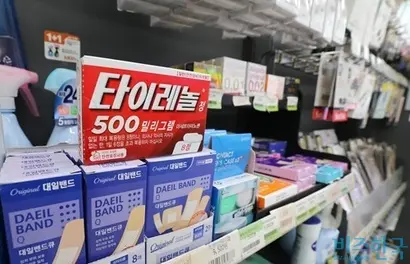
Effectively Only 11 Items on Sale… Advisory Committee Remains Dormant
Last year, during the National Assembly audit of the Health and Welfare Committee, questions regarding the expansion of safe household medicine items continued. Kim Ye-ji, a lawmaker for the People Power Party, pointed out, "Although the Pharmaceutical Affairs Act allows for the designation of up to 20 items as safe household medicines, the number has remained at 13 for over a decade," adding, "There are demands to include antidiarrheals and antacids." At the time, the Ministry of Health and Welfare stated, "We are reviewing the necessity of expansion," but added, "We planned to operate an advisory committee in September 2023, but the review has been on hold due to the prolonged medical standoff." Currently, among the 13 items, children's Tylenol 80mg and Tylenol Tab 160mg have ceased domestic production due to the manufacturer relocating factories overseas, meaning only 11 items are effectively available as safe household medicines.
The system for selling safe household medicines outside of pharmacies was introduced in November 2012 to resolve inconvenience in purchasing medicine on public holidays and late-night hours when pharmacies are closed. The revised Pharmaceutical Affairs Act stipulates that up to 20 items can be designated based on ingredients, side effects, dosage, formulation, awareness, and ease of purchase, and that their validity must be reviewed and addressed every three years. In 2017 and 2018, plans to include Gelfos (antacid) and Smecta (antidiarrheal) were discussed, but no conclusion was reached due to strong opposition, including a self-harm incident by a member of the pharmacy association, and the Safe Household Medicine Designation Deliberation Committee temporarily suspended operations. Since then, an advisory committee was formed in October 2023, but no activities have taken place.
Pharmacy Industry: “Safety and Poor Sales Management are Issues… We Should Expand Public Late-Night Pharmacies”
The market for safe household medicines is steadily growing. According to the 'Finished Drug Distribution Statistics' from the Health Insurance Review and Assessment Service, the supply amount of safe household medicines was 43.514 billion won in 2019, 45.667 billion won in 2020, 44.346 billion won in 2021, 53.753 billion won in 2022, and 58.194 billion won in 2023. Compared to 15.439 billion won in 2013, it has increased about threefold over the last 10 years. In particular, demand for Tylenol surged during the COVID-19 pandemic, leading to calls for an increase in the number of items compared to other countries. According to a report on 'Improvement of the Safe Household Medicine System' published by the Korea Institute of Public Administration last year, the number of medicines available for purchase without a pharmacist's guidance is 120 in the UK, 600 in Japan, and 300,000 in the US.
The pharmacy industry opposes expanding the list of safe household medicines, citing reasons such as 'safety.' An official from the Korean Pharmaceutical Association pointed out, "Increasing the number of items does not make the system itself perfect. All medicines carry the risk of side effects. While strengthening accessibility is necessary, safety is a factor that should not be overlooked first. We need to consider whether the system truly has room for improvement." The official further explained, "We should not solve this problem by handing it over as fodder for distribution capital. We must examine whether the increase in sales of antipyretics is due to an increase in the number of patients, or if it has led to people taking unnecessary medicine."
The pharmacy industry also cites the failure of retailers to properly follow sales guidelines as a basis for their opposition. According to the civic group 'Future Consumer Action,' out of 1,036 retailers surveyed last year, 94.3% (977 stores) violated sales guidelines at least once. The most common violation (58.5%, 612 stores) was selling two or more units of the same item at once. To prevent safety issues such as overdosage, safe household medicines are limited to sales of one package unit at a time; however, stores were circumventing this by processing multiple separate transactions. Furthermore, while trained sellers are required to handle drug sales, some items were available for purchase in unmanned stores. The Seoul Pharmaceutical Association stated, "Given the poor state of sales and management, the safe household medicine sales system should be abolished."
The pharmacy industry is pinning its hopes on the public late-night pharmacies that have been expanded starting this year. Operating from the evening until 1:00 AM the following day, public late-night pharmacies had previously been operated separately by the government and local municipalities as pilot programs, but they are now integrated under government leadership. According to the Korean Pharmaceutical Association, public late-night pharmacies have been implemented in 129 cities, counties, and districts since January this year. An official from the Korean Pharmaceutical Association said, "Wouldn't it be more helpful for the public to expand public late-night pharmacies to safely purchase the necessary medicines, rather than simply increasing the number of safe household medicines?" Kwon Young-hee, the president-elect of the Korean Pharmaceutical Association, has promised in her platform to implement safety assessments for the safe household medicine system and to establish penalty clauses for retailers.