

[비즈한국] It has been reported that the 'Long-range Air-to-Surface Missile' (KALCM, Cheonryong), a key piece of equipment for the Korean fighter jet KF-21, is currently undergoing flight tests in Sacheon after being mounted on the FA-50. This is expected to bring a new turn to the ongoing debates surrounding the selection and operation of missiles for the KF-21 and FA-50.
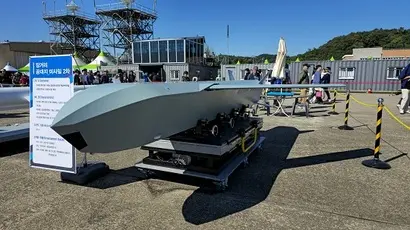
The Cheonryong missile, which has been under development since 2018, is an air-to-surface weapon capable of conducting precision strikes on key targets such as enemy underground command posts located over 500km away. Equipped with stealth features to evade enemy surface-to-air missiles, it also utilizes a high-precision navigation system and a terminal guidance system to hit targets with an accuracy of within a few meters. Furthermore, it features a special warhead with enhanced penetration capabilities, allowing it to strike underground facilities protected by reinforced concrete.
As long-range air-to-surface missiles provide the capability to strike key targets during wartime, they are classified as strategic assets. Consequently, they are difficult to export, and it is equally challenging to import such missiles for use on the KF-21. Therefore, the Cheonryong missile, currently being developed under the leadership of the Agency for Defense Development (ADD) with the participation of companies like LIG Nex1079550 and Hanwha Aerospace012450, has garnered attention as both a next-generation strategic weapon for the ROK Air Force and a core card for the KF-21’s export competitiveness. High-priced fighter jets that have successfully reached the export market have invariably been equipped with high-performance air-to-surface missiles.
Due to its strategic importance, domestic and international military experts have been closely watching the development and practical implementation of the Cheonryong missile, but there has been little news in recent years. This was due to issues regarding the platform required for development testing.
Initially, the Cheonryong missile was intended to be mounted on the KF-21, but because the KF-21 was still a prototype undergoing flight tests, mounting the missile on it before 2026 was impossible. Consequently, the ADD and LIG Nex1 successfully conducted three separation tests in 2021 by mounting a flight test model of the Cheonryong on an F-4 fighter jet.
The problem is that the F-4 fighter was retired in June 2024. With the retirement of the F-4, the Cheonryong missile faced a potential gap of over two years where flight testing would be impossible until 2026. Fortunately, it is understood that the FA-50 has been designated to take over the flight testing of the Cheonryong missile and has already been put into operation.
According to overseas defense sources, flight tests with the Cheonryong missile mounted on the FA-50 have already been conducted on several occasions, including on December 18, 2024. A source from a country with a high potential for importing the FA-50 told BizHankook, "I have always been interested in the scalability and future armament capabilities of the FA-50, so I was intrigued to see the FA-50 equipped with this new weapon."
Domestic defense industry officials responded that details regarding the FA-50 carrying out Cheonryong flight demonstrations are restricted due to security concerns; however, the Air Force and the Defense Acquisition Program Administration have previously stated that they would use the FA-50 for testing until the KF-21 Block 1 development is completed in 2026.
However, as Cheonryong missile tests proceed on the FA-50, there will likely be discussions regarding the current air-to-surface missile project approach, where multiple missiles are being proposed. This is due to the partial overlap between the 'long-range air-to-surface missile' and 'medium-range air-to-surface missile' projects, as well as opinions suggesting the adoption of German-made Taurus missiles.
Additionally, Taurus Systems GmbH and LIG Nex1 signed an MOU at the 2023 Seoul ADEX to develop a downscaled version of the Taurus missile, known as 'Taurus K2'.
A viable alternative worth considering is to mount the Cheonryong on the FA-50 through minor modifications—such as reducing fuel volume or warhead weight—without changing the basic design, thereby eliminating the need to develop a new missile. Supersonic air-to-surface/anti-ship missiles are already scheduled to be mounted on both the KF-21 and the FA-50 after undergoing flight tests on the FA-50.