

[비즈한국] The Seoul Metropolitan Government has decided to abolish the policy requiring prime contractors to directly perform 50% of public works projects commissioned by the city and its affiliated agencies. The "50% mandatory direct construction" policy was introduced three years ago to improve construction safety and quality following the Gwangju Hwajeong I-Park apartment collapse, but it is reported that there has been strong backlash from construction sites, which claim they are not yet prepared for such a transition. Views are divided on the abolition of this regulation: some expect it to revitalize the frozen public works market, while others worry it will threaten construction safety and quality.
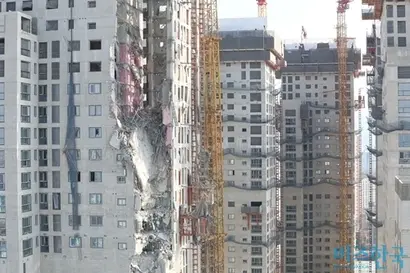
On the 9th, the Seoul Metropolitan Government announced its plan to deregulate the public construction sector, stating that the "50% mandatory direct construction" requirement would be repealed. Direct construction refers to a scenario where a construction company that has been awarded a contract directly provides the labor, materials, and equipment to perform the work. Until now, Seoul had been expanding mandatory direct construction requirements to curb the conventional subcontracting practices of prime contractors who lack the capacity for direct execution.
The 50% mandatory direct construction policy was introduced just three years ago. In July 2022, the Seoul Metropolitan Government implemented a "Plan to Improve Subcontracting Practices through Expansion of Direct Construction," which mandated that prime contractors directly perform at least 50% of the contract value for major processes such as civil engineering and structural work, aiming to boost safety and quality. The 50% requirement, initially limited to projects under 10 billion won, was expanded to all projects in January of the following year.
These regulations stemmed from the 2022 Gwangju Hwajeong I-Park collapse. As large-scale construction accidents continued despite the enforcement of the Serious Accidents Punishment Act, the Seoul Metropolitan Government identified deeply rooted subcontracting practices as the culprit behind safety issues. During a site visit to the Sillim-Bongcheon Tunnel project in March 2022, Seoul Mayor Oh Se-hoon stated, "Most safety issues at construction sites arise from subcontracting," adding, "We must increase the proportion of direct management." The city subsequently introduced the 50% rule in response to the market's needs.
The Seoul Metropolitan Government's 50% mandatory direct construction policy was a stricter regulation than current national law. Under the Framework Act on the Construction Industry, contractors awarded projects worth 10 billion won or less must perform a certain percentage of the work themselves (ranging from 10% to 50% based on labor costs), as defined by the Enforcement Decree. The structure requires a higher direct construction ratio for smaller projects: 50% for contracts under 300 million won, 30% for 300 million to 1 billion won, 20% for 1 billion to 3 billion won, and 10% for 3 billion to 7 billion won.
The repeal appears to be a response to complaints from the construction industry. A construction industry official noted, "Since the introduction of specialized construction businesses in 1975 to foster industrial specialization, the industry has been bifurcated into general construction and specialized construction, establishing a system of outsourcing and subcontracting. Although the Framework Act on the Construction Industry’s direct construction system helped establish some direct performance capabilities for projects under 7 billion won, large construction firms were not equipped to handle large-scale projects directly. Even if they wanted to bid for Seoul's projects, the constraints were significant."
Hong Hyun-tak, Seoul's construction innovation officer, told BizHankook, "We introduced the direct construction regulation for safety reasons, but we decided to abolish the policy because we determined that the domestic construction industry currently lacks the conditions to implement it. Instead, we will manage construction safety through alternative methods, such as strengthening inspections of subcontracting practices."
Recent worsening construction market conditions and the surge in construction costs, which led to the failure of bidding for various Social Overhead Capital (SOC) projects, also played a part. An analysis of Korea ON-line E-Procurement System (KONEPS) bid announcements by BizHankook revealed that out of 20 projects worth an estimated 30 billion won or more commissioned by Seoul last year (including re-bidding), only one contract (the construction project for the road improvement in the eastern Tancheon area) resulted in a successful bidder. Numerous public works projects, such as the deep-underground rainwater drainage tunnels in Gwanghwamun, Gangnam Station, and Dorimcheon, as well as the second phase of the Yeongdong-daero underground complex development, have seen repeated failed bids.
However, the move to abolish a policy introduced to improve construction safety and quality is likely to draw criticism. Last year, 21 construction companies received administrative sanctions for poor or sloppy construction (including changes, corrections, or revocations), an increase of 7 (50%) from the previous year. During the same period, there were 207 cases of entities being punished for subcontracting or re-subcontracting to unregistered companies, a 51-case (33%) increase. Subcontracting to unregistered companies is considered a primary cause of shoddy construction in the industry.
Shin Young-chul, director of the Construction Economy Research Institute, pointed out, "Even with the implementation of the Serious Accidents Punishment Act, cases of construction safety accidents and poor construction quality are being reported endlessly. It is disappointing that the Seoul Metropolitan Government, which was the only entity to propose an alternative after witnessing major accidents that threaten citizen safety, has withdrawn it." He added, "Most safety accidents and cases of poor construction stem from rampant subcontracting and poor management of those subcontracts. It is necessary for not only the Seoul Metropolitan Government but also the central government and the National Assembly to step up efforts to increase the percentage of direct construction by prime contractors for processes directly linked to safety, such as civil engineering and structural work."
Nonetheless, the Seoul Metropolitan Government plans to implement a "direct construction evaluation during bidding" starting this year as an alternative. The plan is to grant a perfect score to construction firms bidding on projects worth over 3 billion won subject to qualification screening and comprehensive evaluation if they perform 20% of the construction directly.