

[비즈한국] The British frequently define themselves as "animal lovers." Yet, during World War II, they euthanized hundreds of thousands of dogs and cats. And they did it voluntarily. Why did the British commit such a horrific act? What on earth happened?
"The Great Cat and Dog Massacre" tracks the "animal massacre" that took place in Britain during World War II. Through period records and testimonies, British historian Hilda Kean meticulously traces how the war influenced humans and animals, and what shifts it brought to their relationships.
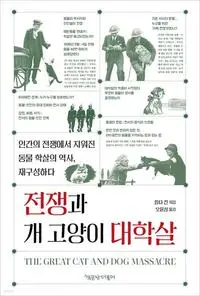
The Great Cat and Dog Massacre
: Reconstructing the History of Animal Slaughter Erased from Human Warfare
Written by Hilda Kean, Translated by Oh Yoon-sung, Published by Chaek-gong-jang Deo-bul-eo
332 pages, 20,000 won
World War II holds significant weight in Britain's national memory and public culture. The outbreak of the war, the Dunkirk evacuation of 340,000 troops, and the role of Winston Churchill are staple themes of documentaries. Underpinning this is the perception that WWII was, by and large, a "good" war. It suggests that the British stood united against Nazi Germany and endured air raids with immense resilience. However, hidden behind this "human war" lies a shameful history of animal slaughter.
Two days after Germany invaded Poland, on September 3, 1939, Britain declared war on Germany. Within just four days of that declaration, at least 400,000 dogs and cats were euthanized; within a week, the figure reached 750,000. This accounted for 26 percent of the dogs and cats living in London at the time.
Long lines of people formed at animal welfare organizations and shelters, waiting to have their pets killed. The number of animals slaughtered was more than three times the number of pets usually euthanized by London's animal organizations in a year. It was such a significant event that it was already being called a "pet holocaust" at the time. Moreover, it was not the "enemy" Germany that killed them, but their own owners.
Was this an abnormal behavior triggered by the fear and panic of the impending war? Such an assumption, however, clashes directly with the existing "myth" that the British overcame World War II with a steady spirit. In fact, it is the consensus among historians that there was absolutely no evidence of a noticeable increase in neurosis or mental illness among the British during the war.
Ironically, during the first week of the war—when the massacres were occurring—and up until March 1940, not a single bomb fell on London or anywhere across Britain. This ultimately serves as a case study showing how easily companion animals could be disposed of during a time defined as a "human" crisis.
Of course, the majority of pet owners cherished their animals. Even when resources were scarce and food was rationed, many shared their own food with their animals.
As author Jean Lucie Pratt recorded: "We were allowed 280 milliliters of milk per adult per day. This was enough for me alone, but to share it with my three cats, I had to water down the milk, and I couldn't even make milk pudding." Consequently, it was Pratt, not the cats, who stopped drinking milk. - Page 158
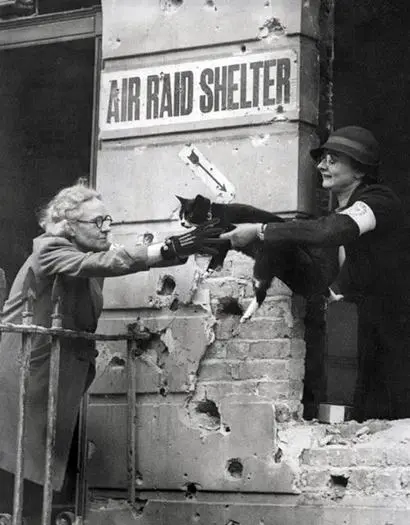
In areas where bombs fell and people evacuated, those who remained fed and cared for the animals left behind. Some elderly residents took in stray cats to feed them, and even the impoverished shared their own food with cats and dogs.
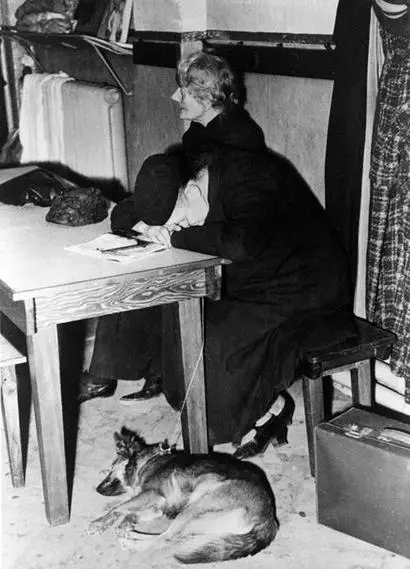
When evacuating to air-raid shelters, people often brought their animals along. One woman, when refused entry to a shelter with her puppy during an air raid, shouted, "If my dog dies, I'll die too!" Eventually, the woman was allowed to enter with her puppy. In fact, many fire chiefs and air-raid wardens at the time turned a blind eye to people bringing animals into shelters.
Dogs and cats, being highly sensitive, would sometimes notice signs of an air raid in advance and lead people to shelters. One Londoner recalled, "The dog would perk up its ears or run somewhere, and if we followed it, we would find a shelter there." Amidst a war between life and death, humans and animals became "comrades-in-arms" and true "companions."
Even government officials discussing food policy declared that "the dog issue must not be touched," refraining from strictly restricting the feeding of human food to pets. This was because they realized that animals maintained human morale during the war, and that the bond between them was growing closer.
The British government's decision also had political motivations. They wanted to propagate the concept that, unlike the Germans, the British were a nation that loved animals. In wartime Britain, a class-based society, affection for animals transcended all class boundaries. The government urged pet owners to continue cooperating with the national war effort, claiming that if the Nazis won, animals would be in danger, and both humans and animals would starve to death.
As their claim of being "animal lovers" suggests, Britain is a country with significantly advanced animal culture and awareness. As early as the 1930s, campaigns were held to keep dogs indoors, and animal registration was implemented. Various animal organizations were active, and a "National Air Raid Precautions Animals Committee" was even formed in preparation for the war. Because such a massacre occurred in such a country, it must have been an event that wounded the British sense of pride, even in wartime.
"The Great Cat and Dog Massacre" tells the history of the war through the narrative of animals. Although the subject is heavy and serious, the vivid testimonies and records make it a compelling read. Those interested in history—especially World War II and the Blitz—will gain a fresh perspective on the past.
For pet owners in Korea, this book holds even deeper meaning. It forces us to seriously consider how we would save our own pets if a war or large-scale disaster were to occur in Korea, a country still technically at war. Above all, it serves as a reminder of the truth that where it is difficult for animals to live, it is also impossible for humans to survive.