

[비즈한국] Recently, the real estate market in Sejong Special Self-Governing City experienced an unprecedented housing subscription frenzy. For the ‘Hillstate Sejong River Park’ unranked subscription, 1.2 million people flocked over two days for just three available units. This can be interpreted as a powerful signal that the value of Sejong City remains valid, moving beyond a simple "lottery subscription" craze.
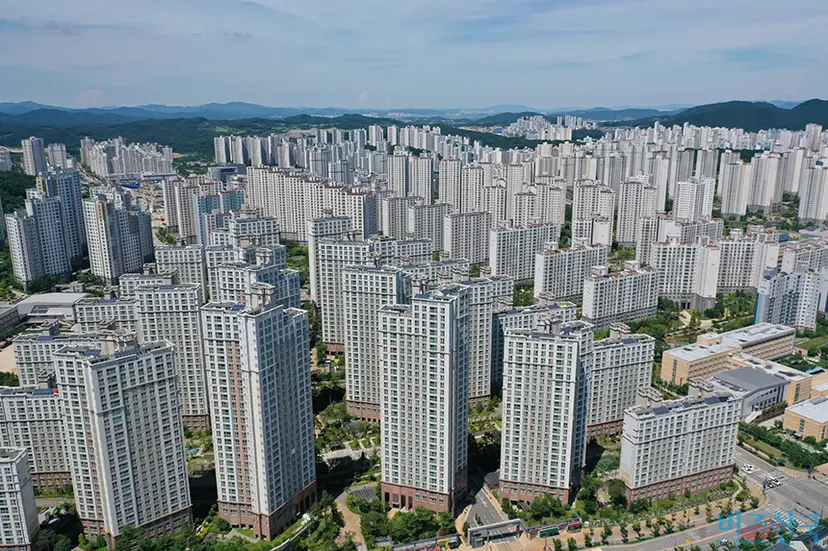
Until now, Sejong City has struggled with a downward trend amid the stagnant real estate market. A decrease in transaction volume, an increase in unsold properties, and price drops in some areas fueled the negative outlook that "Sejong real estate is over." However, the results of this unranked subscription served as a turning point that dispelled such concerns at once.
What does the choice of the 1.2 million people who applied for this subscription signify? Is it merely a speculative move seeking price arbitrage, or is it an active response from genuine buyers who believe in Sejong’s long-term growth potential? Through this incident, we can confirm the reasons why we need to focus on Sejong City once again.
First, it is the ‘living’ location of Sejong, proven by 1.2 million people.
In the real estate market, location is the most important factor. No matter how good a complex is, if the location does not support it, its value cannot be sustained. Since its inception in 2012, Sejong City has increasingly strengthened its role as an administrative-centered complex city, and it continues to develop through the construction of the National Assembly Sejong Building, the additional relocation of government agencies, and the attraction of companies. This subscription competition rate should be seen not as a one-time event, but as an instance where Sejong’s locational strengths have been verified again.
Sejong City remains the most systematically designed city in the country and is a region with the highest level of infrastructure outside the Seoul metropolitan area. Its transport network centered on BRT (Bus Rapid Transit), pleasant residential environment, and high-quality educational facilities are factors that steadily attract actual residential demand.
The explosive demand shown in this unranked subscription proves that these locational advantages have not vanished. Evaluating the market based solely on price volatility has its limits. Considering its long-term growth potential, Sejong's real estate market still holds high potential.
Second, the 400 million won price gap shows that Sejong still holds a ‘premium’.
Another reason this unranked subscription was so hot is the ‘price gap.’ The presale price, fixed at the time of supply in 2017, was 302 million to 321 million won for an exclusive area of 84㎡, and 399 million won for 105㎡. However, since the same square footage in the same complex was traded for 638 million won (84㎡) and 800 million won (105㎡) last December, it became a ‘lottery subscription’ guaranteeing a minimum profit of 300 to 400 million won upon winning.
Subscription fever driven by price gaps is actually not a new phenomenon. However, the reason this case is drawing attention is that this level of competition occurred despite the Sejong real estate market being stagnant for the past 1–2 years. This means that even if Sejong experiences short-term adjustments, it has sufficient room for price appreciation in the long run. If the market were completely dead, there would be no reason for so many applicants to flock to it.
Rather than dismissing this phenomenon as mere speculative demand, it should be viewed as a rational choice by investors and genuine buyers who have reaffirmed the value of Sejong. Through this subscription, Sejong City has proven that it is a "region that is still valuable even after the bubble has burst."
Third, with a planned population of 800,000 by 2040, Sejong’s future is ‘a work in progress.’
Sejong City is not just a residential area. It is where South Korea's core administrative functions are concentrated and is scheduled to grow into a major hub that will distribute the roles of the Seoul metropolitan area in the future. In particular, according to the ‘2040 Urban Basic Plan,’ Sejong City is in the process of building various industrial complexes and expanding transportation networks with a target planned population of over 800,000.
In addition to existing government agencies, Sejong City is proceeding with plans to relocate some functions of the National Assembly. This will serve as an opportunity to further increase Sejong City’s economic and political importance, and there is a high possibility that an administrative, political, and economic cluster will be formed.
If the KTX Sejong Station, currently under discussion, is opened, accessibility to Seoul will be further enhanced, which is expected to have a positive impact on the residential and commercial real estate markets.
High-tech industrial complexes are being continuously created. Sejong City is developing into a new city centered on IT, bio, and high-tech industries, not just an administrative city. Consequently, job creation and an increase in housing demand are inevitable.
The public transport network is being completed. BRT and metropolitan railway connection networks are being continuously expanded, strengthening the transport system that connects the inside and outside of Sejong City.
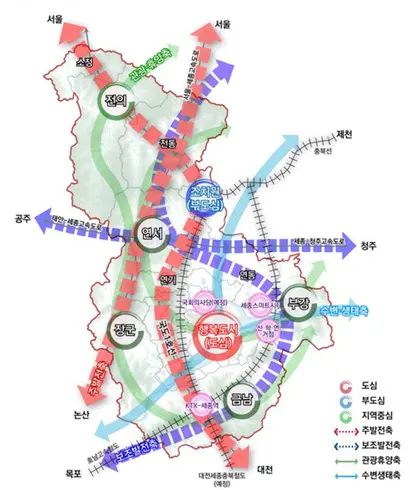
Considering these factors, it is highly likely that now is actually the best time to enter the Sejong market. This is precisely why one should approach it from a long-term perspective.
One must discard the illusion that ‘Sejong is over.’
The results of this ‘Hillstate Sejong River Park’ unranked subscription clearly show the present and future of the Sejong real estate market. Even if there are short-term adjustments, the long-term growth potential—such as Sejong’s locational strengths, the administrative capital premium, population inflow, and infrastructure expansion—remains solid.
Transactions may be quiet right now, and prices in some complexes may decline. But in the long run, Sejong is one of the most well-planned cities in South Korea and one of the few regions with a guaranteed future. It is time for skeptics to stop obsessing over short-term market volatility and reflect once again on the future growth engines that Sejong possesses.
Kim Hak-ryeol, the director of Smart Tube Real Estate Research Institute, well-known by his pen name ‘Pashong,’ formerly served as the team leader of the Real Estate Research Division at Gallup Korea. He operates the Naver blog ‘Pashong’s World Exploration’ and the YouTube channel ‘StueTV.’ His books include ‘The Power of Gyeonggi Real Estate (2024),’ ‘Absolute Principles of Seoul Real Estate (2023),’ ‘The Future of Incheon Real Estate (2022),’ ‘Kim Hak-ryeol’s Absolute Principles of Real Estate Investment (2022),’ ‘Future Map of South Korean Real Estate (2021),’ ‘Only Places That Will Rise, Rise From Now On (2020),’ and ‘User Manual for South Korean Real Estate (2020).’