

[비즈한국] With the drama ‘Wonyeong’ nearing its end, I am finally letting go of Choi Myung-gil, who has long been my definitive Queen Wongyeong. The formidable presence of Choi Myung-gil, who played the Queen in the 20th-century drama ‘Tears of the Dragon,’ remains vivid in my mind. Perhaps that is why it has been difficult to find a Queen Wongyeong who could make me forget her since then. The primary reason for this lies in the shifting era that has brought Queen Wongyeong into the spotlight as a protagonist.
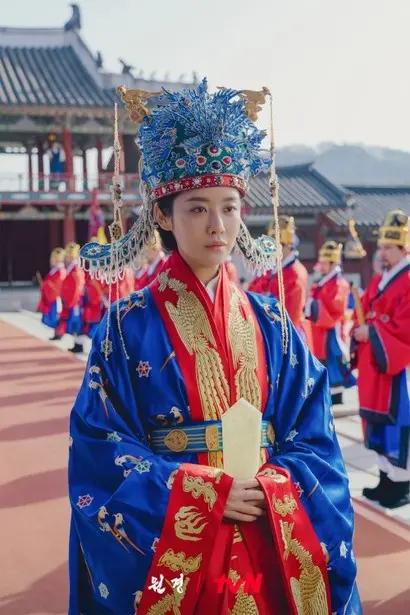
The late Goryeo and early Joseon periods were filled with remarkable figures. Beyond the three-generation royal lineage from Yi Seong-gye and his son Yi Bang-won to King Sejong—the greatest sage-king of Joseon—the ranks of officials were packed with “legendary” characters, from General Choe Yeong, who viewed gold like stone, to Jeong Mong-ju, the final loyalist of Goryeo, and Jeong Do-jeon, the founding contributor who laid the framework for Joseon. Queen Wongyeong, the wife of King Taejong (Yi Bang-won), is also known as a “kingmaker” and a strong-willed woman who helped her husband ascend to the throne. However, because it was an era with so many powerful characters, it was difficult for her to be highlighted as the sole lead. After all, in the founding of a nation, the King is inevitably the center.
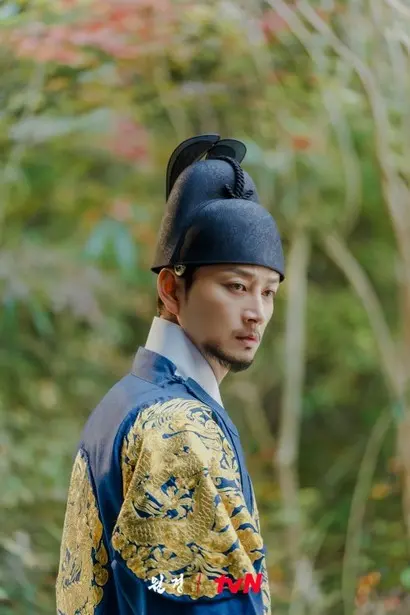
As there have been many dramas covering the late Goryeo and early Joseon periods, several actresses have struggled to showcase their own versions of Queen Wongyeong. I remember Gong Seung-yeon in ‘Six Flying Dragons,’ who showed a young Queen Wongyeong prioritizing her family's future, and Park Jin-hee in ‘The King of Tears, Lee Bang-won,’ who played a resolute Queen Wongyeong asserting herself as a co-founder of Joseon. However, ‘Wonyeong’ clearly demonstrates the significant difference between viewing Queen Wongyeong as a major supporting character versus the main protagonist.
When viewing her as a major character, we focused on ‘how’ her devotion and efforts for her husband were betrayed. As a supporting figure, Queen Wongyeong’s goals were depicted as identical to those of her husband. In ‘Wonyeong,’ where she is the protagonist, the focus shifts to the ‘why’—why she chose to trust and follow Yi Bang-won (Lee Hyun-wook), and why she jumped into helping her husband build the nation of Joseon. This difference is monumental. Because she is a character acting based on her own grand cause and calling from the start, rather than simply following her husband’s desires, the scope for both interpreting and creating the character of Queen Wongyeong expands significantly.
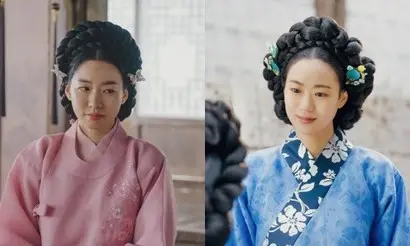
This becomes even clearer in the 2-part prequel released on TVING, ‘Wonyeong: Bonds of Dano.’ ‘Bonds of Dano’ depicts her youth when she first formed a connection with Yi Bang-won, who was a student of her father, Min Je. During this time, we see a side of Queen Wongyeong whose spirit was extraordinary even before meeting Yi Bang-won. She is a Goryeo woman who feels anger, protests, and acts against the reality where no one objects to the maidens of Goryeo being taken to the Yuan Dynasty as tribute. It is a realization that perhaps we had merely internalized Queen Wongyeong as a stereotypical “strong woman” through the lens of a Confucian Joseon perspective.
With this shift in perspective, Queen Wongyeong’s range of action also changes. Her reaction to her husband, now King, repeatedly bringing other women into the palace is different from the previous portrayals of her exploding in rage. Though she is shocked to find out late that he fathered a child with Yeong-sil (Lee Si-ah) during their private life, her intense protest to her husband comes when he brings Yeong-sil into the palace on his own authority, bypassing her as the head of the inner court. The power in her voice when she says, “Please step down from the throne. I want to speak to you eye-to-eye. This is a matter between husband and wife.”
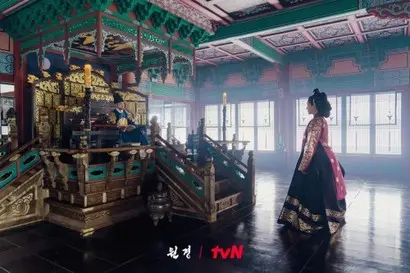
When you think about it, it doesn’t make sense that a Queen Wongyeong who secretly secured weapons and encouraged her hesitant husband to fight by putting armor on him would be reduced to mere jealousy over concubines in her middle age. While there are historical records and it is presumed that the betrayal stemmed from their relationship as equals rather than simple jealousy, portraying the psychology of Queen Wongyeong and King Taejong’s betrayal as merely “betrayal-jealousy” in a romantic sense is one-dimensional. The interesting point of ‘Wonyeong’ is its rich interpretation of King Taejong’s complex psychology behind bringing other women in, and Queen Wongyeong’s response to it. The drama even depicts her banishing her former servant and concubine Chae-ryeong (Lee Yi-dam) from the palace not out of jealousy, but because Chae-ryeong interfered with personnel appointments, showing that ‘Wonyeong’ avoids tarnishing the Queen's dignity with mere jealousy.
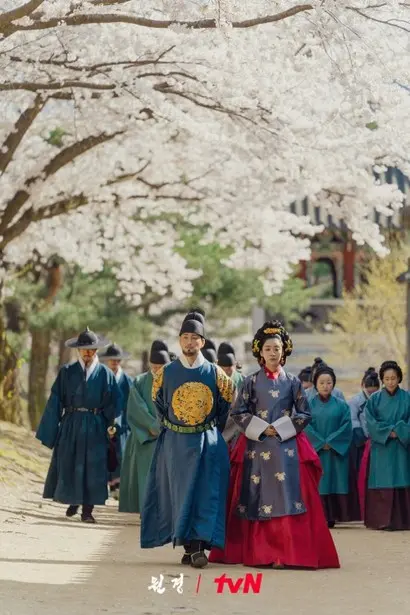
This interesting interpretation is also found in the way Queen Wongyeong faces Taejong as he slaughters her maternal family. It is a well-known fact that Taejong wiped out the Min family, the Queen’s family, who were powerful in-laws, to strengthen royal authority. The image of Queen Wongyeong screaming, collapsing in agony, and weeping whenever her husband killed one of her four younger brothers is a familiar trope in historical dramas. While the Queen in ‘Wonyeong’ also shows devastation upon the exile and death of her brothers and consoles her mother, her most heated moment of anger occurs when Taejong murders her helper, the informant Pansu (Song Jae-ryong).
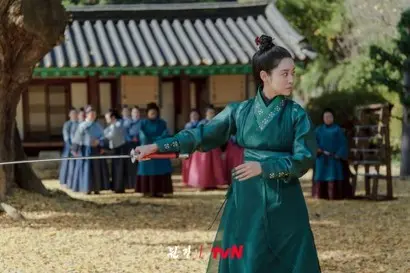
Although Pansu is a fictional character, he is depicted as a close aide who helps the Queen without personal greed, and her reacting more intensely to his death than to the exile of her brothers—who were partly responsible for their own fates due to their greed for power and wealth—is a deliberate reinterpretation of her character. The scene where commoners who did not receive famine relief receive help from Queen Wongyeong and chant “Her Majesty the Queen” instead of the King highlights her potential and spirit to be a ruler.
Of course, ‘Wonyeong’ is a fusion historical drama that focuses on actual events but includes many creative elements. It is inevitable that there are some strained parts due to making the Queen the protagonist. However, isn’t it quite fresh to summon a woman of that era who lived in a male-dominated society and interpret her in a 21st-century way? It also aligns with the current trend of female-centered narratives. ‘Wonyeong’ will likely be remembered for a long time as a project that encourages us to rethink Queen Wongyeong, a woman born in Goryeo who dreamed of a new nation with her husband, only to die and be recorded as a woman of Joseon. And Cha Joo-young—even if another Queen Wongyeong appears later, just like Choi Myung-gil did, the 21st-century Queen Wongyeong will likely be remembered as Cha Joo-young.
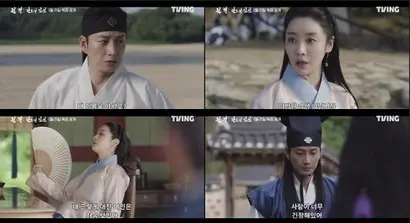
The 12-episode ‘Wonyeong’ will conclude with the final two episodes on February 10th and 11th. As Queen Wongyeong discovered the qualities of a monarch in Grand Prince Chungnyeong in episode 10, what remains is how she will treat Prince Yangnyeong, who is deposed, and Prince Chungnyeong, who becomes King, as well as how she will conclude things with her husband before she passes away. If you haven’t watched ‘Wonyeong’ yet, I highly recommend it. Make sure to watch the prequel, ‘Wonyeong: Bonds of Dano,’ as well.
Who is the writer, Jung Soo-jin?
She has worked at various magazines, covering and writing about movies, travel, and popular culture. She does not want to fall behind on trends, but she has become an “old-timer” who, while watching the latest dramas, only predicts the obvious clichés for the next scene. She is drifting through the vast world of OTT platforms, trying to regain her lost edge, and her current wish is for the release of an integrated OTT subscription plan.