

[비즈한국] It has been confirmed that Hanssem009240, which declared ethical management last year, has received a 'warning' from the Korea Fair Trade Commission (KFTC) for engaging in 'gapjil' (abuse of power) against a subcontractor. The subcontractor that reported Hanssem to the KFTC claims that the conglomerate's abuse of power pushed the company to the brink of bankruptcy and is currently pursuing a damages lawsuit against Hanssem for approximately 14 billion won. The KFTC's ruling is expected to have a significant impact on the outcome of this lawsuit.
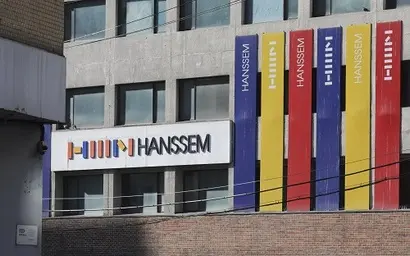
Judged as ‘Abuse of Trading Position’ under the Fair Trade Act
On January 13, it was confirmed that the KFTC decided that Hanssem violated Article 45 (Prohibition of Unfair Trade Practices), Paragraph 1, Subparagraph 6 (Prohibition of Abuse of Trading Position) of the Fair Trade Act and issued a 'warning.' The KFTC determined that Hanssem’s refusal to renew a trademark license agreement with a subcontractor and its subsequent refusal to purchase products using that trademark violated the 'Monopoly Regulation and Fair Trade Act.'
Hanssem's subcontractor, 'Ozen,' reported Hanssem to the KFTC in 2023 for abuse of trading position. According to Ozen's claims, Hanssem approved the use of its air sterilizer trademark in July 2021 and issued a letter of intent for 20,000 units, prompting Ozen to begin development. In February 2022, Hanssem promised to place an order for 4,000 units and receive the products.
However, just two to five months after delivery, Hanssem refused to renew the trademark license agreement with Ozen. As a result, Ozen was unable to sell the products it had already produced. Since the 'Hanssem Ozen' trademark was engraved on the products themselves, the entire inventory became unsellable. This led to a chain of bankruptcies for Ozen and its partner companies. They held demonstrations in front of Hanssem’s headquarters and reported the company to the KFTC.
The KFTC, which investigated the case, determined that Hanssem held a superior trading position and that the refusal to renew the contract without prior consultation lacked fairness. According to the KFTC decision obtained by BizHankook, it stated, “In a situation where high predictability (of trademark renewal) is difficult to see, the then-CEO of the respondent (Hanssem) refusing to renew the contract for abstract and subjective reasons such as it ‘not having a positive impact on brand value’ can hardly be seen as a reasonable refusal to trade,” adding, “The unfairness of unilaterally cutting off the transaction is recognized.”
However, the KFTC stated that it issued a 'warning' because the violation was a case limited to seeking relief for the claimant (Ozen). A warning is a measure taken when the suspicion of violating the law is acknowledged, but the issue is limited to a specific trading partner or the respondent’s sales volume or market share is small. Repeated warnings can lead to measures such as the imposition of penalty points.
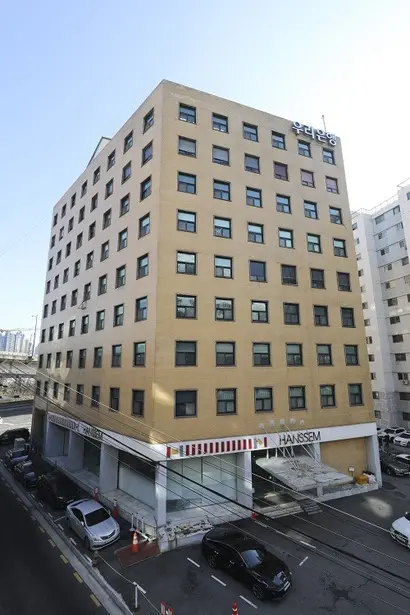
Hanssem filed criminal charges against subcontractor CEO, but received a non-indictment decision
This KFTC ruling is expected to have a considerable impact on the legal battle between Hanssem and its subcontractor, Ozen. Claiming massive losses due to Hanssem’s refusal to renew the trademark, Ozen filed two separate damages lawsuits against Hanssem in October and December 2023, totaling approximately 14 billion won.
An Ozen representative remarked, “We believe the KFTC ruling will have a major impact on the results of the damages lawsuit. We filed the damages suit based on reasons such as negligence in contract execution and refusal to purchase after prohibiting trademark use. Beyond the KFTC ruling, we believe (Hanssem’s liability) is proven given that the criminal complaints Hanssem previously filed against us were dismissed as non-indictments.”
After Ozen filed the damages lawsuit, Hanssem filed criminal charges against Ozen’s CEO last year on six counts, including forgery of private documents, uttering of forged private documents, defamation, damage to credit, obstruction of business, and fraud. In response, the prosecution issued a non-indictment decision for all charges last December, stating, “The suspect has no charges due to insufficient evidence.”
In November of last year, a month before the prosecution’s investigation results were released, Hanssem declared ethical management. The company established a dedicated compliance organization and published the ‘Hanssem Pledge,’ which outlines the ethical responsibilities and compliance obligations that Hanssem and its employees must uphold in their relationships with key stakeholders. One of the six articles in the ‘Hanssem Pledge’ is ‘Pursuit of Shared Growth with Partners.’
An Ozen representative claimed, “We have been fighting Hanssem for about two years. It’s not just us; many subcontractors are experiencing similar things. But because they have to continue doing business with Hanssem, they all suffer in silence.” The representative added, “Ozen was a company valued at over 40 billion won, but all our planned investments were overturned, employees quit, and the company is now in a state of suspended operations. When a conglomerate decides to kill a small business, a company like ours is left defenseless.”
In response, Hanssem stated, “We plan to announce an official position after review by our Ethical Management Office and legal counsel.”