

[비즈한국] Amid rising alarm over bird strikes (collisions between aircraft and birds) following the Jeju Air 089590 tragedy, an investigation by BizHankook has confirmed that bird strikes at Incheon International Airport—the gateway to South Korea—reached an 11-year high last year. The number of incidents relative to total flight operations also hit an all-time record. The increase in accidents is attributed to rising flight volume coupled with inadequate accident prevention capabilities that fail to keep pace with the loss of bird habitats.
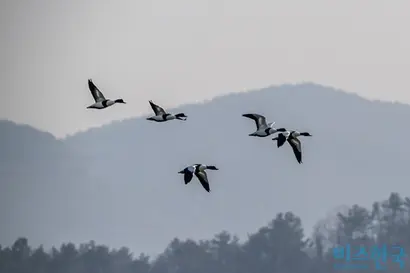
41 Bird Strike Incidents at Incheon International Airport Last Year
According to data from the Incheon International Airport Bird Strike Prevention Committee for the second half of 2024, obtained by BizHankook through a request for information disclosure to Incheon International Airport Corporation, there were 41 bird strike incidents at Incheon International Airport last year—an increase of 19 cases (86%) from the previous year. This is the highest figure since 2014, when there were only 11 incidents. On average, Incheon Airport has recorded 16 bird strikes annually. These accidents primarily occur during the autumn (50%), when migratory birds such as wild geese collide with aircraft.
Even when considering flight volume, Incheon Airport’s bird strike rate is at its highest level. Last year, the number of bird strikes per 10,000 operations at Incheon International Airport was 1.0, an increase of 0.3 cases (52%) compared to 2023. Excluding 2022 (1.2 cases), when flight volume was halved due to the COVID-19 pandemic, this is the highest rate in the last 11 years. Compared to 2019 (0.42 cases), the year with the highest number of flights during that period, the number of incidents has more than doubled. The 11-year average is 0.62 cases per year.
Captain A from Korean Air 003490 stated at the second-half Incheon International Airport Bird Strike Prevention Committee meeting held last December, "The number of confirmed annual bird strikes has increased significantly. Newer aircraft models use lighter composite materials that are less durable, leading to more severe damage from collisions. I ask that you strengthen bird strike prevention activities."
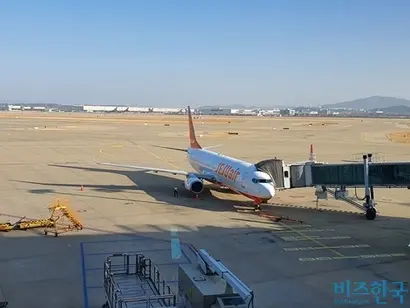
Rising Flight Volume and Shrinking Habitats vs. Insufficient Prevention Capabilities
The primary reason cited for the increase in bird strikes at Incheon Airport is the growth in aircraft operations. The number of flights at Incheon International Airport peaked at 404,104 in 2019, hit a low of around 100,000 during the COVID-19 pandemic (2020–2022), but has since seen an upward trend, reaching 337,299 in 2023 and 413,200 last year.
A more fundamental cause is identified as the loss of bird habitats. Environmental changes due to global warming and construction projects around the airport have reduced bird habitats, causing higher concentrations of birds in remaining areas. In fact, on Yeongjong Island, where Incheon International Airport is located, bird habitats have shrunk significantly due to a succession of airport expansion projects, resorts, hotels, tourist complexes, and new city developments.
On the other hand, the airport's bird strike prevention staff falls short of the required standards. According to Ministry of Land, Infrastructure and Transport notifications, Incheon International Airport Corporation, which operates four runways 24 hours a day, should have at least 48 full-time bird strike prevention personnel. However, as of December last year, only 46 personnel were deployed—a shortage of two. Furthermore, only 25 of them (56%) have five or more years of experience. Last year, Incheon International Airport Corporation established a plan to add 8 more personnel in 2025, bringing the total to 54.
As bird strikes rise, there are growing calls to reinforce prevention manpower and equipment. Currently, Incheon Airport's dedicated prevention team uses sonic deterrents and firearms to drive away or capture birds in the airport area on a 4-group, 2-shift rotation. Capture via firearms is reportedly limited to within a 100-meter radius of the airport. It is understood that the Incheon Airport Wildlife Control Team, which carries out bird deterrent operations, also recognizes the need for more personnel and better equipment.
An official from Incheon International Airport pointed out to BizHankook, "Many of the bird strike prevention staff are contract workers with poor working conditions, leading to high turnover with many leaving after only a few months. We must secure more than the minimum number of dedicated staff and improve their treatment so that they can remain as specialized professionals."
Kwon Hyuk-rak, head of the Incheon International Airport Wildlife Control Team, stated at the second-half Bird Strike Prevention Committee last year, "Laser guns (for bird deterrents) are very effective in controlling birds in terms of range and dispersion, but they have not been approved by the Ministry of Land, Infrastructure and Transport for safety reasons due to aircraft operations. We need to form a consultative body with airlines and related agencies to discuss this matter."
First Officer B from Asiana Airlines 020560 raised the need to introduce radar, stating at the same committee, "Many airports in the United States are using bird radar systems, and some have seen a 40% reduction in bird strikes after implementation. The effect of reducing bird strikes compared to the introduction cost will be significant, and the utility of data collected through radar will be substantial."
Bird strikes were identified as a primary cause of the Jeju Air passenger plane tragedy on December 29, which resulted in 179 deaths. Jeju Air Flight 2216, heading to Muan, Jeollanam-do from Bangkok, Thailand, attempted a belly landing after failing to deploy its landing gear and subsequently exploded after hitting navigation equipment at the end of the runway. According to the Aviation and Railway Accident Investigation Board, the flight declared an emergency (Mayday) at approximately 8:58 AM that day due to a bird strike. Currently, the Investigation Board is conducting a joint investigation to determine the cause of the accident in cooperation with the U.S. National Transportation Safety Board (NTSB) and French accident investigation authorities.