

[비즈한국] Samsung Electronics005930 Chairman Lee Jae-yong has been acquitted in the appellate trial regarding charges of 'illegal management succession.' This ruling comes one year after the first trial court acquitted Chairman Lee of all 19 charges in February of last year, and four years and five months since he was first indicted by the prosecution. The Samsung executives indicted alongside him were also all acquitted. Chairman Lee's judicial risk, which persisted for nearly a decade, has been cited as one of the backgrounds for the lack of leadership at Samsung. With this judicial risk largely resolved, attention is focused on whether Chairman Lee can expand his management reach and breakthrough the "Samsung crisis" theory.
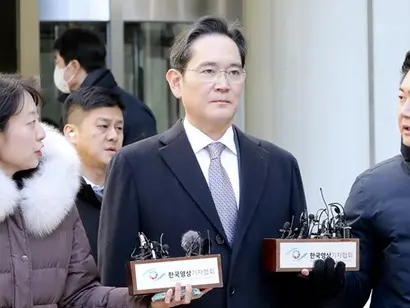
Chairman Lee and Former/Current Executives All Found 'Not Guilty'
On the 3rd, the Seoul High Court acquitted Chairman Lee Jae-yong of charges including unfair trading practices under the Capital Markets Act, market manipulation, and breach of trust. This decision comes about 70 days after the final hearing of the second trial was held last November. The court stated, "Even after gathering various reasons, the evidence is not enough to exclude reasonable doubt to prove the charges in this case," adding, "Even considering the difficulties and limitations of the investigation, we cannot recognize criminal responsibility for such important criminal facts and charges with significant social repercussions based on speculation, scenarios, or assumptions."
Following the first trial, the second trial court also did not recognize the charges of market manipulation and unfair trading. Although the prosecution changed the indictment to include the contents of a first-instance ruling in an administrative lawsuit that partially acknowledged Samsung Biologics'207940 accounting fraud charges last year, the second trial court upheld the acquittal, stating it was difficult to view the accounting practices as false.
This trial began with charges that Chairman Lee, in the process of the 2015 merger between Cheil Industries and Samsung C&T028260, engaged in unfair trading and market manipulation in collusion with the Future Strategy Office for the purpose of strengthening his control. The prosecution argued that Cheil Industries' corporate value was inflated at the time of the merger, while Samsung C&T's value was intentionally lowered. The charge is that the merger proceeded with these factors in mind. During this process, the accounting issues of Samsung Biologics, a former subsidiary of Cheil Industries, surfaced. In 2020, the prosecution indicted Chairman Lee and demanded a 5-year prison sentence and a 500 million won fine.
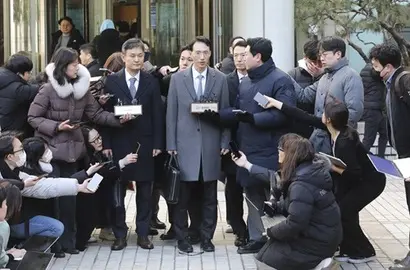
A total of 14 former and current executives who were indicted at the time along with Chairman Lee—including Choi Gee-sung, former head of the Samsung Future Strategy Office; Jang Choong-ki, former deputy head; and Kim Jong-joong, former team head—were also all acquitted in the appellate trial. After the trial, Chairman Lee's lawyer said, "A long time has passed. I hope this ruling will allow the defendants to fully dedicate themselves to their primary duties."
Restoring Leadership: Will He Escape the 'Crisis'?
This second-instance verdict is a crucial turning point that has decided Chairman Lee's fate. Even if the prosecution appeals to the Supreme Court, the prevailing view is that the verdict is unlikely to be overturned, as the Supreme Court does not re-examine factual findings and only determines whether legal interpretation and application were appropriate.
Attention is focused on whether efforts will be made for Chairman Lee to return as a registered director and to rebuild a control tower like the former Future Strategy Office. Samsung Electronics is facing a complex crisis entangled with sluggish demand due to the prolonged global economic downturn, supply chain issues, and weakened technological competitiveness. The failure to recover in the commodity DRAM sector, where Samsung is a powerhouse, along with a slump in the high-bandwidth memory (HBM) business—referred to as AI semiconductors—and poor performance in the foundry (semiconductor contract manufacturing) business have also had an impact.
The "crisis theory" discussed within and outside Samsung was formalized through an apology message from Samsung's top leadership last October. Jeon Young-hyun, head of the DS Division (Vice Chairman) and leader of Samsung Electronics' semiconductor sector, issued an unusually public statement immediately after the third-quarter preliminary earnings report. In a situation where concerns about stock prices and technological prowess are intense, it was effectively an admission that the beginning of the crisis should be sought not only in external market conditions but also internally. Vice Chairman Jeon stated, "All responsibility lies with the management team leading the business. To overcome the crisis, the management team will take the lead and create an opportunity for a turnaround," acknowledging the crisis and promising major reforms.
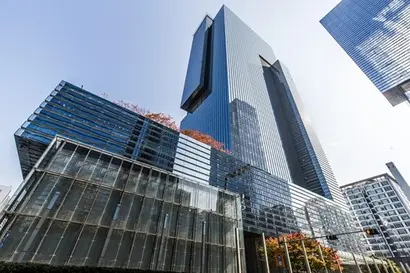
Tracing the cause of the problem ultimately points to management failure. Samsung has consistently struggled with yields, a key metric for assessing a semiconductor company's productivity, profitability, and technological capability. Critics argue that the company lacked the ability to see the "big picture," such as failing to predict that HBM would become the future when formulating semiconductor strategies. While it has been nearly 10 years since Chairman Lee effectively took charge of the group after the late Chairman Lee Kun-hee was hospitalized, assessments suggest he has yet to demonstrate a clear management philosophy or tangible results. While competitor SK Hynix00660 identified the growth potential and focused on HBM research and development before the AI boom, Samsung Electronics actually downsized its HBM research organization. This became the catalyst for delays in supplying to Nvidia and losing the initiative in the HBM market to SK Hynix.
International credit rating agency Moody's lowered its credit outlook for Samsung Electronics on the 24th of last month, stating, "Samsung Electronics' semiconductor technology leadership has weakened over the past few years. Although they are striving to regain leadership in the memory and foundry sectors, we expect them to face difficulties due to fierce competition and market changes."
While judicial risk cannot be blamed for everything, it is undeniable that there were limitations to management activities, such as appearing in court over 100 times for legal proceedings and restrictions on overseas business trips. The repetitive judicial risk of the owner's family has had a negative impact both internally and externally. There is a view that it is time for Chairman Lee, now unshackled, to demonstrate proactive response capabilities in a rapidly changing industrial environment. SK Group Chairman Chey Tae-won has been demonstrating crisis-response leadership by engaging in extensive outreach with partners. A business industry official observed, "His room for maneuver in areas like M&A, new investments, and external activities will expand."
Park Jae-keun, a professor of convergence electronic engineering at Hanyang University, pointed out, "The semiconductor industry is changing rapidly due to the development of the AI industry. Up until now, Samsung has been in a situation lacking leadership. They need to go all-in on their lacking technological prowess and focus on talent recruitment and investment attraction," adding, "In the AI sector, the role of building new partners and relationships is most important. He needs to build a 'big plan' and step up as the owner."