

[비즈한국] With the intense global competition for obesity treatments, highlighted by the supply shortages of Eli Lilly’s "Wegovy," the pharmaceutical industry is accelerating the development of oral and patch-based weight loss drugs. This push aims to overcome the discomforts associated with existing injectables, such as needle phobia and the need for refrigeration. Domestic pharmaceutical companies are also striving to secure a lead in the market for GLP-1 (glucagon-like peptide-1) class obesity treatments in oral and patch formats.
Speed: Hanmi Pharmaceutical128940; Pipeline Quantity: D&D Pharmatech347850
Among domestic pharmaceutical companies, Hanmi Pharmaceutical is the fastest in terms of progress. "Efpeglenatide," the flagship obesity treatment currently being developed by Hanmi, is in Phase 3 clinical trials in Korea with a goal of commercialization in the second half of next year. It is an injectable formula that improves upon the gastrointestinal side effects of existing GLP-1 drugs, while reducing the dosing frequency to once a week or once a month. Hanmi emphasizes that it is a "customized obesity treatment for Koreans" that reflects the body types and weight characteristics of the Korean population.
In 2023, Hanmi Pharmaceutical announced a "customized full-cycle obesity portfolio" consisting of five products. In addition to Efpeglenatide, the company is preparing to enter Phase 2 and Phase 1 clinical trials in the second half of this year for other injectable candidates, including HM15275 (a triple agonist (GLP-1/GIP/GCG) that minimizes muscle loss) and HM17321 (which targets the CRF2 (Corticotropin-releasing factor 2) receptor to enable simultaneous muscle gain and weight loss).
D&D Pharmatech leads in the number of pipelines. The company holds a total of six obesity treatment pipelines: four oral drugs and two injectables. All of its oral drug candidates are being co-developed with the US firm Metsera. The fastest-moving candidate, DD02S, is a GLP-1 receptor agonist; it began Phase 1 clinical trials in North America last November, with study results expected to be released in the first half of this year. The other three oral candidates are in the preclinical stage.
The two injectable candidates utilize the company's proprietary long-acting PEGylation technology. D&D Pharmatech’s PEGylation technology uses spacers to facilitate easier receptor binding and extend the drug's half-life. NLY12, a GLP-1 class drug with a once or twice-monthly dosing schedule, is currently preparing to file for approval of its clinical trial plan. The triple agonist (GLP-1/GIP/GCG) DD15 is in the preclinical stage.
Diversity: Daewoong Pharmaceutical069620
Daewoong Pharmaceutical is developing the most diverse range of formulations, with two oral drugs, one patch type, and one injectable. DWP306001, a combination drug that adds an appetite suppressant to the diabetes drug Enavogliflozin, has completed Phase 1 clinical trials in Korea. In November of last year, the company filed a domestic patent for a new GLP-1/GIP receptor dual-agonist material. According to Daewoong, this new drug is easier and cheaper to produce because it is based on small molecules.
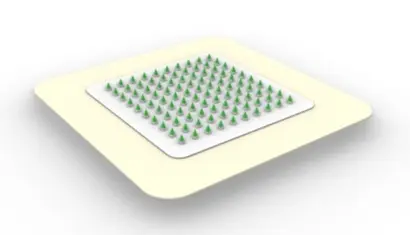
Its affiliate, Daewoong Therapeutics, is developing an obesity treatment in the form of a microneedle patch. It is an ultra-compact 4cm² patch containing a GLP-1 analog, which needs to be applied to the arm or abdomen once a week. Because it does not touch nerve cells, it is painless and delivers the drug through micro-vessels. Unlike injectables, it does not require a cold chain system during distribution. The company applied for clinical trial approval to the Ministry of Food and Drug Safety last November and aims for commercialization by 2028.
In December of last year, Daewoong Pharmaceutical announced that it had signed a contract with T-On Lab Therapeutics, Daehan New Pharm, and Darim BioTech for the joint development of a 4-week long-acting injectable. Based on semaglutide, the drug uses T-On Lab Therapeutics' long-acting drug delivery platform, "microsphere," to reduce the dosing frequency to once a month. The company plans to file for domestic Phase 1 clinical trials within this year.
Active Development Across 'Injectables,' 'Oral Drugs,' and 'Microneedles'
Other companies currently developing injectables include NeuroBo Pharmaceuticals (a subsidiary of Dong-A ST170900), HK inno.N195940, and Yuhan Corporation. All of these are once-weekly injectables. DA-1726, an oxyntomodulin analog being developed by NeuroBo Pharmaceuticals, is differentiated by inducing weight loss through increased energy expenditure. It is nearing the end of global Phase 1 clinical trials in the first half of the year. HK inno.N recently submitted a Phase 3 clinical trial plan for IN-B00009 (ingredient: ecnoglutide) in Korea. Yuhan Corporation holds two obesity treatment pipelines, with its YH34160 candidate, which uses a GDF15 analog mechanism to suppress appetite, currently in the preclinical stage.
Oral and microneedle formulations are being developed by companies like DXVX, Yunovia (a subsidiary of Ildong Pharmaceutical), and Daewon Pharmaceutical. DXVX recently announced at the "Biotech Showcase 2025" in San Francisco that its non-clinical animal studies showed superior results in absorption, distribution, metabolism, and excretion compared to other drugs. Yunovia is conducting follow-up trials after Phase 1 for its GLP-1 drug ID110521156, with completion expected in April of this year. Daewon Pharmaceutical is co-developing the oral drug DW-4222, which finished Phase 2a clinical trials last year, with Raphas, and also holds DW-1022, a microneedle patch version of Wegovy.