

[비즈한국] In the 2025 smartphone market, the competition over thickness is intensifying. Samsung Electronics005930 unveiled its new Galaxy S25 series at Galaxy Unpacked 2025, alongside the Galaxy S25 Edge, which boasts a body thickness of 6.4mm. Originally known as the ‘Galaxy S25 Slim,’ this model is garnering attention for achieving the thinnest profile in the Galaxy S series. It is scheduled for release this April.
News has also emerged that Apple will join the thickness race in the second half of this year with the iPhone 17 Air. Industry experts predict this model will launch with a thickness of approximately 5.5~6.25mm, increasing the likelihood of it becoming the thinnest smartphone ever.

As these ultra-slim smartphones emerge, interest is growing in how manufacturers have succeeded in reducing their thickness. In particular, how these slim device designs have overcome existing limitations such as heat dissipation, battery capacity, and internal component configuration remains a key issue. This ultra-slim smartphone design is not just a change in appearance. Manufacturers must overcome existing limitations in the design of key components like cameras, batteries, and displays, and the technological innovations that have made this possible are currently leading the smartphone industry.
Camera: Metalens, ALoP
Smartphone cameras have been cited as a primary cause of increased thickness, despite providing high-resolution images and various features. In response, manufacturers have found a breakthrough by introducing new technologies to reduce module size and maximize efficiency.
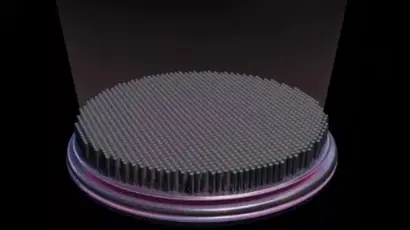
Metalens technology, which has been expected to be introduced for several years, is one such example. Metalens is a technology that replaces traditional multi-layer lens structures with a single planar lens, using nanostructures to control the refraction and reflection of light. It is reported that this can reduce the number of lenses and significantly decrease the thickness of smartphone camera modules. Apple is considering applying this technology to the iPhone 17 Air. In particular, Metalens offers the potential to reduce both the notch and the camera module size, showing strengths in both design and functionality.
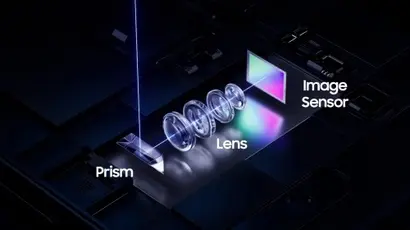
Samsung has overcome the limitations of telephoto camera design through its ALoP (Advanced Lens on Prism) technology. Conventional telephoto lenses required thick modules due to their size and arrangement. However, ALoP places the lenses horizontally and uses a prism to refract light, reducing the height of the module and allowing for the use of brighter lenses. ALoP technology delivers low-noise images, especially in night photography, and contributes to the improvement of exterior design. The Samsung Galaxy S25 series is cited as a prime example that balances thickness and performance by adopting this technology.
Battery: Electrically Induced Adhesive Debonding Technology
Maintaining or increasing battery capacity in thin smartphones is a difficult challenge. Amid this, Apple's recent introduction of 'electrically induced adhesive debonding technology' has opened new possibilities for battery design. This technology is designed to allow bonded surfaces to be separated by an electrical signal. When an electrical signal is applied, the chemical structure of the adhesive changes, weakening the bond between the battery and the device. This allows for easier battery replacement or repair.
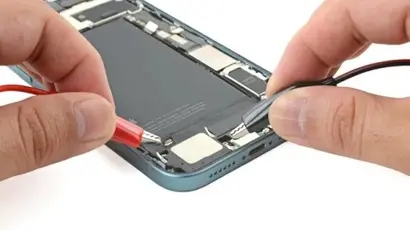
Because it does not use physical adhesive strips, the thickness can be kept low, maximizing internal space utilization and eliminating the need for brackets and various other components within the smartphone's internal design. Furthermore, users can easily replace the battery, which improves repairability and extends the lifespan of the device. This is highly regarded in terms of sustainability, aligned with eco-friendly design.
Display: OLED TDDI
The display is one of the components that take up the most volume in a smartphone. Recent display innovations are heading in the direction of simplifying the structure while maintaining performance. Among them, the technology receiving the most attention is OLED TDDI (Touch and Display Driver Integration). TDDI technology simplifies the structure by integrating the touch sensor and the display driver into a single chip. By embedding the touch sensor directly into the display's glass substrate, the thickness of the display is reduced, and the screen-to-body ratio is improved.
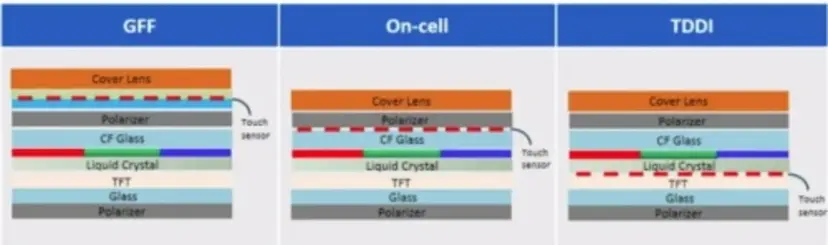
Apple is expected to apply this technology to the iPhone 17 Air, which will allow for a thinner display along with a reduction in bezel size. TDDI technology is highly likely to be used in other devices such as iPads and Apple Watches as well. For this reason, it is attracting attention as a technology that will lead revolutionary changes in display design across the market. Samsung is also accelerating the commercialization of OLED TDDI this year, and it is widely expected to be featured in the Galaxy S25 Edge.
These innovative technologies are considered the core enablers of reduced smartphone thickness. However, there are significant arguments that a thinner profile does not always bring positive effects. Experts say that solutions for new problems, such as decreased battery capacity, heat dissipation issues, and increased repair costs, must be explored simultaneously. Nevertheless, experts agree that this trend of slimness from companies will continue, given that consumers who have grown weary of the smartphone enlargement trend of the past several years now desire thinner, more portable smartphones.