

[비즈한국] A legal battle between the seller, Shinhan Bank, and the manager, Kyobo Securities030610, over a private equity fund that suspended redemptions has effectively resulted in both parties being found at fault. The ‘Kyobo Securities Royal Class Global M Fund (Royal Class M Fund),’ managed by Kyobo Securities and sold by Shinhan Bank, is a product in which investor losses reached 99%. Shinhan Bank filed a claim for damages against Kyobo Securities and has received a partial victory.
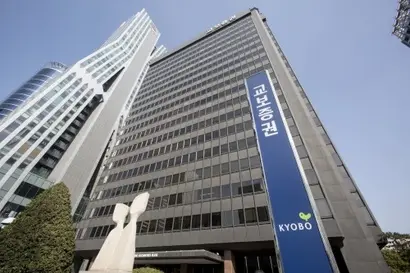
On the 10th, the 13th Civil Division of the Seoul Southern District Court (Presiding Judge Choi Jung-in) issued a partial ruling in favor of the plaintiff in the damages suit filed by Shinhan Bank against Kyobo Securities. Shinhan Bank filed the lawsuit in May 2022, arguing that Kyobo Securities, as the manager, should compensate for the approximately 7.2 billion won that Shinhan Bank had voluntarily paid out to 45 Royal Class M Fund investors.
The legal dispute between the seller and the manager lasted for about three years. The first-instance court determined that the seller, Shinhan Bank, also bore responsibility, and ordered Kyobo Securities to pay approximately 4.3 billion won, which is 60% of the claimed damages.
Although the scale of the Royal Class M Fund is smaller compared to the Lime or Optimus funds, which caused damages exceeding 1 trillion won, it was a product that resulted in significant losses for individual investors, with losses hitting 99%. According to data submitted by the Financial Supervisory Service (FSS) to former People Power Party lawmaker Yoon Joo-kyung in 2022, the total damage amount for the Royal Class M Fund was 39 billion won (151 people).
The Royal Class M Fund, established and managed by Kyobo Securities, is a fund-of-funds that invests in loan receivables of small and medium-sized American businesses backed by real estate through offshore funds (funds created in a third country other than where the investors reside). The structure involved indirect investment in loan receivables issued by the U.S. financial company WBL through the ‘Tandem Credit Facility Fund’ created by Hong Kong-based asset manager Tandem.
The Royal Class M Fund was launched in May 2019 with a maturity date of March 2020. Shinhan Bank, which entered into a consignment sales agreement with Kyobo Securities to sell the fund, explained to investors that it ‘only deals with normal receivables’ or that it was ‘safe because it is backed by real estate.’ 45 customers invested 10.5 billion won into the Royal Class M Fund through Shinhan Bank.
However, as liquidity issues arose for WBL due to the COVID-19 pandemic, the maturity of the Royal Class M Fund was postponed from March to September 2020, and redemptions were eventually suspended at the end of September. Furthermore, because Kyobo Securities had invested using a Total Return Swap (TRS—a contract that exchanges the profits and costs generated by underlying assets) with KB Securities, the recovered loan proceeds were repaid to KB Securities. Ultimately, in November 2020, Shinhan Bank sent a loss confirmation notice to investors stating that ‘the fund’s base price has been adjusted to within 1% of the initial investment.’ In essence, 99% of the investment had vanished.
It was only after the redemption suspension incident occurred that problems within the Royal Class M Fund itself were revealed. Kyobo Securities replaced the manager from Tandem to PGCM in May 2020, and an asset due diligence conducted by PGCM with an accounting firm that June confirmed that a staggering 142 out of 145 loan receivables were non-performing.

Ultimately, both the seller and the manager were heavily responsible for the losses incurred by investors. First, there was a breach of duty and complacency on the part of the manager, Kyobo Securities. Although Tandem stated in its monthly reports to Kyobo Securities that there were no non-performing loans, this was not true. By May 2019, a significant number of loan receivables were already in default and deteriorating. However, Kyobo Securities did not verify the accuracy of the data provided by Tandem.
Kyobo Securities also did not conduct asset due diligence when setting up the Royal Class M Fund. Kyobo Securities had already launched a fund with the same structure in July 2018. It appears they did not conduct due diligence when setting up the Royal Class M Fund because they had performed due diligence on the previous fund two months later in September.
Regarding this, the court pointed out Kyobo Securities' responsibility, stating, "Nine months (September 2018 to May 2019) is sufficient time for changes to occur in the loan receivable details." Although Kyobo Securities argued that 'there were limits to verification as a fund-of-funds manager,' the court did not accept this.
The court stated, "The manager, Kyobo Securities, must provide accurate information to sellers and investors through reasonable investigation regarding profit and risk structures, but it provided unclear information," concluding that they had breached their duties as a manager.
The court also pointed out that Shinhan Bank was at fault for failing to verify the problems with the product during the sales process. Shinhan Bank was sanctioned by the Financial Supervisory Service in July 2023, including a three-month business suspension, for incomplete sales (violation of explanation duties, etc.) while selling six types of private equity funds, including the Royal Class M Fund, between May 2018 and January 2020.
According to the FSS investigation, the loan receivables that the Royal Class M Fund invested in were dangerous products from the start. The average annual loan interest rate was 69%, and there were no credit rating restrictions on the borrowers. There was always a possibility that the loans would become non-performing or that the loan principal could not be recovered. Nevertheless, Shinhan Bank distributed product proposals to branches that distorted investment risks, such as emphasizing only stability.
Regarding this first-instance ruling, Kyobo Securities stated, "We are considering an appeal." Shinhan Bank did not respond regarding whether it would appeal but stated, "Private settlements with Royal Class M Fund investors have all been concluded."