

[비즈한국] ISU Petasys007660, an affiliate of ISU Group, is facing significant hurdles in its acquisition of J.O.418550, a company specializing in the production of carbon nanotubes (CNT) for secondary batteries. ISU Petasys has been pursuing a capital increase to fund the acquisition, but financial authorities have rejected its securities registration statement twice. Without approval from the regulators, the capital increase cannot proceed. Amid this, minority shareholders of ISU Petasys have also expressed negative views regarding the acquisition, reflecting a generally unfavorable public sentiment toward the company.
In November last year, ISU Petasys announced its plan to acquire the CNT producer J.O. To fund the purchase, the company disclosed plans for a shareholder-allocated capital increase worth 550 billion won. An ISU Petasys official stated at the time, "By acquiring J.O., we can move beyond our single portfolio focused on existing printed circuit boards (PCB) and achieve business diversification. We will solidify our status as a key materials supplier providing high-quality core industrial materials."
However, minority shareholders of ISU Petasys erupted in protest, as there is little synergy between the businesses of ISU Petasys and J.O. Since ISU Petasys is a PCB manufacturer, critics have pointed out that ISU Specialty Chemical457190, an ISU Group affiliate involved in chemical-related businesses, would be a more logical acquirer. As of the first three quarters of last year, ISU Petasys recorded 610.8 billion won in revenue and 76.4 billion won in operating profit, while ISU Specialty Chemical reported 241.5 billion won in revenue and 13.3 billion won in operating profit. J.O. generated 114.5 billion won in revenue and 17.4 billion won in net profit in 2023.
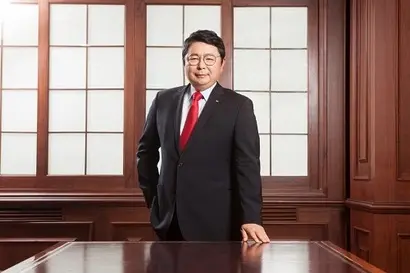
Conspiracy theories have also emerged regarding why ISU Petasys, rather than ISU Specialty Chemical, is the acquisition entity. ISU Group Chairman Kim Sang-beom (64) holds a 7.48% stake in ISU Specialty Chemical, and his wife, Kim Sun-jung, director of the Art Sonje Center (60), holds a 2.65% stake. This has led to speculation that Chairman Kim is trying to avoid placing a burden on ISU Specialty Chemical. Notably, Director Kim Sun-jung also holds a 4.27% stake in ISU Petasys. She is the eldest daughter of the late Kim Woo-choong, former chairman of Daewoo Group.
The financial sector also views the acquisition negatively. Park Hyung-woo, a researcher at SK Securities, analyzed, "The investment decision to acquire a CNT firm is an unreasonable expansion. I am concerned about a drop in the company's valuation due to an acquisition and capital increase plan that lacks the consent of existing shareholders and investors." Yang Seung-yoon, a researcher at Meritz Securities, pointed out, "ISU Petasys shareholders are not secondary battery investors. While ISU Petasys mentioned business diversification as the external reason for the takeover, it needs to resonate with investors since it is being conducted through a shareholder-allocated capital increase."
Ignoring these criticisms, ISU Petasys began the capital increase process in November last year. During this process, a variable arose: the Financial Supervisory Service (FSS) requested a correction to the securities registration statement in December. Without FSS approval, the capital increase cannot move forward. The FSS stated, "This corresponds to cases where important matters are omitted or unclear, which may hinder rational investment decisions or cause significant misunderstanding among investors."
ISU Petasys submitted a corrected statement on December 11 of last year as requested. However, on the 23rd of the same month, the FSS demanded another correction for the same reasons. ISU Petasys submitted the statement again on January 15 of this year.
Notably, the January 15 submission deleted all content related to the schedule. ISU Petasys had initially planned to hold the capital increase subscription at the end of February. In the filing, the company explained, "We intend to continue with the capital increase, but the specific schedule is currently undecided. We will disclose the details as soon as they are finalized."
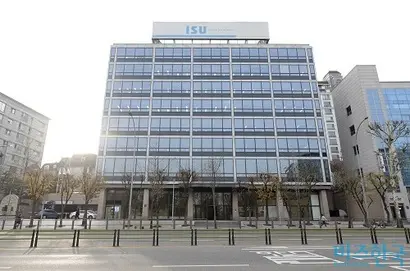
Various interpretations have emerged regarding these moves. Some believe that ISU Petasys has effectively given up on the acquisition of J.O., as public sentiment is negative and it is difficult to go against the financial authorities' stance.
There are also practical issues. ISU Petasys planned to conduct the capital increase at 27,350 won per share. The current stock price hovers around 30,000 won, but it dropped to the low 20,000 won range in November when the plan was announced. On December 12, the day after submitting the corrected filing, the stock price closed at 21,100 won, down 12% from the previous trading day. This means the stock price could fall further if the capital increase process begins. If the stock price is lower than 27,350 won, there is no incentive for minority shareholders to participate.
If minority shareholders do not participate, ISU Group affiliates must either increase their participation beyond their current stakes or the company must find a third-party investor. On January 2, ISU Petasys disclosed regarding rumors of abandoning the acquisition that "nothing has been confirmed." At the very least, it did not deny the possibility of giving up.
Conversely, some analysts argue that ISU Petasys will push ahead with the acquisition. It is reported that during a meeting with a coalition of minority shareholders on January 7, the company expressed its intent to proceed, citing that a contract has already been signed and cannot be easily withdrawn.
To acquire J.O., ISU Petasys must secure the remaining balance by March 7. The total acquisition price is 158.125 billion won. Of this, a 15.8125 billion won deposit has already been paid, and the remaining 142.3125 billion won is due on March 7. Aside from the acquisition cost, ISU Petasys plans to inject 99.69414 billion won into J.O. in the form of a capital increase on the same day. Thus, the company needs to raise 242.00664 billion won by March 7. While the capital increase plan for J.O. can be modified, the balance for the acquisition is difficult to change due to the signed contract.
As of the end of September last year, ISU Petasys had 68.3 billion won in cash and cash equivalents. If the capital increase fails, the company would have to take out loans to cover the acquisition costs. Its debt-to-equity ratio was 113.69% as of late September, which is relatively healthy. However, if debt increases by 550 billion won without other changes, the ratio would spike to 290.76%, which is a significant burden for the company.
Realistically, persuading the FSS is the best option for ISU Petasys to move forward. However, given the chaotic situation within financial authorities following the emergency martial law incident, even meeting with officials is proving difficult, let alone winning their approval. Bizhankook reached out to ISU Petasys for comment on this matter but received no response.