

[비즈한국] A 1.9 trillion won project for ‘electronic warfare (EW) aircraft’ designed to paralyze enemy integrated air defense and wireless command and control systems is set to kick off in earnest this year. Competition to secure the contract is expected to be fierce between Korea Aerospace Industries (KAI)047810 and Korean Air003490, sparking intense industry interest over who will emerge as the winner.
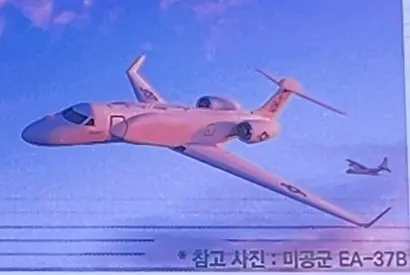
On the 20th, the Defense Acquisition Program Administration (DAPA) held an integrated briefing for 2025 defense capability improvement and defense industry promotion support projects. During the event, DAPA announced plans to issue a bid notice for the EW aircraft project between May and June. Following the bid announcement, proposal evaluations and negotiations are scheduled to begin in July to draft the system development execution plan. Contract signing is set to start in October, with the selected company commencing the project immediately. The project will be conducted through research and development from the date of the contract until 2034, with a budget of 1.9206 trillion won allocated.
In April 2023, the South Korean military approved a basic strategy for the project to secure EW aircraft through domestic R&D during the 152nd Defense Acquisition Promotion Committee. The objective of this project is to disrupt and deceive enemy integrated air defense systems and paralyze enemy wireless command and control systems from the air.
An ‘electronic warfare aircraft’ is a specialized military aircraft that disrupts enemy air defense systems from the sky. Electronic warfare is widely applied across land, sea, and air. Electronic warfare conducted using aircraft is performed through various methods, including attacks to suppress enemy air defenses, pilot warnings for aircraft self-protection, jamming, deployment of chaff (radio deception equipment), anti-aircraft missile launches, surveillance of operational areas, early warning, and the collection of communication or electronic signal intelligence.
The U.S. operates ‘electronic reconnaissance aircraft’ such as the RC-135V/W/U worldwide during both war and peacetime to collect, replicate, and analyze radio signal information from other countries' fighter jets, aircraft, ground radars, and communication equipment. The accumulated radio intelligence is then incorporated into EW aircraft pods, operational software, and hardware development.
The EW aircraft project is considered a long-cherished ambition of the South Korean Air Force and is deemed essential for preparing for the transfer of wartime operational control and enhancing deterrence against neighboring countries. Due to the current lack of EW aircraft, the Air Force has had to rely on support from the U.S. Navy and Air Force during every ROK-U.S. joint exercise.
It is predicted that the core electronic warfare equipment to be mounted on the Korean EW aircraft will be developed and produced by LIG Nex1079550. LIG Nex1 has produced ALQ-88K and ALQ-200 electronic warfare equipment for aircraft and has also developed the integrated electronic warfare system for the KF-21 fighter jet. The company also participated in the development of equipment for the Baekdu electronic reconnaissance aircraft, which collects signals intelligence.
The new EW aircraft is expected to be equipped with functions to collect the enemy's communication and radar radio frequency information and neutralize them from a distance through electronic warfare. Determining the targets for electronic warfare attacks requires the collection and identification of enemy radio frequencies. Furthermore, information collection capabilities are needed to verify the results after electronic warfare missions, and data links for real-time information sharing and equipment to protect the airframe will also be added.
A total of four EW aircraft are expected to be built through this project, with delivery to the Air Force scheduled upon the completion of development in 2034. It is anticipated that the first two will be built as Block 1 (base models), while the subsequent two will be developed as performance-enhanced Block 2 units.
KAI and Korean Air are competing to secure the contract for the aircraft modification development and system integration of the Korean EW aircraft. Both companies are reportedly well-equipped to handle the modification and development of special mission aircraft similar to the Korean EW aircraft.
Korean Air explained that the diverse experience it has accumulated while taking on special mission aircraft projects would be a great asset in winning this contract. A Korean Air official stated, "We have several significant achievements regarding special mission aircraft, such as the 2nd Airborne Early Warning and Control (AEW&C) project. We participate in much of the work as a domestic partner, and we hope to participate in the domestic R&D of the EW aircraft by utilizing the technology secured through the 2nd AEW&C project. We will begin technical meetings with LIG Nex1 regarding the EW aircraft system integration."
KAI emphasized its status as the nation's only aircraft platform developer and expressed confidence in winning the bid based on its expertise in modifying and developing special mission aircraft. A KAI official stressed, "Since the EW aircraft project requires a high level of understanding and know-how regarding aircraft airframes and design technology, we will thoroughly prepare to ensure the Air Force can secure and strengthen its airborne electronic warfare capabilities in a timely manner by maximizing the aircraft system integration technology unique to KAI as the only domestic aircraft platform developer."