

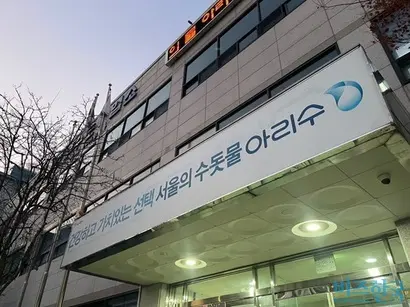
[비즈한국] It has been revealed that radioactive substances have been detected in the raw water of Seoul's tap water, Arisu. According to data on Seoul’s radioactive material inspection results obtained by Bizhankook, a total of 8 detections—6 cases of radiation and 2 cases of radon—were found during water quality tests conducted from 2012 to 2024. A Seoul city official explained, "These are minimum detectable levels that fall far below the standards set by the World Health Organization (WHO) and domestic guidelines, so there is no issue with safety."
Seoul began testing Arisu for radioactive materials in 2012. The measure was implemented following growing anxiety over radiation leaks after the 2011 Fukushima nuclear disaster. Since 2016, the scope has been expanded to include 5 types of artificial radioactive materials, 6 types of natural radioactive materials, and 1 type of radiation, due to concerns raised about potential radiation leaks from North Korean nuclear tests. At the time, Seoul stated, "No radioactive substances have been detected so far," and added, "We will continue to strengthen the monitoring of radioactive materials in Arisu."
However, according to the test results from 2012 to 2024 obtained by Bizhankook, some radioactive substances were detected in the raw Arisu water collected at the intake stations. The detected substances were 'Gross-alpha radiation (total radioactivity of radioactive substances)' and 'Radon-222,' which is classified as a natural radioactive substance.
'Gross-alpha radiation' was detected six times in 2014, 2022, and 2024, while 'Radon-222' was detected twice in 2022. The levels detected were 0.01–0.022 Bq (becquerels) per liter for Gross-alpha radiation and 0.2 Bq per liter for Radon-222. It should be noted that these were detected in raw water, and no radioactive substances have been detected in Arisu after it has undergone purification.
Seoul city explained that the detected levels of radiation do not meet the criteria that would require management intervention. According to Seoul, the city uses the following as management benchmarks: 0.5 Bq/L for Gross-alpha radiation (WHO recommendation), 100 Bq/L for Radon-222 (EU standard), and 148 Bq/L for groundwater (Ministry of Environment standard).
An official from the Seoul Water Institute explained, "The concentrations of the detected radioactive substances are at the minimum levels that inspection equipment can measure. After undergoing advanced purification, all were undetectable. Because the concentrations are extremely low, we monitor them periodically to verify safety."
Until now, Seoul had not disclosed the fact that radioactive substances had been detected. While the Seoul Arisu Headquarters website publishes regular water quality test results, the only radioactive material items disclosed are 'Iodine-131' and 'Uranium-238.'
Some point out that an analysis of the causes behind the detection of radioactive substances is necessary. Choi Kyung-sook, an activist at the Citizens' Radiation Monitoring Center, pointed out, "Gross-alpha radiation was detected six times, but it is difficult to determine whether it is natural or artificial based on this test alone. There is a need to analyze individual nuclides to track the cause, such as whether it is an impact from North Korean nuclear tests. The test results should also be disclosed to the public in the interest of the right to know."
Seoul city stated that it has not previously analyzed the causes separately. The aforementioned official from the Seoul Water Institute explained, "In the case of Gross-alpha radiation, we do not analyze individual nuclides because the testing is conducted solely for monitoring purposes."