

[비즈한국] Organic food retailers, which saw growth during the pandemic due to rising interest in healthy eating, are now facing deep concerns over declining performance. Industry insiders explain that as the economic downturn persists, consumer preference has shifted from spending on healthy food despite the high price to prioritizing value for money, leading to a slump in the market.
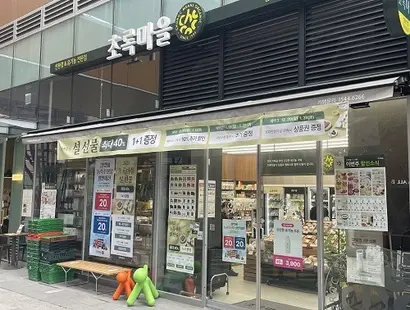
More than 40 Offline Stores Closed
Recently, there have been growing complaints among consumers who frequently used organic grocery stores about the noticeable decline in store numbers. Customer A recently received a text message announcing the closure of an organic specialty store they often visited. They said, "The message stated that they could no longer operate due to difficult business conditions. An organic store near my parents' home also closed recently," adding, "I can feel that organic stores are disappearing. It’s very disappointing because it feels like I’ll have to travel far just to visit one."
In December of last year alone, Chorocmaeul closed several locations, including the Seohyeon Station, Eunyeoul Park, and Umyeon branches. Hansalim has also recently closed branches such as Gaesin, Hwamyeong, and Sinbong, while Natural Dream has shut down its Seoul Bukgajwa, Jeongja, and Wirye New Town branches.
During the pandemic, the growth of offline organic retailers was distinct. This was due to an increase in demand for home-cooked meals and a rapidly growing interest in health. The "Healthy Pleasure" trend, which prioritizes both taste and health, emerged, and consumers willing to pay more for quality sought out organic food.
However, as the economic downturn continued, consumer focus shifted toward "value for money," and the growth of organic retailers stalled. An industry official said, "Organic consumption peaked during the COVID-19 period. But it is true that the atmosphere has cooled recently, perhaps due to the impact of the economic slump." Another industry insider explained, "The closure rate of offline stores for organic companies is rising. Since organic food is a market sought by those who prefer healthy options over value-for-money, it seems to be heavily affected by the cold domestic consumption climate."
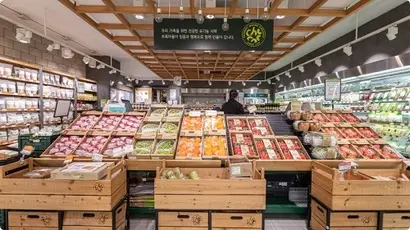
The sentiment surrounding Chorocmaeul, considered a leading eco-friendly organic brand, is also not positive. Although Chorocmaeul set a goal to expand its offline franchise count by 10% last year, the number of stores actually decreased. The number of offline stores, which was 396 in 2020, fell to 360 by early 2024, and has now shrunk to 313. While Chorocmaeul is strengthening its online delivery services, there is speculation that revenue may have declined last year due to the reduction in the number of stores, as the company remains highly dependent on offline sales.
Chorocmaeul has been experiencing a decline in performance since 2022. Revenue fell from 202.2 billion KRW in 2021 to 190.9 billion KRW in 2022, and further decreased to 178.8 billion KRW in 2023. During the same period, operating losses widened from 4.1 billion KRW to 8.3 billion KRW and then 8.6 billion KRW.
A Chorocmaeul representative explained, "The number of stores decreased due to natural attrition, including the economic downturn and contract expirations," adding, "However, we are still opening new locations, with 3 stores opening in the last two weeks alone."
How to Create Synergy with Jeongyookgak
Chorocmaeul has remained in a deficit since 2018, when Daesang Holdings 084690 took over management. However, when it appeared on the M&A market in 2022, many companies showed interest in acquiring it. Because it was a time when consumer interest in eco-friendly food was surging, they judged that Chorocmaeul, as an organic specialty retailer, had significant growth potential. Companies like Kurly, E-Mart Everyday, and Barogo kept an eye on acquiring Chorocmaeul, but in the end, it was acquired by the startup Jeongyookgak.
However, the growth trend of the organic market has stalled, and Chorocmaeul has failed to turn its performance around since being acquired by Jeongyookgak. Jeongyookgak stated in April and June of last year that Chorocmaeul had achieved EBITDA profitability and expected to reach quarterly profits thereafter, but it seems it has yet to hit those targets. A Chorocmaeul representative explained, "We are currently totaling the fourth-quarter results. There were months in the second half of the year where we achieved monthly profits. However, due to the cold domestic consumption, quarterly profits appear to be delayed."
Jeongyookgak continues to contemplate the synergy of integrating with Chorocmaeul. Last year, as part of a strategy to supply livestock products to Chorocmaeul’s offline stores—which have already secured a customer base for safe food—they opened Jeongyookgak corners in some Chorocmaeul stores in a shop-in-shop format. However, plans for future expansion are undecided.
A Chorocmaeul representative stated, "We are creating synergies in infrastructure such as IT, production, and logistics, including cost reduction, improved quality and service, and simplified processes. We are now expanding this synergy into areas that customers can directly experience (product planning and development, sourcing, etc.)."
This year, they are also pinning their hopes on entering overseas markets. In January last year, Chorocmaeul signed an export contract with a Singaporean food e-commerce platform. As they completed the shipping of the initial volume at the end of last year, they expect to see results in overseas markets starting this year.
A Chorocmaeul representative explained, "This year, we plan to create our own big data and AI-based trade area analysis solution to implement nationwide trade area analysis and a locally-based strategy to recruit store owners. We will also push for key tenant shop-in-shops connected with large distribution networks," adding, "We have plans to roll out customized growth strategies for each store. We also plan to expand exports to the Americas and elsewhere."