

[비즈한국] Change always breathes new life into a city. South Korea’s cities are no exception. In particular, aging planned cities in the provinces—once the centers of industrialization and urbanization—are now facing a new phase. Names like Busan Haeundae, Daejeon Dunsan, Incheon Guwol, and Gwangju Sangmu were synonymous with their eras, but they now require a new leap forward amidst aging infrastructure and changing urban structures. In this column, we will explore the necessity of redeveloping these aging planned cities in the provinces and examine their potential and direction, focusing on key regions and complexes.
The Background of Redeveloping Aging Planned Cities in the Provinces
During the period of rapid urbanization in the 1980s and 1990s, major provincial cities were created as new towns and residential development districts under innovative urban planning. At the time, they provided advanced living environments and became the central axes of regional development. However, 30 to 40 years later, they have reached a point where new redevelopment is necessary due to outdated infrastructure and changes in population structure.
The government recognizes this situation and is actively promoting the renewal of these aging planned cities. In particular, regions such as Busan Haeundae, Daegu Chilgok, Daejeon Dunsan, and Gwangju Sangmu have played key roles within their cities but are now at risk of stagnation if they are not improved.
Promising Areas for Leading Projects in Provincial Aging Planned Cities
Redeveloping aging planned cities goes beyond simple reconstruction of buildings; it carries the greater goals of revitalizing the regional economy and strengthening urban competitiveness. Areas with high potential for redevelopment generally boast excellent transportation accessibility and previously served as regional hubs. Below are the key candidate areas and complexes for leading projects.
① Haeundae-gu, Busan
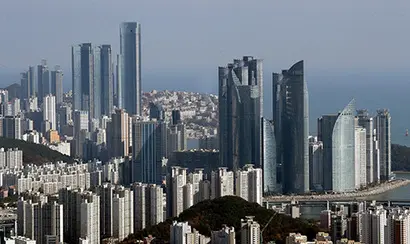
Busan Haeundae was once a representative new town of South Korea and remains a region that attracts constant streams of domestic and international tourists. In particular, the Haeundae New Town (Jwa-dong New Town) area was densely packed with high-end residential complexes and commercial facilities, but the necessity for reconstruction is currently emerging due to the aging of some complexes. Haeundae New Town 1 and 2 offer excellent transportation accessibility and living convenience, remaining a preferred area for Busan citizens. With strong resident consensus and a high willingness to push for redevelopment projects, it is highly likely to be designated as a leading district. In particular, once reconstruction is completed, apartment complexes in the U-dong and Jwa-dong areas are expected to be reborn as high-end residential zones, further boosting regional value.
② Hwamyeong District, Buk-gu, Busan
Hwamyeong in Buk-gu, Busan, was once a representative new town in the city, but it is one of the areas that has required revitalization over time. While the Hwamyeong 2 District and Geumgok areas gained popularity due to relatively low housing costs and a pleasant environment, recent aging of residential facilities and infrastructure calls for redevelopment. In particular, if urban restructuring is carried out in conjunction with a regional transportation network, Hwamyeong has the potential to become a new hub for the northwestern part of Busan.
③ Chilgok and Seongseo, Daegu
In Daegu, Chilgok and Seongseo are being discussed as strong candidates. Chilgok is a major residential area in the northern region with a long history. In particular, districts including the Chilgok area possess the potential to accommodate new housing trends through reconstruction and redevelopment on top of existing, stable infrastructure. Seongseo is a hub connected to industrial complexes in southwestern Daegu, with a high possibility of being reborn as a mixed-use district combining commerce and residence.
④ Dunsan and Noeun Districts, Daejeon
Daejeon Dunsan was once a symbolic new town of Daejeon Metropolitan City, but recent aging of residential complexes has led to increased demands for reconstruction. Large-scale complexes in the Dunsan-dong and Wolpyeong-dong areas need to be reorganized as representative residential areas of Daejeon. Meanwhile, Noeun is a region with high growth potential through its connection to the nearby Sejong City. Large residential complexes centered around Noeun Station have the potential to leap forward as new residential hubs with future improvements in the transportation network.
⑤ Guwol and Yeonsu, Incheon
In Incheon, Guwol-dong and Yeonsu-gu are garnering attention as leading regions for redevelopment projects. Guwol-dong is a representative commercial and residential area of Incheon, and there is a great need to improve old apartments and commercial districts simultaneously. Residential complexes near the Songdo International City in Yeonsu-gu have the potential to strengthen ties with Songdo through reconstruction and absorb the added value of Songdo, which is developing into a global business hub.
⑥ Sangmu and Hanam, Gwangju
In Gwangju, the Sangmu and Hanam districts are also mentioned as core areas for redevelopment. The Sangmu district is the administrative center of Gwangju and has a high demand for reconstruction due to many old residential complexes. The Hanam district is a major residential area in northern Gwangju, and given its transportation accessibility and spacious living environment, the effect of redevelopment projects is expected to be significant.
⑦ Hwajeong District, Goyang
The Hwajeong District in Deogyang-gu, Goyang, is a representative new town in the northern metropolitan area, boasting an excellent transportation network and convenient living infrastructure. However, as large-scale apartment complexes have aged, the time for redevelopment has arrived. Once reconstruction is completed, complexes near Hwajeong Station are highly likely to leap forward as popular residential areas based on their accessibility to Seoul.
⑧ Hwabong, Ulsan
Hwabong in Buk-gu, Ulsan, is a residential area close to large industrial complexes and has grown alongside regional industrial development. Recently, the aging of apartment complexes and a lack of resident amenities have been pointed out as issues, highlighting the need for redevelopment. Hwabong has a high potential to become a new residential area linked to Ulsan's industrial infrastructure.
⑨ Jangyu, Gimhae
Jangyu in Gimhae is a representative new town in the Gyeongnam region that has gained popularity for its convenient transportation network and relatively low housing costs. However, demands for redevelopment are rising due to the aging of complexes and insufficient infrastructure. As a transportation hub connecting Gimhae and Busan, Jangyu is a place expected to create greater urban value through reorganization.
For these candidate sites for leading provincial aging planned city redevelopment to be successfully reborn, several important tasks must be resolved.
First is securing resident consent. The biggest obstacle to reconstruction and redevelopment is the rate of resident consent. Transparent and fair procedures are essential to gain the understanding and cooperation of residents.
Second is financial and legal support. The financial support and legal framework of the government and local authorities must be strengthened. In particular, cooperation between the public and private sectors is crucial.
Third is the dimension of balanced development. Strategies are needed to bridge the gap between the capital region and the provinces, and to enhance competitiveness by leveraging the unique characteristics of each region.
Redeveloping aging planned cities in the provinces is a significant project that goes beyond simply creating new buildings; it is about unlocking the economic and social potential of the regions. Busan Haeundae and Hwamyeong, Daegu Chilgok and Seongseo, Daejeon Dunsan and Noeun, Incheon Guwol and Yeonsu, Gwangju Sangmu and Hanam, Goyang Hwajeong, Ulsan Hwabong, and Gimhae Jangyu are leading candidates to spearhead these changes.
Successful redevelopment of these areas will provide a better quality of life for local residents and offer new competitiveness to the city as a whole. Now is the time to pay attention to the process of change, with the hope that these cities will once again emerge as the protagonists of South Korea's urban development.
Kim Hak-ryeol, the head of the Smart Tube Real Estate Research Institute, known by his pen name "Pasyong," formerly served as a team leader at the Korea Gallup Real Estate Research Division. He operates and hosts the Naver blog 'Pasyong's World Tour' and the YouTube channel 'Tube TV'. His books include 'The Power of Gyeonggi Real Estate (2024)', 'Absolute Principles of Seoul Real Estate (2023)', 'The Future of Incheon Real Estate (2022)', 'Kim Hak-ryeol's Absolute Principles of Real Estate Investment (2022)', 'Future Map of South Korean Real Estate (2021)', 'From Now On, Only Places That Will Rise, Rise (2020)', and 'South Korean Real Estate User Manual (2020)'.