

[비즈한국] The "sale of personalized health supplements," which had been operated as a pilot project, is being institutionalized starting this month. It is now possible to subdivide and combine one or more types of health supplements based on an individual’s lifestyle and health condition. Unlike the pilot project, product forms have been narrowed down to three types—tablets, capsules, and pills—and because sellers can choose whether or not to purchase accident liability insurance, there are concerns that consumer compensation may be difficult in the event of an incident.
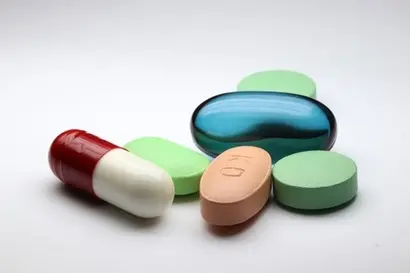
The sale of personalized health supplements was selected as a regulatory sandbox project in 2020 and operated on a pilot basis. Although the subdivision and sale of health supplements are generally prohibited, the project was pursued in response to the growing demand for "personalized" products tailored to individual physical conditions. Subsequently, the Ministry of Food and Drug Safety included this in its "100 Tasks for Food and Drug Regulatory Innovation" and actively pushed for its institutionalization. The Ministry stated, "The project has operated stably, with a continuous increase in participating companies and sales, and no safety-related issues such as adverse events reported."
According to the Ministry, as of September last year, approximately 3,900 locations had been approved, with 687 currently in operation. The cumulative sales amount stands at 24.5 billion won, with about 300,000 cumulative users. The new legislation includes requirements for business registration for the subdivision and combination of personalized health supplements, the purchase of accident liability insurance, and provisions for fines for obstructing the duties of personalized health supplement managers. Additionally, the range of product forms has been restricted from the previous six (tablets, capsules, pills, flakes, bars, and jellies) to three (tablets, capsules, and pills). It is expected that the business will become more vibrant as it becomes fully institutionalized.
On the other hand, some are concerned that it may be difficult to provide consumer compensation if side effects occur after consumption, as purchasing accident liability insurance is not mandatory for sellers. While the bill states that business operators may purchase liability insurance to compensate for consumer damages resulting from health risks caused by subdivision and combination, it does not make it compulsory. The compensation limit for the liability insurance is 150 million won per person for death, 150 million won for permanent disability, and 30 million won for injury.
Some companies already purchased liability insurance during the pilot period. Monolabs' 'IAM' and Pulmuone017810 Health & Living's 'Perpack' announced that they have enrolled in accident liability insurance. Other companies have informed customers on their websites of their enrollment in business liability insurance or personal information protection liability insurance as "liability insurance or damage compensation measures."
Previously, the Ministry of Food and Drug Safety stated at the beginning of the pilot project that "by providing only necessary ingredients in a personalized manner, the occurrence of adverse events due to excessive intake or misuse is expected to be minimized." However, they also noted, "Since adverse events can occur depending on an individual's constitution and characteristics, we plan to manage the process to prevent the combination of excessive amounts at once and operate alongside protective measures such as the verification of adverse events and consumer damage compensation."