

[비즈한국] As the voluntary agreement restricting the opening of convenience stores in close proximity has been extended for another three years, the convenience store industry is expected to face difficulty in accelerating new store openings this year. Consequently, competition to win over stores with expiring contracts is expected to intensify; however, concerns remain that this may prove to be a difficult challenge for 7-Eleven, which currently suffers from lower brand competitiveness.
Increasing Waste Support Subsidies to Industry-Leading Levels and Strengthening Medical Benefits
It has been confirmed that the “Voluntary Agreement on Restricting Convenience Store Proximity Openings,” which expired at the end of last year, is currently being prepared for a three-year extension. In 2018, the convenience store industry established this agreement to prevent over-saturation. The policy restricts the opening of new stores within a 50–100m radius of existing convenience stores (tobacco retailers).
Following three years of implementation, the agreement was extended in 2021 for another three years (expiring in December 2024). Although it expired at the end of last year, the industry has decided to extend it for an additional three years. An official from the Korea Convenience Store Industry Association explained, “With 7-Eleven’s acquisition of Ministop, some modifications were made, such as removing the Ministop branding. We have submitted the revised agreement to the Fair Trade Commission for a complementary review and are currently awaiting the results. Once approved, the three-year extension will take effect from the date of the change.”
As the restrictions on proximity-based openings remain in place, the industry is expected to find it difficult to speed up new store openings this year. Rumor has it that GS25 and CU have also adjusted their annual expansion targets downward compared to last year. It is expected that competition between brands to “steal” each other’s stores will intensify in order to increase their total store counts. An industry insider noted, “Outside of new towns, there is a consensus that there are no longer many viable locations for new stores. The convenience store market will likely see an intensifying scramble to convert rival brands to one's own, similar to the mobile carrier market.”
The convenience store industry is focusing on its win-win policies for franchisees to protect stores reaching contract expiration and to attract owners from competing brands. Companies are striving to boost brand preference by increasing subsidies and creating welfare policies for franchisees.
Among the brands introducing win-win policies, 7-Eleven stands out. This year, through its franchisee win-win agreement, 7-Eleven has raised its waste support subsidies to the highest level in the industry. The waste support rate for food items—which are core to convenience store revenue, such as triangle kimbap, kimbap, and lunch boxes—has been increased from a maximum of 40% to 50%. Since 2023, 7-Eleven has operated with a 50% waste support rate for convenience foods like spaghetti and udon, and with this year’s policy, it is extending that rate to cover all food categories. It has also strengthened welfare benefits for franchisees, including medical support programs.
A 7-Eleven official stated, “We are working hard for the win-win growth of our franchisees. For convenience foods made from rice, we have expanded the waste support rate to the highest level in the industry. We have also introduced policies that have expanded upon existing medical benefits.”
Worsening Profitability After Ministop Acquisition, Slow Pace of Store Expansion
Although 7-Eleven emphasizes franchisee-friendly policies such as industry-leading support systems, critics suggest its brand competitiveness is somewhat weak. There are also forecasts that the task of converting rival franchisees to 7-Eleven will not be easy. An industry insider pointed out, “Even when GS25 or CU are busy developing new products linked to popular content, 7-Eleven has an atmosphere of releasing very few related products. You need to release many new items to find hits, and that is where 7-Eleven seems to be falling short.”
The convenience store industry typically ranks market share by the number of stores, as a higher store count generally leads to larger sales volume. When 7-Eleven decided to acquire Ministop, there were high expectations that it would solidify a “Big 3” system in the industry. However, 7-Eleven has been struggling to accelerate its store expansion.
Although the acquisition of Ministop was completed in March of last year, the gap in store numbers between 7-Eleven and GS25/CU remains large. As of the end of 2023, CU maintained 17,762 stores and GS25 had 17,390, whereas 7-Eleven had only 13,130. The number of stores actually decreased from the 14,265 it had at the end of 2022. A 7-Eleven official explained, “During the Ministop integration, we have been carrying out structural improvements for low-efficiency, low-margin stores. We closed some stores that were unprofitable or struggling.” The current store count has not been disclosed.
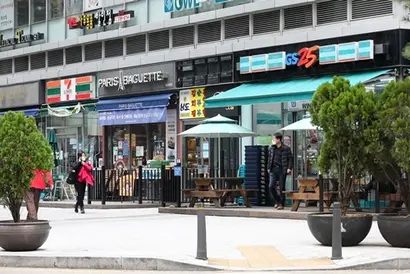
Investment costs for the convenience store business also show a significant difference compared to other brands. The annual investment budget for the convenience store business of Korea Seven, the operator of 7-Eleven, was set at 65.487 billion KRW for 2024. Of that, 57.016 billion KRW was executed through the third quarter. In contrast, GS Retail007070 set its annual investment budget at 391.133 billion KRW and spent 280.956 billion KRW by the third quarter. BGF Retail also executed 203.666 billion KRW of its 336.946 billion KRW investment budget for 2024.
Korea Seven appears to be significantly cutting its investment in the convenience store business. It invested 120.425 billion KRW and 210.94 billion KRW in 2023 and 2022, respectively, while working on the Ministop acquisition. Even compared to pre-acquisition levels in 2021 (172.249 billion KRW) and 2020 (142.71 billion KRW), last year's investment (65.487 billion KRW) has been reduced to less than half.
Since the Ministop acquisition, Korea Seven's profitability has been deteriorating. Cumulative sales through the third quarter of last year reached 4.0595 trillion KRW, with an operating loss of 52.8 billion KRW. In October of last year, the company implemented a voluntary retirement program for the first time since its incorporation. It also implemented a wage freeze for the first time in seven years and moved its headquarters to reduce operating costs.
A 7-Eleven official stated, “Sales and operating profits are gradually showing signs of improvement. We expect this trend to continue this year,” adding, “We plan to continue opening new stores. We will proceed with a strategy of carefully selecting high-efficiency locations rather than indiscriminate expansion.”