

[비즈한국] An unexpected work recently caught attention by making the shortlist for the Best Animated Short Film at the 97th Academy Awards. The protagonist is the Japanese animated film 'Magic Candies'. Should we really be paying attention to Japanese animation? Moreover, isn't it already common knowledge that Japanese animation is world-renowned?
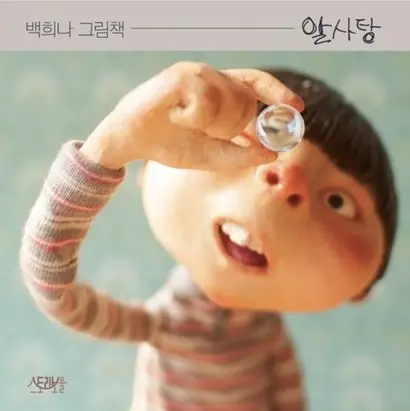
This Japanese animation is based on the picture books 'Magic Candies' and 'I Am a Dog' by the renowned Korean author Baek Hee-na, famous for her book 'Cloud Bread'. Because the original works are picture books, they have the advantage of being easily adapted into animation. The possibility of an Academy Award win is also high. The animation has already won the Best Short Film Jury Award at the New York International Children's Film Festival (NYICFF) in March 2024.
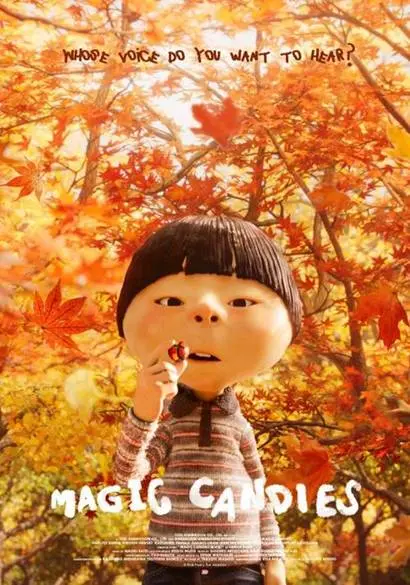
Japanese creators have stated that they were awestruck by the fact that such a magnificent picture book existed in Korea. The production team involved also consists of prominent figures in Japan. The film was directed by Daisuke Nishio, known for the 'Dragon Ball' and 'Kindaichi Case Files' series, and produced by Takashi Washio, who worked on 'The First Slam Dunk'. Despite their fame and expertise, instead of adapting it in a purely Japanese style, they sought to realize a Korean aesthetic by fully preserving the texture of the clay dolls created by author Baek Hee-na.
In Korea, Baek Hee-na's works were never adapted into animations. We have effectively surrendered an important cultural asset of ours to Japan. Perhaps we are currently focusing too much only on webtoons.
Beyond webtoons, the graphic novel is a genre that demands our attention. Following Keum Suk Gendry-Kim, the author of 'Grass', the most recent Korean figure to receive international acclaim in the field of graphic novels is Ma Young-shin. Ma received the 2021 Harvey Award—often called the Oscars of the comics industry—for his work 'Moms'. This marked the second consecutive year a Korean author had won the award, following Gendry-Kim. Ma was also nominated for the Prix Guimet de littérature asiatique (Graphic Novel category) in France. Following 'Moms', his works 'Love Streaming' and 'Artist' are set to be adapted into screen productions, and 'Hodo' is also awaiting international publication.
Ma is particularly recognized because he draws directly with a pen rather than on a tablet PC. In the international market, a graphic novel refers to a "drawn novel." It signifies comics that are more artistic in illustration and deeper in content than traditional comics. Ma points out that the reason Korean webtoons have failed to show concrete results in Europe or North America is that the graphic novel genre has not been properly accepted within webtoon platforms.
In Europe, where our portal webtoon platforms are knocking on the door, printed comics remain the mainstream of the comic industry. Last year at the Angoulême International Comics Festival in France, Korean comic artist Park Yoon-sun’s 'Oh My God, Miss Bang' won the top prize in the children’s category, the Fauve Jeune Public. It is a pity that while our graphic novels—which are essentially printed books—are being recognized abroad, they are neglected at home. Graphic novels can serve as a reservoir of inspiration.
Graphic novels can be considered an independent comic genre, and independent comics are linked to printed comics. The devoted readers—the enthusiasts—of printed comics represent a core fandom that elevates the cultural standards of our country. Conversely, the Korean portal webtoons that are actively seeking overseas expansion tend to rely on light fandoms rather than core ones. It is similar to how a weekend drama may have high viewership ratings but few passionate fans, while a drama with lower ratings may have a much larger core fandom.
Even if webtoons become hot topics due to high view counts, they rarely possess high artistic merit. This is why, even if they draw attention during their adaptation into screen media, they are seldom discussed long after. Moreover, it is difficult to find cases where webtoons are adapted into high-quality animations. If Korean webtoons were truly extraordinary, Japanese animation directors and production teams would be interested, but that is not the case. Instead, they focused on Korean picture books. Ultimately, this only enhances the brand value of Japanese animation.
It is regrettable that while small but essential Korean graphic novels are receiving global attention, there are no efforts to institutionalize or scale this domestically. In a reality where all talented creators are flocking to webtoons, I want to ask if that is truly the only right path. Rather than focusing on popular "success codes" for commercial gain through webtoons, we must fundamentally deliberate on cultivating professional talent to elevate comics to the level of art. Only then can webtoon platforms become a tree with deep roots. The webtoon industry must reflect on the fact that the growth of printed comics is inseparable from the growth of webtoons. The government should also actively seek policies to support this. We often see attempts to pick the fruit before the roots have grown deep, which is no different from foreshadowing a crisis for Korean webtoons.
The author, Kim Heon-sik, has spent his time navigating and dissecting the forest of popular cultural phenomena since his 20s, driven by the hope that there is a way to make the world a better place through culture. He continues on the same path with the same belief, even in the 21st century, where artificial intelligence and quantum computers are at play.