

[비즈한국] There is a family. An elderly father and mother, and four grown daughters. Then, it is revealed that the father, in his 70s, is having an affair. It seems there is even a young son. There are other problems, too. The eldest daughter, a widow working as a flower arrangement instructor, is involved in an affair with a married man, and the second daughter, a stay-at-home mom with a devoted husband and energetic children, is actually suspicious of her husband’s infidelity. The third daughter, a librarian, has a prickly personality bordering on germophobia, and the youngest, a waitress, is secretly living with an unknown boxer. Naturally, one might think, "What a dysfunctional family!" This is the story of the Takezawa family in the Netflix series 'Like Asura'.
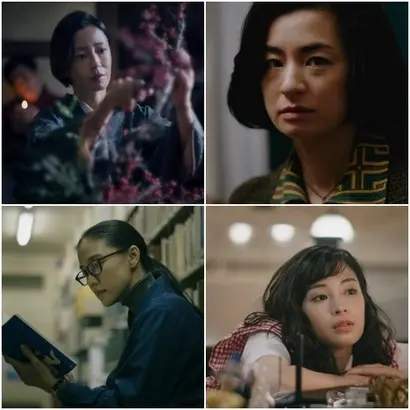
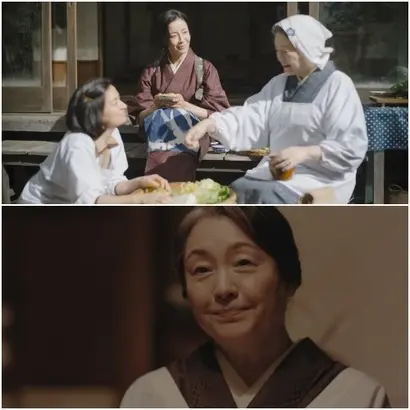
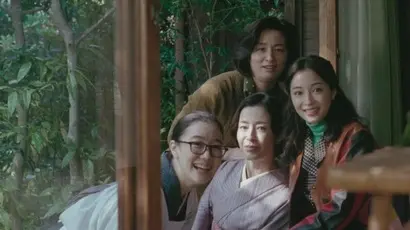
The four daughters of the Takezawa family live disparate lives, varying in appearance, personality, and family circumstances. When they discover that their father, Kotaro (Jun Kunimura), has been cheating on their devoted mother, Fuji (Keiko Matsuzaka), for several years, they hit a deadlock: some argue it’s a private marital matter they shouldn’t interfere with, while others insist they must take strong action. The core of 'Like Asura' revolves around the sisters gathering frequently to discuss their father, only to have their own hidden secrets exposed and long-standing conflicts surface. While the surface-level conflict is the father’s affair, the personal situations each daughter harbors and their complex family dynamics stir up just as many minor conflicts, drawing the viewer in.
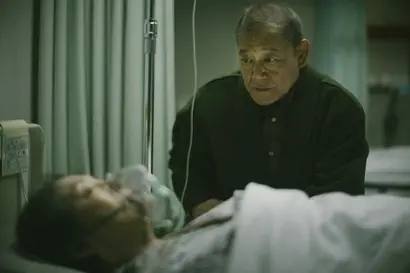
Even considering the setting is 1979 Tokyo, Japan, the fact that a family member is committing adultery is just as shocking now as it was then. Let’s imagine this were our own family. Wouldn't we immediately identify with the third daughter, Takiko (Yu Aoi), who hired a private investigator to dig up the truth about her father’s affair? But upon further reflection, other thoughts emerge. A father who has deceived his wife and cheated for years likely won't leave her easily, and if they don't divorce, isn't it better for the mother not to know at all? This line of thinking might be subtly tinged with the fear that if the parents split, the children would be the ones left to pick up the pieces.
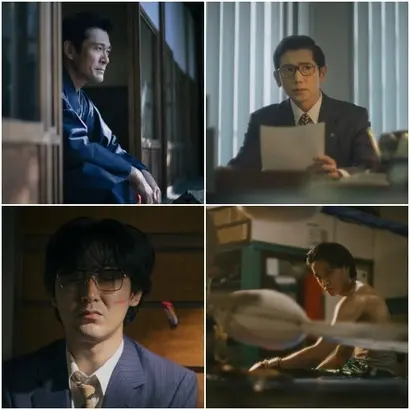
Amidst this, the second daughter, Makiko (Machiko Ono), who suspects her own husband Takao (Masahiro Motoki) of infidelity, cannot understand her eldest sister Tsunako (Riho Miyazawa) for having an affair with a married man and tries to find her a new marriage partner. Tsunako, who has a grown son, knows she should end the affair, but it isn't easy. Meanwhile, the long-standing tension between the third sister, Takiko, and the youngest, Sakiko (Suzu Hirose), deepens. Unlike Takiko, who did well in school but had no luck with love, Sakiko was less academic but popular for her looks, which bred a subtle sense of inferiority in Takiko. When Sakiko's husband, the boxer Jinnai (Kisetsu Fujiwara), succeeds, she flaunts her success to her sisters. Takiko, who has fallen in love with the private investigator Katsumata (Ryuhei Matsuda), feels bitter and jealous because Katsumata seems "lesser" than Jinnai.
The stories in 'Like Asura' are intense yet portrayed with a calm sensibility, and there is a particular pleasure in peeking into the storm of emotions brewing beneath that stillness. It perfectly captures Charlie Chaplin’s famous quote: "Life is a tragedy when seen in close-up, but a comedy in long-shot." Since it is a family story where a myriad of emotions fluctuate in an instant—making one wonder if they actually like or hate each other—there is a fun element in imagining how your own family might handle such situations.
Furthermore, the pleasure of watching the performances and the chemistry of the actresses who define their generations in Japan is a major strength of this series. Keiko Matsuzaka (born 1952), who plays the mother, is familiar to older Korean viewers as the Japanese-Korean actress Han Kyung-ja; her emotional explosion in the scene where she finally confronts her husband's infidelity, having silently pretended not to know, is the highlight. The sisters' cast is truly stellar: Riho Miyazawa (born 1973), an icon of 90s Japan who became a powerhouse actress through works like 'Tony Takitani,' 'Paper Moon,' and 'Her Love Boils Bathwater'; Machiko Ono (born 1981), famous for 'Like Father, Like Son' and the dramas 'Mother' and 'Matrimonial Chaos'; Yu Aoi (born 1985), especially popular in Korea in the 2000s for films like 'All About Lily Chou-Chou,' 'Hana and Alice,' and 'Hula Girls'; and finally Suzu Hirose (born 1998), the most sought-after actress currently for 'Our Little Sister,' 'Wandering,' and 'Kyrie’s Song.' It is a literal gathering of the most prominent Japanese actresses of their respective eras.
Added to this are the masterful performances of male actors like Jun Kunimura (familiar from 'The Wailing' and 'The Roundup: No Way Out'), Masahiro Motoki (who proved his range and popularity in 'Sumo Do, Sumo Don't' and 'Departures'), and Ryuhei Matsuda of 'The Great Passage.' The drama itself isn't packed with dopamine-rushing twists or immense magnetic tension, but then again, our daily lives aren't exactly that dramatic, are they? It’s perfect to watch one episode at a time whenever you have a moment, as if you’re quietly peeking into someone else's life.
For context, 'Like Asura' is a remake of the 1979 NHK drama of the same name scripted by Kuniko Mukoda, returning after 46 years. It is famous in Japan, having also been adapted into a film and stage play. Since it is the second Netflix series directed by Hirokazu Kore-eda—who has a significant following in Korea for films like 'Nobody Knows,' 'Like Father, Like Son,' 'Our Little Sister,' 'Broker,' and 'Monster'—following 'The Makanai: Cooking for the Maiko House,' it is highly recommended if you enjoy Kore-eda’s sensibilities.
About the writer, Jung Soo-jin?
I have covered films, travel, and pop culture across various magazines. I don't want to fall behind on trends, but I've become that old-timer who predicts every cliché in the next scene of a latest drama. I’m currently drifting through the vast OTT universe, trying to regain my lost touch. My current wish is for an integrated OTT subscription plan.