

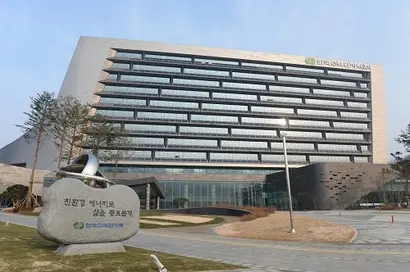
[비즈한국] Korea Hydro & Nuclear Power (KHNP) has been confirmed to be pursuing the construction of hydrogen fuel cell power plants in Gwangju and Pocheon, Gyeonggi Province. KHNP previously constructed a hydrogen fuel cell power plant in Pohang, North Gyeongsang Province, last year, which is currently in operation. Once the two new plants are completed, KHNP is expected to establish a significant presence in the hydrogen fuel cell market.
Strong Interest in Hydrogen Fuel Cell Agreements and Technology Development
KHNP has shown interest in hydrogen fuel cells for several years. The company has signed agreements with numerous firms and has been dedicated to developing hydrogen fuel cell-related technologies. It also established plans to directly operate hydrogen fuel cell power plants. In April 2021, KHNP signed a memorandum of understanding (MOU) with North Gyeongsang Province, Gyeongju City, and Uiduk University for an "Industry-Academic Cooperation Gyeongju Hydrogen Fuel Cell Power Project." The core of the MOU was to build a hydrogen fuel cell power plant on the Uiduk University campus, with KHNP planning to oversee construction and operations. However, a KHNP official stated, "The Gyeongju hydrogen fuel cell power plant project plan has currently been scrapped."
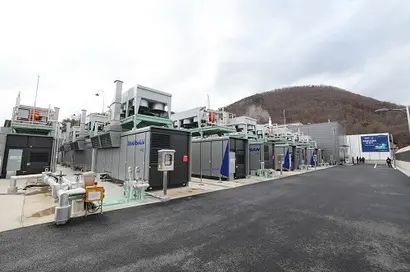
Instead, KHNP completed the "Pohang Energy Park" in January of last year. Pohang Energy Park is the first hydrogen fuel cell power plant operated directly by KHNP. Its annual power production is approximately 160 million kilowatt-hours (kWh), enough to supply electricity for 33,000 households for one year. Hwang Joo-ho, CEO of KHNP, expressed his anticipation, stating, "Starting with the Pohang Energy Park, KHNP will secure fuel cell operation and maintenance technology to enhance the competitiveness of our fuel cell business and lead the way in contributing to the improvement of fuel cell technology together with our suppliers."
According to Bizhankook’s reporting, KHNP also plans to build hydrogen fuel cell power plants in Gwangju and Pocheon, Gyeonggi Province. Like the Pohang Energy Park, these plants are expected to be operated directly by KHNP. It is reported that discussions with the relevant local governments have been largely concluded. Both plants are targeting a 2026 groundbreaking and a 2027 completion date.
KHNP plans to operate the two plants for 20 years after completion. A KHNP official explained, "From the 21st year after completion, we will operate flexibly by reflecting domestic energy conditions and the efficiency of hydrogen fuel," adding, "There will be various methods available, such as sale or decommissioning."
Notably, it is understood that the Gwangju hydrogen fuel cell power plant was proposed by the local government. In September 2023, Gwangju's Dong-gu district successfully won a bid for the "2024 Hydrogen City Development Project" hosted by the Ministry of Land, Infrastructure and Transport. At the time, Dong-gu announced plans to invest a total of 85 billion won—comprising 21 billion won in state funding, 12.6 billion won in municipal funding, 11.4 billion won in district funding, and 40 billion won in private capital—to create a hydrogen city on the site of the Sotae-dong sanitary landfill from 2024 to 2027. The site for KHNP's hydrogen fuel cell power plant is also in Sotae-dong, Dong-gu.
Business Feasibility Remains the Key
However, the atmosphere surrounding hydrogen fuel cells is not entirely positive. The industrial sector has been striving to foster a hydrogen ecosystem since the Moon Jae-in administration. Yet, sales of hydrogen vehicles, the core of the hydrogen ecosystem, have been sluggish. According to SNE Research, global hydrogen vehicle sales fell by 17.35% from 12,034 units in the first nine months of 2023 to 9,946 units in the same period of 2024. In particular, South Korea's hydrogen vehicle sales dropped by 25.79% from 4,013 to 2,978 units during this period.
SNE Research assessed, "The overall market size has shrunk as low sales continue in the domestic market, which was once the leader in hydrogen vehicle market share. Despite the government's roadmap, the supply of hydrogen vehicles is slow, and plans for new passenger car releases are severely lacking. It is uncertain when the expansion of the hydrogen vehicle market, which lags behind the electric vehicle market in infrastructure, economic feasibility, and policy, will take off."
Hydrogen fuel cells have low density, making large-scale storage and long-distance transport relatively difficult. Because of this, most existing hydrogen fuel cell power plants are known to be operating at a loss. According to Rep. Han Moo-kyung of the People Power Party, 35 hydrogen fuel cell power plants operated by state-owned power companies in Korea incurred a total loss of 125.7 billion won in 2023.
Opposition from residents must also be overcome. There are significant concerns regarding potential explosions at hydrogen fuel cell power plants. In fact, Korea Southern Power (KOSPO) saw its planned construction of a hydrogen fuel cell plant in Saha-gu, Busan, halted due to resident opposition, and the project was recently scrapped. Similarly, in 2023, Songdo Green Energy’s plan to build a hydrogen fuel cell power plant in Songdo International City was canceled due to resident protests.