

[비즈한국] About 66 million years ago, a massive asteroid crashed into the Yucatan Peninsula near what is now Mexico. The collision of an asteroid 200km in diameter caused immense changes to Earth's climate, and the giant reptiles that had long ruled the planet slowly vanished. This was recorded as the fifth mass extinction event on Earth.
However, meteorites are not always synonymous with destruction and death. Sometimes, they act as a flare signaling the birth or beginning of new life.
British biologist Francis Crick, famous for discovering the double-helix structure of DNA, put forth an intriguing hypothesis in 1973—a time when the world was abuzz with UFO fever following the end of World War II—alongside chemist Leslie Orgel. It is the hypothesis that substances embedded on the surfaces of asteroids and comets that flew to Earth long ago were delivered to our planet and served as the seeds of life.
Until then, almost all biologists believed that the building blocks of life were simply combined somewhere on Earth. Yet, Crick instantly expanded that possibility to the universe beyond. It was a groundbreaking claim that even Earth's life forms might have originated from extraterrestrial life. Although there has been much debate over how seriously Crick meant his words, this hypothesis has been refined and developed over the past 50 years.
The 2012 film "Prometheus," considered a masterpiece in the Alien franchise, is based precisely on this hypothesis. It suggests that billions of years ago, an extraterrestrial species called "Engineers" visited Earth's oceans, and as components from their bodies dissolved, they became the materials that formed the first life in Earth's seas. Thus, the alien corpses seen in the movie are portrayed as having DNA nearly identical to that of modern humans.
If the origin of life on Earth came from asteroids and comets, similar events could easily occur throughout the universe. Pieces of life's materials, once embedded in small space rocks, drift through the cosmos for long periods before being delivered to another planet, and those fragments then fly back into space to be delivered elsewhere. It is like dandelion seeds riding the wind to a distant mountain, spreading a new meadow of dandelions. This hypothesis, which suggests that the species of life is spreading pan-universally, is called "Panspermia."
This hypothesis is fascinating but difficult to prove. There is only one way to verify it: to fly directly to pristine asteroids and comets—uncontaminated by Earth's materials—and check if the building blocks of life are truly frozen solid within them.
Astronomers, drawn to this incredible possibility, have recently sent various probes toward asteroids. The Hayabusa2 probe, which traveled to the asteroid Ryugu, successfully attempted a touchdown. Hayabusa2 collected asteroid samples in a capsule, which pierced Earth's atmosphere and returned home in December 2020. In effect, it was a "rocket delivery" of asteroid samples directly to Earth.
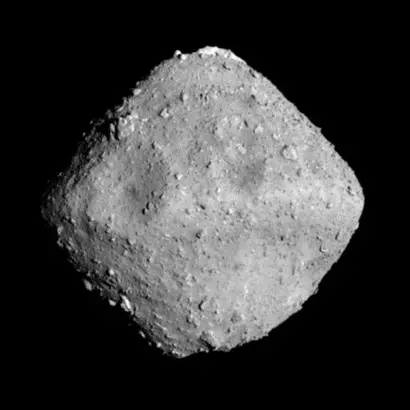
More recently, there was NASA's OSIRIS-REx mission. The probe approached the asteroid Bennu and similarly touched down on its surface with a long nozzle. It collected loose dust kicked up during the brief collision, and the capsule containing the samples successfully re-entered Earth's atmosphere in September 2023. It effectively became an artificial meteorite carrying asteroid samples to Earth's skies.
The Ryugu samples brought back by Hayabusa2 have been heavily analyzed, and something surprising was discovered. Living, breathing bacteria were found in the Ryugu samples. Furthermore, their numbers were seen multiplying day by day. Did we discover the identity of the Engineers, as in the movie "Prometheus"? That was not the case. A very sad, yet even more surprising story is hidden here.
When the Ryugu samples were sliced thinly and examined under an electron microscope, a thin, fine structure was discovered. The scale was very small, about 50 micrometers. A human hair is roughly 20 to 200 micrometers thick. A hair would be thick enough to completely cover the thin structure seen in the research paper's photograph.
Long, thin filament-like structures were found throughout the samples. Initially, astronomers assumed these might simply be stray human hairs, lint, or textile fibers from clothing. This is because fibers from lab coats or cloths used to wipe lab tools can easily contaminate samples in a laboratory. However, the structure did not match any known fiber tissue.
Looking at a magnified photo of one of the filaments, an even more interesting feature appears: there are sections where the strand is indented. This is often found when two cells are still connected after the process of cell division.
Even more surprising is the fact that the number of filaments was increasing over time. This clearly meant that it was a proliferating life form. It was not just a fiber from an eyeglass cleaning cloth.
The capsule containing the Ryugu samples arrived on Earth in December 2020. While astronomers wanted to check the "freshly delivered" gift immediately, they patiently waited for a long time. They stored them in a vacuum chamber for several months to minimize contamination by Earth materials. After a long wait, the sample container was finally opened on November 4, 2022.
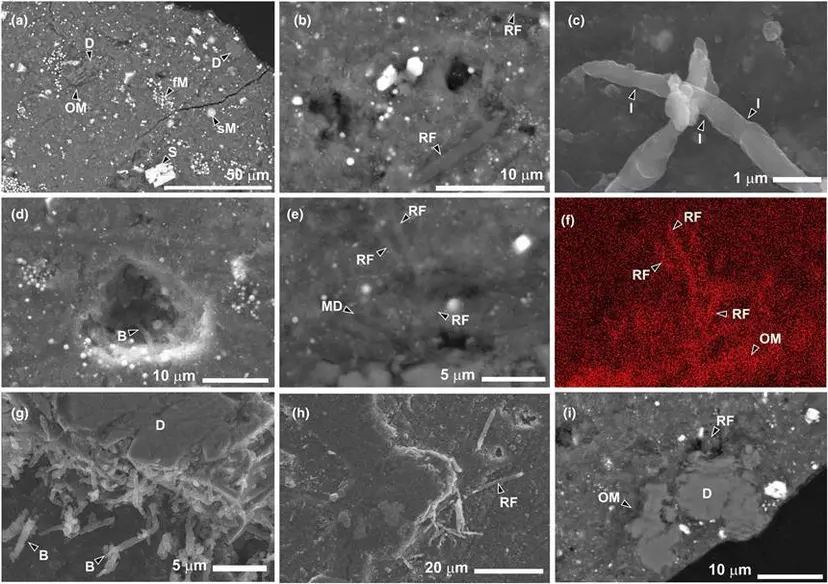
The date they began observing the samples used for this analysis under an electron microscope was November 11, 2022, one week later. When first examined under the electron microscope, about 11 filaments were found in the sample. Yet, just three weeks later, on November 30, the number of filaments had increased to 147. After another two weeks, on January 14, 2023, the number dropped significantly to 36. This clearly implies that there was a living population of entities that grew and then declined over time. It was definitely life.
The researchers briefly felt the excitement of potentially having discovered extraterrestrial life existing in microbial form. However, a more detailed analysis revealed a disappointing truth. This was not extraterrestrial life. It was bacteria from Earth.
Earth's bacteria all multiply in a similar way. When bacteria are first exposed to a new environment, they multiply slowly while adapting, preparing for full-scale growth. No significant cell division is observed as they prepare protein replication for later growth. They then enter the "Log Growth phase," where the number of bacteria doubles at regular intervals. It is a period of exponential population explosion. However, bacteria do not multiply indefinitely. When resources needed to maintain the colony become scarce, they eventually stop multiplying and enter a "stationary phase." This is followed by a "death phase," where their numbers slowly decline.
The number of filaments suspected to be bacteria found in the Ryugu samples changed in exactly this way. From only 11, the number increased to 147 in just three weeks, and then decreased to 36. Through this growth pattern, researchers estimated that the number was doubling every 5.1 days. Tracing back based on this, it appears the proliferation began in early November 2022, when the asteroid sample was first sliced thin for electron microscope analysis. In other words, it is highly likely that they were Earth bacteria that contaminated the sample immediately after it reached the lab, not extraterrestrial life that originally lived on the asteroid.
The bacteria observed are suspected to be *Bacillus*. They have a long, rod-like shape. The name *Bacillus* itself means "stick" in Latin. These are very common bacteria that live in soil and rivers throughout the Earth, and even inside our own bodies. They have relatively tough cell walls, allowing them to survive even in low-pressure environments that are nearly vacuum.
Under normal circumstances, *Bacillus* typically doubles every 120 minutes. However, the filaments identified in the asteroid sample doubled every five days or so, which seems to be because they were exposed to a highly stressful environment while being stored after arriving on Earth. In low-pressure conditions, the doubling time for *Bacillus* extends to up to six days, which is similar to the growth cycle of the filaments observed in this sample.
One might hold onto the lingering hope that perhaps extraterrestrial bacteria, frozen cold on the asteroid, woke up from hibernation when exposed to Earth's warm environment, but that possibility is very low. The asteroid samples were not opened immediately upon arrival on Earth; they were kept exposed to the warm environment of the lab for nearly 300 days. Therefore, if there had been any extraterrestrial life on the asteroid from the start, it should have multiplied into a huge number during that year-long storage. Yet, when the sample was first analyzed, only 11 filaments were observed.
It is also important that no other filament structures were found during additional analyses conducted in January 2023. If extraterrestrial bacteria had been embedded throughout the asteroid, they should have been found again when the sample was sliced and checked further. But no new extraterrestrial life was seen afterward.
Unfortunately, it was not the extraterrestrial bacteria or "Engineers" we had hoped for, but this discovery teaches us an important fact. First, it demonstrates that Earth life can survive on the surfaces of entirely different celestial bodies, not just Earth. It has been proven that even if they cannot thrive, they do not die immediately and can increase their population by multiplying for a certain period. Astronomers describe the series of events in this sample as "Rapid colonization." The asteroid sample that arrived on Earth was colonized by native Earth bacteria in just a few weeks.
This is a very important discovery for future plans to terraform various celestial bodies, including Mars. Ultimately, before humans go to Mars, we need to send bacteria that can live in harsh environments first. This discovery shows that bacteria can sufficiently live—and even multiply—on non-Earth materials like those on Mars. Perhaps, if terraforming becomes a reality, the true vanguard to reach Mars before humans will be bacteria.
This discovery also leaves an important message for scientists planning more diverse asteroid and comet explorations. Scientists follow strict anti-contamination protocols to ensure precious samples brought from space are not contaminated by Earth materials. Yet, this sample was contaminated. This means the protocols currently in place are not enough.
The fact that a hole was poked in the asteroid quarantine shield is a serious problem. Bacteria can undergo biochemical reactions, destroying minerals on the asteroid's surface or leaving behind new substances. The chemical properties of the asteroid are being altered. Asteroids are considered "living fossils" that contain the materials of the solar system from 5 billion years ago, when it was first created. If that precious treasure becomes contaminated the moment it is brought to Earth, the research results will be significantly distorted.
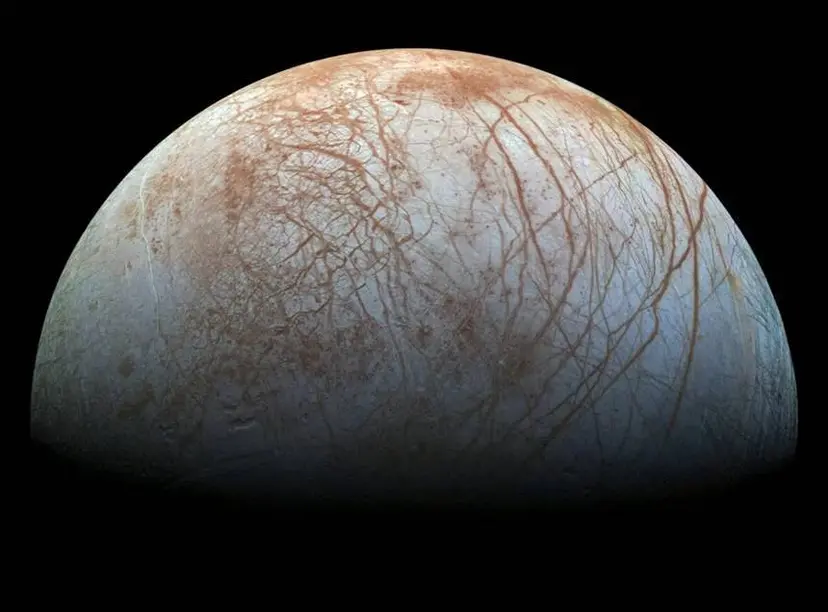
Efforts by astronomers to avoid contaminating space environments have been ongoing for a long time. There was a debate regarding the fate of the Galileo probe, whose mission ended in September 2003 after a 14-year journey. Some argued for crashing it onto the surface of an icy moon like Europa, which orbits Jupiter.
However, Europa is a place where water and ice exist, and where we can expect a high probability of finding extraterrestrial life. Therefore, many explorations are planned to search for traces of life there. If a probe from Earth crashes into Europa, the Earth materials attached to it could alter the pristine environment of Europa. If we later really go to Europa and find living, breathing bacteria, there would be no way to know if they were true extraterrestrial life forms born on Europa, or if they were Earth bacteria that survived from a probe sent by our predecessors long ago. Unintentionally, humanity would become the "Engineers" sowing new life on Europa.
In the end, astronomers decided to have the Galileo probe dive into Jupiter's clouds, successfully protecting Europa's environment. Thanks to this, the recently launched Europa Clipper probe can analyze Europa, which has remained pure until now, without worrying about contamination.
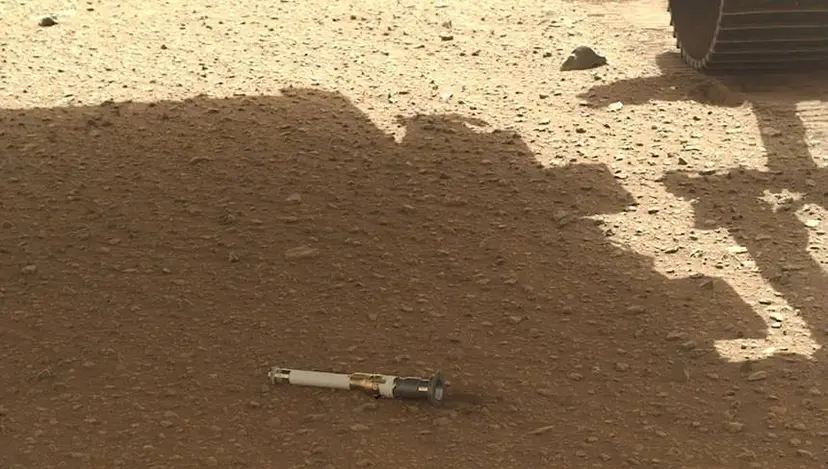
Although currently faltering slightly due to budget issues, NASA is preparing for the historic "Mars Sample Return" mission, which aims to bring samples back to Earth from Mars before 2030. The Perseverance rover, which has already landed on Mars, is busily drilling into various parts of the planet to collect samples. Later, it will transfer the samples to a second probe arriving on Mars, which will then launch a small missile-like rocket to bring the precious treasure back to Earth.
Until now, all research on Mars has been conducted only on Mars. If this mission proceeds successfully as everyone hopes, humanity will finally be able to verify and analyze Martian materials directly on Earth. However, if they are contaminated by Earth materials as in this asteroid sample analysis, the analysis results of the valuable Martian samples will contain many errors. At this current point, just before the Mars sample return mission, the Ryugu samples have left an important lesson that astronomers must more carefully re-establish anti-contamination protocols.
The title of the novel "Catch-22," written by American novelist Joseph Heller based on his experiences during World War II, refers to a hypothetical implicit rule in the work. It states, "A person who is insane cannot be forced to fly combat missions, so he must inform the flight surgeon if he is insane. But doing so would prove he is capable of sound judgment, meaning he is not insane and cannot be excused from flying." Thus, "Catch-22" refers to a frustrating situation trapped in a circular loop.
A similar situation occurs when analyzing asteroid samples. To analyze what components are on an asteroid, it must be analyzed in a laboratory on Earth. But bringing it to an Earth laboratory leads to contamination by Earth materials, making correct analysis impossible. Because results could be distorted, bringing asteroid samples to an Earth lab is risky. Yet, without bringing the asteroid samples, they cannot be analyzed on Earth.
Of course, this is not an exact analogy, but looking only at the superficial phenomenon, the situation calls to mind the frustrating dilemma of quantum mechanics—which stated that "the very act of observation affects the state of the universe"—in the sense that "the moment you observe an asteroid to analyze it, it loses its original nature and turns into a transformed, contaminated version of itself." It seems we are unable to see the world in its pure, original form before we touch it, whether in the microscopic world of atoms or the macroscopic world of the universe.
Reference
https://onlinelibrary.wiley.com/doi/10.1111/maps.14288
https://www.darts.isas.jaxa.jp/curation/hayabusa2/
Who is the author Woong-bae Ji? He loves cats and the universe. After watching "Galaxy Express 999" as a child, he dreamed of sharing the beauty of the universe. Currently, he researches galaxy evolution through galactic interactions at the Galaxy Evolution Center and the Near-Universe Cosmology Laboratory at Yonsei University, and engages in various science communication activities such as lecturing and writing. He has authored books including "Astronomy with a Crush," "Thinking About the Universe All Day," and "Stars, the Science of Light."