

[비즈한국] "There were pieces of pork in the ramen, but there was no problem bringing it in." This is what a traveler named A, who visited China last year, said. Recently, as cases of African Swine Fever (ASF) have broken out one after another, the Animal and Plant Quarantine Agency has also stepped up its quarantine measures. However, travelers are still freely bringing in prohibited livestock products. The reason for this gap in quarantine is "ramen."
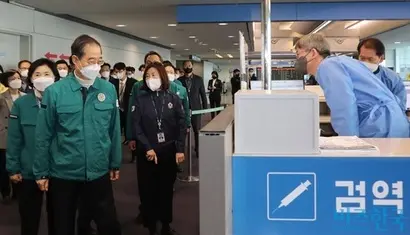
No meat chunks allowed, but soup base is fine?
Recently, African Swine Fever (ASF) has broken out consecutively in South Korea. Outbreaks were confirmed at pig farms in Hwacheon-gun, Gangwon-do in October last year, Hongcheon-gun, Gangwon-do in November, and Yangju-si, Gyeonggi-do in December. In 2024 alone, 11 cases have already occurred.
In response, the Ministry of Agriculture, Food and Rural Affairs reorganized the ASF crisis alert system last December, allowing for different crisis levels to be issued based on the region. The goal is to intensively manage areas at higher risk of outbreaks.
Quarantine measures have also been strengthened. There was a high number of seizures between August and October of last year, as many travelers were bringing in imported meat and processed goods that are prohibited. According to the Animal and Plant Quarantine Agency, the rejection rate for livestock products carried by travelers in 2024 stands at 99.7%.
There have also been cases where the ASF virus gene was identified in processed products carried by overseas travelers. During the spread of African Swine Fever in 2019, the virus gene was detected several times in pork products brought in by travelers from abroad. Some have pointed out that livestock diseases such as ASF are being spread by people returning from overseas travel.
However, "ramen" remains an exception at the quarantine stage. Unlike in the U.S., Australia, or Taiwan, South Korea does not prohibit the entry of ramen just because its soup base contains "meat ingredients (extracts)." Only ramen containing actual chunks of meat or stewed-style meat is prohibited.
Cup noodles are okay? Quarantine Agency says, "Travelers must check the labels"
The "gap" in quarantine created by ramen exists because it is difficult to determine if a product is prohibited based solely on the ingredient label. An official from the Animal and Plant Quarantine Agency explained, "Because there is such a wide variety of ramen products, it is difficult to know if a product is subject to quarantine until it is opened." They added that it is impossible to determine from the ingredients alone whether it is a soup powder with meat extracts or a powder containing actual chunks of meat.
In 2019, when the Ministry of Agriculture, Food and Rural Affairs strengthened baggage quarantine at international airports and ports across the country, it designated "ramen" as a regulated item. This was because ramen soup base could contain processed livestock products. At the time, an official from the Animal and Plant Quarantine Agency explained on the Ministry's blog that "some ramen soup powders are meat-processed, so they are classified as regulated items in Korea to prevent any potential virus influx." The Incheon Airport Quarantine Office advised travelers to declare ramen products as a principle.
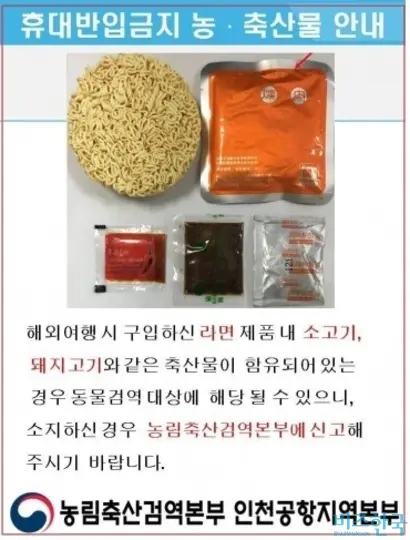
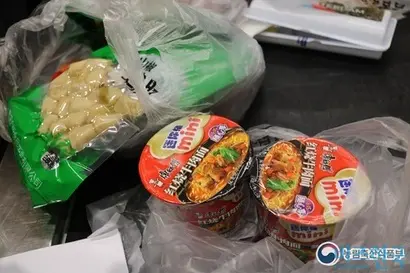
What about now, as ASF infection cases are on the rise? Recently, online forums and cafes have been flooded with "cup noodle entry reviews." Travelers claim they brought in cup noodles containing meat chunks without any issues.
Unlike in 2019, it has been confirmed that the Animal and Plant Quarantine Agency has not been including "ramen" as a primary target for enforcement during airport quarantine. Regulations such as relevant notifications have not changed. While ramen containing meat chunks is still subject to quarantine, there have been instances where even quarantine officers did not regulate the entry of ramen.
B, who recently traveled to Japan, told BizHankook, "I bought cup noodles containing pieces of chashu (braised pork). I asked the airport quarantine officer just in case, and they told me that 'cup noodles are fine.'" C, who purchased beef-flavored rice noodle ramen after a trip to Vietnam, also said, "I checked online reviews and saw it was possible to bring them on the plane, so I bought them."
Even overseas shops popular with tourists, such as duty-free stores, sell cup noodles that are prohibited for import into Korea, specifically targeting "Korean tourists." Not all items sold at duty-free shops are permitted for entry into Korea, yet cup noodles seem to be slipping through the cracks of the quarantine process.
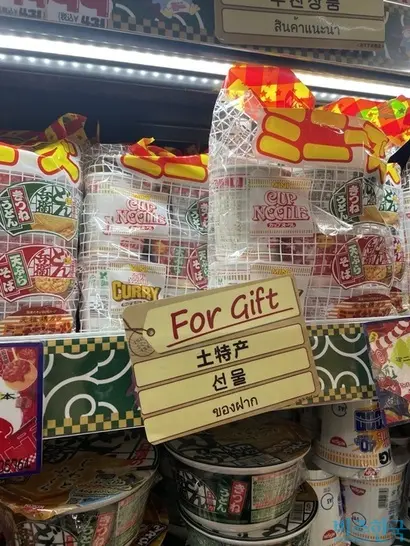
It appears that ramen is being excluded from quarantine on the grounds that it is difficult to determine whether it falls under the quarantine criteria. Is there another reason why the Animal and Plant Quarantine Agency is no longer enforcing quarantine on ramen?
The Animal and Plant Quarantine Agency clarified that, as in 2019, ramen containing livestock products is still subject to quarantine. However, they stated that they do not have statistics on how many people were caught bringing in ramen without declaring it.
The agency stated, "Travelers must check the product labels of ramen to see if they contain livestock products, and products that do should be considered subject to quarantine. Because we classify ramen and cup noodles containing livestock products under categories like beef or pork processed products, it is difficult to pinpoint seizure records specifically for 'ramen'."