

[비즈한국] CEO Kim Young-shub, who joined KT030200 with a reputation as a "restructuring expert," has now set his sights on real estate assets, including 5-star hotels in Seoul. The plan is to sell off non-core assets to fund the massive capital required for the company's transformation into an AICT (Artificial Intelligence and Information & Communication Technology) firm. Since CEO Kim took office a year and a half ago, KT’s overhaul has been relentless in both scale and speed. Through large-scale voluntary retirement programs, one-sixth of the total workforce has been laid off, and many others have been transferred to subsidiaries. This intense efficiency drive has left the internal atmosphere unsettled. There are also growing concerns regarding the justification for this move and the potential negative impact of selling off real estate that provides stable cash flow.
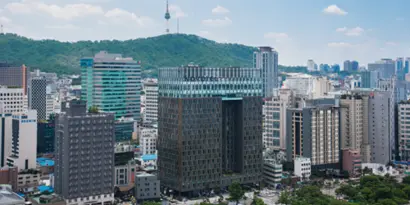
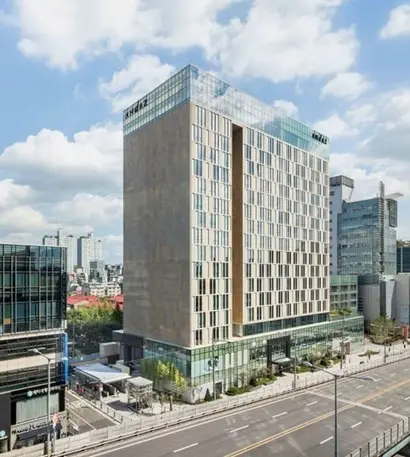
3 trillion won worth of Seoul hotels and aging regional properties up for sale
Telecommunications company KT is a "big player" in the hotel industry, owning four 5-star hotels on prime real estate in Seoul. In the past, when copper lines were the backbone of its network, KT operated phone stations in over 400 locations nationwide. As communication facilities became integrated and advanced, the company began reducing the number of phone stations in the 2010s and repurposed idle sites for construction, leasing, and other business purposes.
The hotel business, managed by the subsidiary KT Estate, which handles development and supply of non-residential buildings, has successfully established itself. This was largely because the phone station sites were located in transit-oriented areas with high foot traffic. After "Shilla Stay Yeoksam (3-star)" opened on the site of the former Yeongdong branch in 2014, 5-star hotels followed: "Novotel Ambassador Dongdaemun" at the Eulji branch in 2018, "Andaz Gangnam" at the Sinsa branch the following year, and "Sofitel Ambassador Seoul" at the Songpa branch in 2021. In 2022, the Marriott-affiliated "Le Méridien & Moxy Seoul Myeongdong (5 & 3-star)" opened on the site of the Seoul Central branch. Next year, the "Ambassador Pullman (5-star)" hotel is set to open at the former site of KT's Gangbuk regional headquarters in Jayang-dong, Gwangjin-gu.
This year, KT is pushing for the sale of 20 real estate properties, including its highly lucrative hotel business. This move follows the massive restructuring of its workforce and organization. According to industry sources, KT has recently selected a consortium of Avison Young, Samjong KPMG, and Colliers Korea as sale advisors and has begun the process of selling non-core real estate held by KT, KT Estate, and NCP. The consulting targets include five hotel assets—Shilla Stay Yeoksam, Novotel Ambassador Seoul Dongdaemun Hotel & Residences, Andaz Gangnam, Le Méridien & Moxy Myeongdong, and Sofitel Ambassador Seoul—as well as aging buildings across the country and corporate rental housing in Gwanak, Dongdaemun, and Yeongdeungpo.
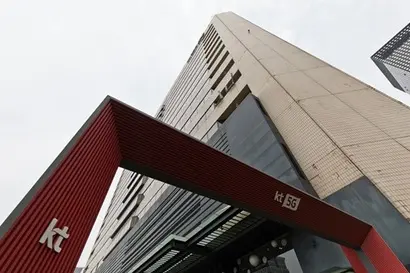
KT maintains that it will use the funds generated from the property sales to pivot its business toward becoming an AICT company. With the company having announced an investment of 2.4 trillion won over five years for its AI and cloud collaboration with Microsoft (MS), securing cash and enhancing corporate value are key tasks. A KT official explained, "To achieve the mid-to-long-term goals of the recently announced Corporate Value-up Program, we are reviewing various ways to secure funds, including the liquidation of non-core assets. Nothing regarding the sales or specific targets has been finalized; final decisions will be made after a comprehensive review." During the third-quarter earnings conference call last year, CFO Jang Min presented a goal of achieving a consolidated Return on Equity (ROE) of 9-10% by 2028, stating, "We plan to triple sales in the AI/IT sector, reach a consolidated operating margin of 9%, and push for the liquidation of non-core assets."
Viewed as a "short-term report card" for reappointment
Reactions within KT are mixed. The skepticism stems from the fact that the company is touching high-performing assets without a clear blueprint while the internal chaos from the workforce and organizational restructuring over the past 18 months of CEO Kim’s tenure continues. According to Korea Ratings, KT Estate generated 183.6 billion won in revenue from its hotel division in 2023. The revenue trend shows a sharp upward trajectory from 29.7 billion won in 2020 to 49.7 billion won in 2021, and 127.9 billion won in 2022.
The KT New Labor Union pointed out, "Real estate assets are a representative non-telecom portfolio that has created stable revenue sources outside of telecommunications. This move essentially weakens the capacity for future AI investment. It is a strategic contradiction to cut off long-term investment funds in favor of maximizing short-term profits just when the company needs to secure future growth engines."
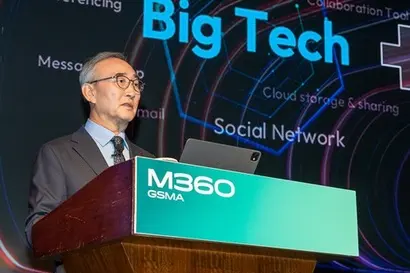
Currently, KT is in the process of adapting to organizational changes after one-sixth of its total workforce (2,800 people) left and 1,700 were transferred to a newly established subsidiary due to restructuring in the second half of last year. The remaining employees are undergoing job retraining as the organization undergoes restructuring, including mergers and closures. A KT employee remarked, "The outline of the transferred roles has emerged, and in the end, it's just sales work again. Although CEO Kim took questions during a live internal broadcast on the 2nd to mark the New Year, he failed to provide a concrete picture of what he plans to do regarding AI, which is disappointing. I don't think the justification for the restructuring and asset sales is clear."
This is not the first time KT has engaged in large-scale asset liquidation through real estate sales. After taking office in 2009, former Chairman Lee Suk-chae implemented a strategy to cash out funds tied up in regional real estate across the country to support subsidiaries. A total of 39 properties, including office buildings in Noryangjin, Seoul, and Seongnam, Gyeonggi-do, were sold, with proceeds reaching approximately 980 billion won.
Some critics argue that CEO Kim is focused solely on demonstrating short-term results on paper. CEO Kim's term ends in March of next year. As early as the first half of this year, the process of declaring his intention to seek reappointment, undergoing a review, and receiving final approval at the shareholders' meeting early next year could begin. Critics claim that decisions are being made with an eye toward securing reappointment, as increased net profit and shareholder dividends through asset sales directly affect re-election prospects. Lee Ho-gye, secretary-general of the KT New Labor Union, criticized the move, saying, "They need to show results by the first half of the year at the latest, but it's difficult to show tangible outcomes from the AI business immediately. It's interpreted as a move to create short-term results by reducing headcount and selling off sellable assets, similar to the method used by former Chairman Lee Suk-chae. The impact of this asset liquidation needs to be thoroughly reviewed."
Han Young-do, a professor of global management at Sangmyung University and a former KT executive, noted, "The details of the AI strategy or the partnership with Microsoft, which are said to be the recipients of this funding, are currently vague. Unlike simple idle land, these are real estate assets that are more profitable than the telecommunications business, so it raises questions about whether selling them is the right choice. KT's long-term direction regarding the real estate development business, which it considers a key pillar of its operations, has also become unclear."