

[비즈한국] The business world is focusing its attention on SK034730 Group’s rebalancing (asset restructuring) efforts. Last year, SK Group declared it would sell off non-core assets to concentrate its capabilities on competitive business areas. In particular, it announced plans for massive investment in Artificial Intelligence (AI). SK Group Chairman Chey Tae-won is also known to have a keen interest in AI. However, there are significant arguments suggesting that aggressive investment may be difficult in the immediate future, as unstable factors such as the recent economic downturn and political uncertainty are mounting.
Financial improvement through massive asset sales
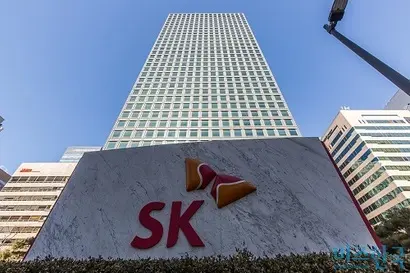
SK Group sold a significant number of assets throughout 2024, including SK Rent-a-Car, SK Magic’s home appliance business, Ascend Elements, and One Commerce. Recently, it also decided to sell UT and SK Specialty. Some have evaluated that SK Group has lost future competitiveness by selling off these assets. However, SK Group maintains that it has focused on streamlining overlapping businesses and that it will strengthen its competitiveness by concentrating resources on core business areas.
SK Group succeeded in improving its financial structure through these asset sales. According to quarterly reports, the debt-to-equity ratio of SK Inc., the group’s holding company, decreased by 9.57 percentage points (p) over one year, falling from 165.76% at the end of September 2023 to 156.19% at the end of September 2024. Nevertheless, the securities industry believes that it will be difficult for SK Group’s rebalancing to show results in the short term. Eom Soo-jin, a researcher at Hanwha Securities, commented, "Even after selling off non-core subsidiaries or non-core assets and business divisions, it will take considerable time to fully achieve competitiveness through the reallocation of resources and concentration of capabilities."
Ultimately, the success of the rebalancing will depend on whether SK Group can strengthen the competitiveness of its core businesses. SK Group has recently been reorganizing its investment organizations, which is interpreted as having future active investments in mind. While SK Inc. previously operated investment centers for its four core future business sectors—advanced materials, green, bio, and digital—it announced that starting this year, it would consolidate these investment functions into a ‘Portfolio Management (PM)’ division. Recently, it also established two new organizations, ‘AI Innovation’ and ‘Growth Support,’ to discover future growth businesses.
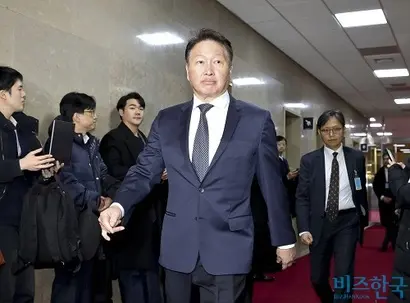
When announcing the sale of SK Specialty last year, SK Group stated it would invest in the AI and energy solution sectors. AI, in particular, is said to be of high interest to Chairman Chey Tae-won. In his 2025 New Year's address, Chairman Chey stated, "The restructuring of the global industrial landscape and market due to the rapid growth of the AI industry is an irresistible trend." An SK Group official said, "We have reached a consensus to secure 80 trillion won in funds by 2026 and utilize them for investments in future growth areas such as AI and semiconductors, as well as for shareholder returns."
Is focusing on AI the right move?
The AI sector is highly competitive as numerous IT companies have entered the market. SK Group’s AI business is led by SK Telecom017670. SK Telecom is conducting its AI business by dividing it into three areas: AI Data Centers, AI B2B, and AI B2C. Among these, it is achieving meaningful results in the data center and B2B cloud business sectors. In the cloud business, many companies such as LG, KT, Kakao, and Naver have already entered the market. SK Telecom’s AI B2C service, ‘A.’ (Adot), is competing with LG Uplus’s ‘ixi-O,’ and KT is also considering the launch of a similar service.
SK Hynix000660’s High Bandwidth Memory (HBM) is also a noteworthy product. HBM is a type of memory semiconductor that provides the data needed for AI learning to system semiconductors. The problem is that global AI product manufacturers have recently been seeking alternatives to HBM due to price concerns. In the domestic market, Samsung Electronics005930 is developing an inference AI accelerator called ‘Mach-1’ that uses low-power DRAM instead of HBM.
Kwak Noh-jung, CEO of SK Hynix, mentioned at the SK Hynix Future Forum last September, "I thought that as artificial intelligence developed and accelerated in earnest, the future would become clearer and more predictable, but it has become far more ambiguous and difficult to predict."
There is also an evaluation that there are limitations to AI’s profit model. In other words, the outlook for SK Group’s AI business is not entirely bright. Heo Jae-hwan, a researcher at Eugene Investment & Securities, explained, "There isn't only optimism regarding the effects of AI automation and human replacement," adding, "From the perspective of innovation diffusion theory, AI seems to be in the early adopter stage. It is growing, but it is in a section where it is difficult to generate profits and competition is intensifying."
The energy solution sector, another business SK Group has declared it would invest in, is being led by SK E&S. SK Innovation096770 absorbed and merged with SK E&S last November. Since then, SK E&S has been operating as a Company-in-Company (CIC) within SK Innovation. SK E&S is currently engaged in businesses such as renewable energy, Energy Storage Systems (ESS), and Virtual Power Plants (VPP).
The variable is an unstable external environment
The investment banking (IB) industry has suggested that SK Group might engage in mergers and acquisitions (M&A). An official from the IB industry said, "Although it is speculation, since SK Group is a group that has grown through M&A, there is a possibility that it will engage in M&A in the process of pursuing future businesses," adding, "While R&D is also important, it is hard to guarantee research results in the short term, so M&A could be a good option."
The variable is the external environment. The external environment is not favorable for SK Group to embark on massive investment or M&A. First, because the economy is sluggish, large-scale spending is bound to be a burden. Political uncertainties such as emergency martial law are also factors that cannot be ignored. A business world official assessed, "In the current climate, not only SK Group but all companies will become conservative," adding, "They will likely devote as much effort as possible to stockpiling strength to respond to uncertainty."
Also, while it is true that SK Group’s financial standing has improved, its overall performance is on a downward trend. SK Inc.’s revenue decreased by 2.20% from 96.5812 trillion won in the first to third quarters of 2023 to 94.4599 trillion won in the same period of 2024, and during the same period, operating profit fell by 38.41% from 4.4874 trillion won to 2.7636 trillion won. If this decline in performance continues, cash inflows will decrease accordingly, which could have a negative impact on investment plans.
Yoo Jun-ki, a senior researcher at Korea Ratings, analyzed regarding SK Inc., "High demand for funds will continue due to aggressive investment plans, treasury stock repurchases, and strengthened shareholder return policies such as increased dividend payout ratios," adding, "While the holding company's own financial burden is not at a high level, it is necessary to monitor the investment expansion stance due to the strengthening of the new business portfolio and the level of fluctuations in borrowings."