

[비즈한국] Discussions regarding "generic prescribing," a long-standing demand of the pharmacist community, are being reignited. Recently, a series of amendments to the Pharmaceutical Affairs Act related to substitute dispensing and generic prescribing have been proposed in the National Assembly. With the terms of the new Korean Pharmaceutical Association president and the Korean Medical Association president scheduled to begin early next year, fierce clashes between the two professions are expected.
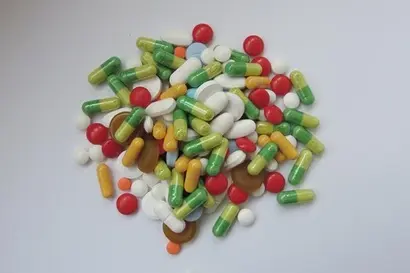
22nd National Assembly Sees Bills Proposed for Substitute Dispensing and Generic Prescribing
According to the pharmacist community, several amendments to the Pharmaceutical Affairs Act concerning substitute dispensing and generic prescribing have been proposed in the 22nd National Assembly. Among the bills, the proposal by Representative Min Byeong-deok focuses on adding the Health Insurance Review and Assessment Service (HIRA) to the list of entities that must be notified post-dispensing when a pharmacist performs a substitute dispensing, and ensuring HIRA notifies the prescribing physician of such changes. The intent is to protect public health by ensuring substitute dispensing details are communicated more efficiently. Bills proposed by Representatives Lee Su-jin and Seo Young-seok include provisions to notify HIRA of prescription details and rename "substitute dispensing" to "same-ingredient dispensing" within the law to prevent unnecessary misunderstandings between patients and pharmacists. Representative Seo had proposed an identical amendment in the 21st National Assembly, but it was scrapped due to the expiration of the term.
The bill proposed by Representative Kim Yoon introduces the concept of "supply-unstable medicine" and allows the Minister of Health and Welfare to support the production and utilization of medicines containing the same ingredients as those with unstable supply. It establishes policies to promote the use of generic names for national essential medicines in prescriptions and allows for recommendations to use generic names when selling or importing such essential drugs. The goal is to prevent hoarding, long-term prescriptions, and illicit over-the-counter dealings that might occur if a specific pharmaceutical company's product becomes scarce due to generic-name usage. Kwon Young-hee, the new president of the Korean Pharmaceutical Association, stated that she would push for "non-face-to-face" generic prescribing, starting with the legalization of generic prescribing for sold-out medicines.
The pharmacist community has recently concluded its presidential election and is awaiting the inauguration of the new leadership next March. President-elect Kwon Young-hee is raising expectations by prioritizing pledges such as "generic prescribing for sold-out drugs," "step-by-step institutionalization of generic prescribing," and "abolition of post-dispensing notification for substitute dispensing." During her time as president of the Seoul Pharmaceutical Association, Kwon formed a task force on generic prescribing and achieved results such as signing a policy agreement with Representative Kim. However, there are not a few who question whether previous leaderships, despite making such pledges in every election, achieved any meaningful results like "legalization."
Regarding Representative Kim’s proposal, President-elect Kwon released a statement explaining, "At the time, the Korean Pharmaceutical Association was too busy worrying about the Korean Medical Association's reaction, claiming it was 'not yet the right time for generic prescribing,' but the Seoul Pharmaceutical Association did not give up and consistently promoted the policy through policy agreements, research, and National Assembly forums." She added, "This bill is the result of the persistent efforts and determination of the pharmacist community. The proposal for generic prescribing of sold-out drugs is just the beginning; the real work starts now."
Pharmacists and Doctors Propose Different Solutions for "Stabilizing Health Insurance Finances"
Pharmacists and doctors have clashed for a long time over generic prescribing since the separation of prescribing and dispensing. The pharmacist community argues that once generic prescribing begins, "price competition" will occur, lowering the prices of generic drugs. The price level of domestic generic drugs is higher compared to other countries, leading government ministries to periodically order related research. Additionally, they cite the ability to curb excessive prescribing and rebates by doctors, as well as the ability to respond to the ongoing medicine supply instability, as reasons why generic prescribing is necessary.
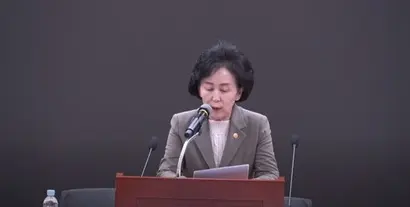
On the other hand, the medical community opposes generic prescribing, citing reasons such as the fact that bioequivalence tests recognize similarity in the range of 80–125% based on the original drug, meaning efficacy can vary by patient, and concerns about potential medication accidents. Regarding Representative Min's bill to expand the targets of substitute dispensing notification, the Korean Medical Association issued an opposing opinion, stating, "Because pharmacists can arbitrarily change medicines without the physician's consent, it risks undermining the physician's right to prescribe, makes it difficult to respond quickly to patient side effects, and can lead to issues regarding liability for prescriptions and side effects."
Ahead of the Korean Medical Association presidential election, candidates are also voicing their opinions. Candidate Choi Ahn-na stated in a position paper on the 13th, "If the purpose of generic prescribing is to prevent medicine waste, it can be solved by in-house dispensing. If the purpose of generic prescribing is to prevent rebates, are doctors clearly morally inferior?" She argued, "At a time when we are witnessing the collapse of health insurance finances, a selective dispensing system that can reduce financial expenditure and minimize waste is a reasonable system for the public, regardless of the vested interests of doctors and pharmacists."
Candidate Joo Soo-ho released a position paper on the 27th titled, "Medical Treatment to Doctors, Choice of Dispensing to the Public," stating, "It is unjust for doctors to bear all responsibility for medication accidents that occur in situations where they do not know which company's generic drug a pharmacist chooses." He explained, "Therefore, if generic prescribing is implemented, doctors will inevitably have no choice but to drastically increase prescriptions for the latest original drugs before patents expire. This could increase pharmaceutical costs and have a negative impact on health insurance finances." He added, "The most effective way to minimize public inconvenience and reduce health insurance financial leakage by decreasing dispensing fees is a public-choice separation system."
As the issue of medicine supply instability repeats, discussions regarding "generic prescribing" are gaining more momentum than before. However, there are also concerns that if the right to choose dispensing moves to pharmacists, "rebates" will simply transfer from doctors to pharmacists, while the patient's burden remains the same. At a recent National Assembly forum, Nam Eun-kyung, Director of Social Policy at the Citizens' Coalition for Economic Justice, said, "The justification and necessity for the policy will be recognized when it becomes clear that the benefits of introducing generic prescribing return to the public, not to specific medical organizations," adding, "Policies should be created with such aspects in mind, and the Pharmaceutical Association must also work toward this."