

[비즈한국] As K-Beauty enjoys its second golden age, the ODM (Original Development Manufacturing) market, which produces cosmetics on behalf of brands, is also expanding. Incheon Namdong Industrial Complex, a hub for cosmetic factories, has recently been attracting people looking to start cosmetic manufacturing businesses. While there is a trend of companies mushrooming to capitalize on the booming cosmetics market, industry insiders point out that quite a few of these companies close their doors just as quickly.

Cosmetic manufacturing thrives amidst ‘Lease and Sale’ signs
The prolonged economic downturn has dampened the atmosphere of industrial complexes. Signs of the recession were visible even in the Incheon Namdong Industrial Complex, visited on the 23rd. Large banners marked "For Lease" or "For Sale" were hung all over the complex, and it was not difficult to find vacant premises. Mr. A, who runs a real estate agency in the complex, pointed to a closed factory and added, “It has been closed for a long time, but a new owner has yet to appear. Because of the recession, there aren’t many companies looking to move into the spots left by bankrupt factories.”
As the economic slowdown lingers, the growth of the commercial real estate market has also stalled. With no demand to expand businesses or start new ones, the number of sales and lease transactions for factories and warehouses in industrial complexes is inevitably declining. However, contrary to expectations, real estate agencies in the Namdong Industrial Complex were busy. Real estate agents explained, “Although it’s a recession, transactions haven’t completely stopped,” and “Cosmetic manufacturing, at the very least, is avoiding the downturn.”
Real estate agent B said they could feel the recent vitality of the cosmetics industry. They remarked, “In the past, there were many automotive-related casting and injection molding businesses. But as the scale of the automotive industry has shrunk and the industrial complex’s sector composition has changed due to environmental issues, cosmetic and food-related businesses have increased. In particular, the Namdong Industrial Complex is so successful in the cosmetics sector that there are about 300 companies related to the industry.”
An official from a cosmetic manufacturer stated, “I hear a lot of talk about how it’s a ‘recession’ and the ‘economy is bad,’ but the cosmetics industry is busy. We have so much work that we have to do a lot of overtime and are in a situation where we need to hire additional staff.”
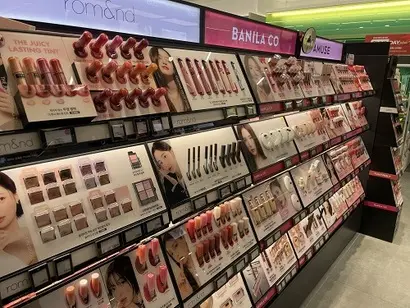
This year, K-Beauty has entered its second golden age. According to the Ministry of Trade, Industry and Energy, the cumulative export value of cosmetics from January to November this year reached $9.3 billion (approximately KRW 13.0097 trillion), surpassing the previous all-time high set in 2021 ($9.18 billion). A key feature of this year’s K-Beauty surge is that it was led by small and medium-sized indie brands. In the past, large corporations were at the center of the market, but for the last few years, small and medium-sized enterprises (SMEs) have been driving the market.
According to the Ministry of Food and Drug Safety, the production share of the top 10 domestic cosmetic sellers has been gradually decreasing over the past three years. The share, which was 69.3% in 2021, dropped to 55.5% in 2023. This means that the production volume of large cosmetic companies like LG Household & Health Care051900, Amorepacific090430, and Aekyung Industrial018250 has declined, while that of SMEs has increased. Even at Olive Young, considered a representative cosmetic distribution channel, about half of the companies that recorded annual sales of over 10 billion won are indie brands.
With the remarkable performance of indie brands, the growth of ODM companies is also continuing. According to the industry, there were 31,524 registered cosmetic sellers as of last year. Only 10% of them possess their own production capabilities. About 90% are in a situation where they sell cosmetics produced through ODM companies without having their own production infrastructure. Thanks to this, the earnings of ODM companies are on an upward trend.
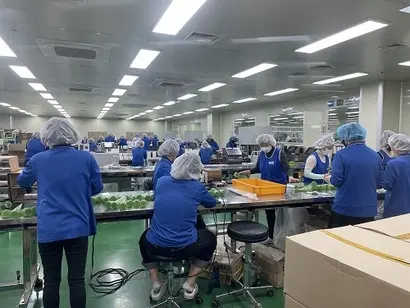
ODM market expands, but “the gap between the rich and poor is distinct”
As the cosmetics market grows and demand for ODM expands, the number of companies looking to start ODM businesses is also increasing. While the number of cosmetic sellers, who distribute the products, has surged, the growth in the number of actual manufacturers has been sluggish.
According to the Ministry of Food and Drug Safety, the number of cosmetic sellers increased more than sixfold from 4,853 in 2014 to 31,524 last year. Conversely, the number of cosmetic manufacturers grew 2.6 times from 1,750 to 4,567 during the same period. Last year alone, 3,509 new cosmetic sellers were established, while the number of manufacturers increased by only 19.
Unlike cosmetic sellers who can launch a brand without large investment costs, manufacturers face relatively high entry barriers. An industry insider said, “Manufacturing requires significant initial investment. A substantial amount of money goes into just setting up the basic facilities, and it is also demanding to obtain certifications like CGMP (Cosmetic Good Manufacturing Practice).”
Nevertheless, there is a trend of companies trying to enter the ODM business. Real estate agent Mr. A hinted, “Among the inquiries for factory leases and sales these days, the most common are for cosmetic businesses. I often receive phone calls from people preparing for cosmetic manufacturing who are looking for places equipped with clean rooms (environmental facilities to prevent product contamination).”
Industry insiders point out that while new manufacturers continue to enter the market due to the cosmetic boom, quite a few companies disappear without establishing themselves. One industry official stated, “There is a tendency for everyone to jump in because the mood in the cosmetics market is good. However, those that do not have items or technological prowess that differentiate them from other companies end up closing their doors and leaving quickly.”
Han Seong-soo, CEO of the cosmetic manufacturer Yegrina, pointed out, “The cosmetic market also shows a clear ‘rich get richer, poor get poorer’ phenomenon. While mid-sized companies and above continue to see their volumes grow and keep expanding, it is difficult for small-scale companies to survive. If you don’t continuously invest and research, it’s hard to keep up.”