

[비즈한국] The problems of aging planned cities go beyond the simple physical defects of old buildings; they represent a decline in urban functionality and the ecological and economic regression of local communities. South Korea’s 1st generation new towns are a quintessential example of this reality. Once symbols of innovative urban planning, these regions are now facing the massive task of reconstruction and redevelopment. However, the current government- and local authority-led approach centered on constructing relocation complexes is not a fundamental solution; rather, accelerating the speed of reconstruction is the practical and sustainable path forward.
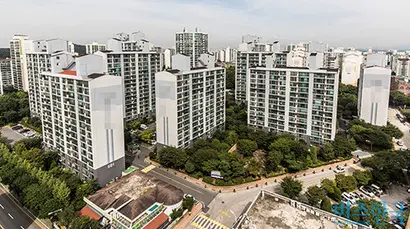
Relocation complexes have problems and limitations.
Relocation complexes are being proposed as a way to temporarily accommodate residents during the reconstruction process. This stems from the intention to alleviate housing instability while large-scale maintenance projects are underway and to support smooth reconstruction. However, in reality, relocation complexes entail various problems.
First, it consumes additional time and money. Constructing relocation complexes requires separate site selection, design, permits, and construction. This causes significant delays beyond the time required for the actual reconstruction work itself. At the same time, the massive budget incurred in this process inevitably ends up being covered by taxpayers.
Second, it weakens resident stability. Because relocation complexes provide temporary housing, they fundamentally fail to provide a stable residential environment. This risks weakening residents' sense of belonging and community, and reduces their willingness to return to the original area after reconstruction.
Third, it exacerbates regional imbalances. There is a high possibility of conflict between existing residents and the newly arriving relocated residents in the areas where these complexes are built. This hinders harmony within the local community and can have a negative impact on the development of that region.
There is a reason why increasing reconstruction speed is necessary.
The key to solving the reconstruction problem of aging planned cities is time. The faster and more efficiently reconstruction is carried out, the more quickly residents' housing stability and the functional recovery of the city can be realized. Let’s look at the reasons.
First, safety issues. Aging buildings pose serious risks not only in terms of physical deterioration but also in terms of safety. In a region like South Korea where natural disasters such as earthquakes, typhoons, and floods are frequent, these problems can no longer be overlooked. Securing safety through rapid reconstruction is more important than anything else.
Second, the issue of economic revitalization. Reconstruction is a crucial factor in vitalizing the local economy. It can lead not only to a boom in the construction industry but also to the recovery of commercial districts, job creation, and local economic growth. Through this, the asset value of the area can rise, and residents' economic stability can be promoted.
Third, environmental sustainability. The reconstruction of aging buildings provides an opportunity to increase energy efficiency and introduce eco-friendly designs. In the long term, this contributes to reducing the carbon emissions of the entire city and achieving sustainable development.
Fourth, easing the imbalance between housing supply and demand. South Korea’s shortage of housing supply has already reached a serious level. This problem is particularly prominent in the metropolitan area, which leads to rising real estate prices and housing instability. By increasing the supply of new housing through reconstruction, market supply and demand can be balanced.
Let’s consider strategies for successful reconstruction.
To increase the speed of reconstruction, a few strategic approaches are necessary.
First, deregulation. One of the biggest hurdles in the reconstruction process is the complex administrative procedures and regulations. These should be eased and the permitting process simplified to support the swift progress of projects.
Second, cooperation between the public and private sectors. Close cooperation between public institutions and private developers is important. Roles should be divided so that the public sector handles infrastructure investment and policy support, while the private sector utilizes its expertise in design and construction.
Third, financial support. Financing issues act as a major obstacle in the early stages of reconstruction. Therefore, the government should prepare plans to help push projects forward through financial support, such as low-interest loans and subsidies.
Fourth, expanding resident participation. Reconstruction cannot succeed without the consent and participation of the residents. Therefore, it is essential to gather residents' opinions and build trust through transparent communication.
Bold decisions are needed for real change.
The attempt to solve residents' temporary housing problems by creating relocation complexes may appear reasonable on the surface. However, this is merely a stopgap measure that fails to address the core problem of reconstruction. Instead, increasing the speed of reconstruction and thereby quickly restoring the residential environment and urban functions is a much more effective solution in the long run.
The government and local authorities must face this reality and spare no institutional or policy support to increase the speed of reconstruction. Time is the lifeblood of a city. Only fast and bold change can re-establish aging planned cities as models for South Korea's urban development once again.
Kim Hak-ryeol, head of the Smart Tube Real Estate Research Institute and famous by his pen name 'Passong,' previously served as a team leader at the Real Estate Research Division of Gallup Korea. He operates and hosts the Naver blog ‘Passong’s World Exploration’ and the YouTube channel ‘Stue TV.’ He is the author of books including ‘The Power of Gyeonggi-do Real Estate (2024),’ ‘Absolute Principles of Seoul Real Estate (2023),’ ‘The Future of Incheon Real Estate (2022),’ ‘Kim Hak-ryeol’s Absolute Principles of Real Estate Investment (2022),’ ‘Future Map of South Korean Real Estate (2021),’ ‘Only Places That Will Rise, Rise From Now On (2020),’ and ‘South Korean Real Estate User Manual (2020).’