

[비즈한국] There is a saying, "The value of 'together'." It appeared in a corporate image advertisement over a decade ago. It is a wonderful copy that carries the meaning that the power of being together can change the world. Being together signifies empathy or communication, and through this power, a new paradigm can be created. Art, too, holds value when it gains the empathy of people. Empathy stems from the spirit of the times and a universal artistic language. The 'Korea Art Support Project' also aims to showcase the thoughts of various people through an accessible artistic language. As we enter Season 10, we support artists who strive to put into practice Confucius’s idea that "good art must be easy to understand."
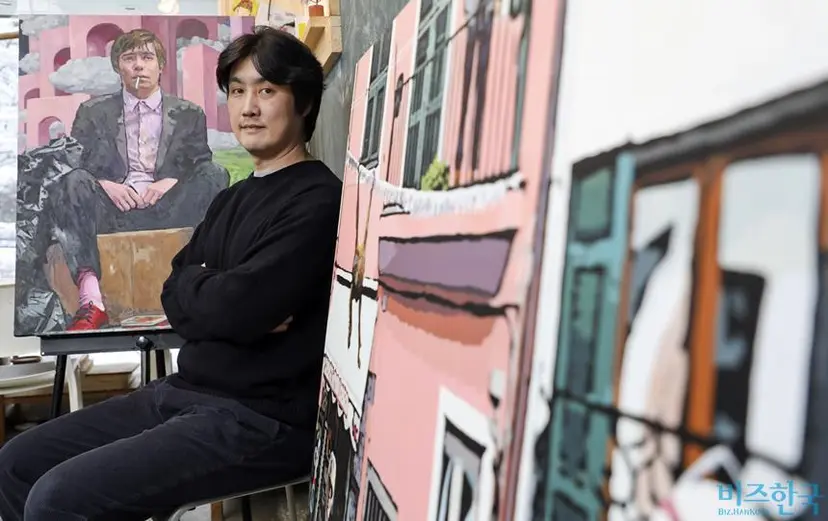
Cinema is the art of editing. A director expresses their thoughts by connecting or deleting filmed video images. This is called directing. Not only in movies but also in TV dramas or variety shows, the PD, who holds a position similar to a film director, speaks through the process of editing.
All art conveys the creator's intentions to those who wish to enjoy the art in this way; only the medium of delivery differs. Literature is created through the editing of text, music through the arrangement of notes, and painters through the combination of images on a canvas.
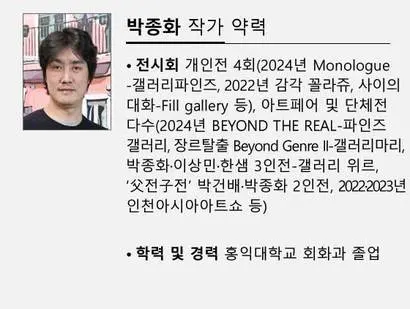
Park Jong-hwa is an artist who collages images using an editing technique close to cinematic syntax. Perhaps that is why his work strongly evokes the atmosphere of a film scene. This is quite intentional. It is, in effect, directing a cinematic atmosphere within his paintings.
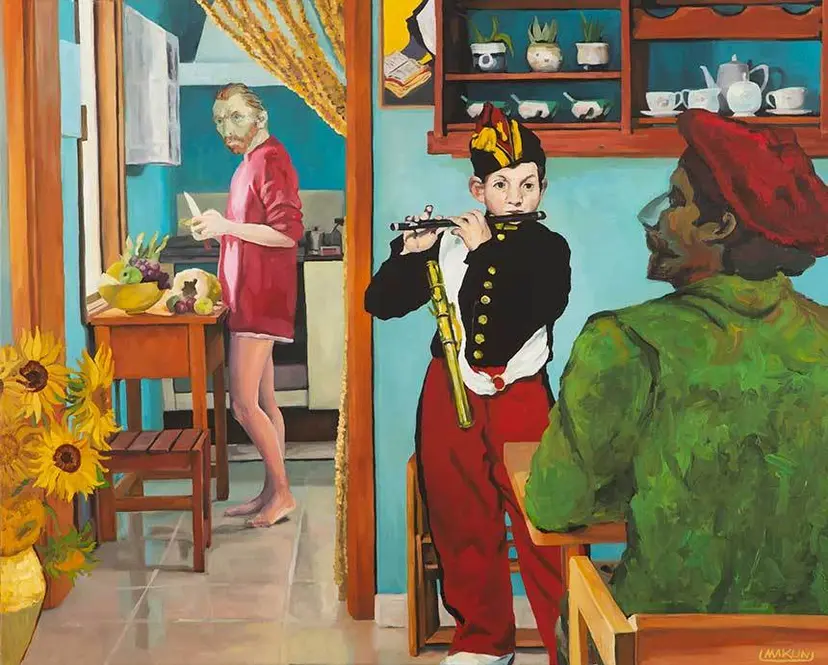
Movies are fiction. Even a documentary that transfers facts as they are is not reality. This is because it is a world woven by the artist's imagination. Even while knowing this, the power of fiction dominates reality while we watch a movie. We sometimes project our own lives onto the film scenes as if they were our own stories.
While watching a movie, we become immersed in it, but we cannot intervene. We cannot save the protagonist in crisis while we are watching. The protagonist ignores our wishes and lives within the movie according to the script written by the director.
Park Jong-hwa seems to think that the world we live in is a reality like a movie, directed by powerful forces. These could be media, government, or power groups in the near sense, or God or the order of the universe in a distant sense. Perhaps people are living according to a predetermined script (fate or destiny). Are we not suffering daily defeats in a reality where our own will or thoughts are not properly realized?
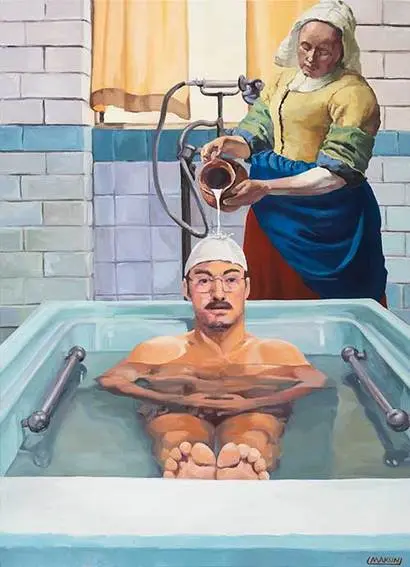
The cinematic scenes he paints are, in a sense, poetic expressions meant to contain these thoughts. The settings chosen by the artist feel like actual film sets. And he makes an effort to ensure they look like highly directed landscapes. This is also why he chooses compositions that look like they are seen through a camera angle.
We are all thrown into a reality composed of powerful direction, living according to our respective roles. Is this perhaps what is commonly referred to as "fate"?
However, there is a twist in Park Jong-hwa's work. The perspective on reality is very positive. There is also humor in his directed pictorial scenes. He creates situations that overturn common sense to trigger curiosity. This is the charm of Park Jong-hwa's painting.