

[비즈한국] As a lawsuit filed by local residents to halt the construction of Dongwha Pharmaceutical's000020 new office building in Sunhwa-dong, Jung-gu, Seoul, enters its third year, a recent appellate court ruling favoring the plaintiffs in part has drawn significant attention. The new Dongwha Pharmaceutical building is approximately three months away from completion.
On the 12th, the Seoul High Court accepted the appeal of residents from the nearby Deoksugung Lotte Castle who had filed the injunction lawsuit against Dongwha Pharmaceutical, ruling that the company must pay a total of 38.81 million won. There are 21 plaintiffs, and the payout amount per person ranges from 1 million to 2 million won. This amount is higher than what was awarded in the first trial. The court also ruled that the first-trial decision regarding five selected representatives was unfair, overturned that portion, and dismissed the remaining appeals. The appeals of the other selected representatives were also dismissed. Previously, in the first trial, the five selected representatives were awarded less for property and mental damages related to sunlight obstruction compared to the other plaintiffs.
The court overturned the first-trial decision that limited Dongwha Pharmaceutical's liability for the "property damages" of the five selected representatives (A, B, C, D, and E) to 20% of the decline in market value, adjusting it to 40%, the same as the other plaintiffs. In the first trial, the court held the company 40% liable because the building was designed with a narrow north-south width and a wide east-west width to minimize sunlight reduction; however, it set the liability for the five representatives at 20% on the grounds that they had purchased their homes after the size of the new building was finalized, meaning they could have foreseen the possibility of an illegal act.
However, the second trial determined that it was unfair to further limit the liability of the five representatives, considering that: △it is impossible to know the specific building scale or whether sunlight obstruction would exceed tolerable limits before actual structural work begins, △it was already planned that the Dongwha Pharmaceutical building would be quite large, with a maximum height of about 50 meters and 10 floors, even before the change in building plans was announced, and △construction on the infringing building appears to have only begun around 2022, after the owners had already acquired their properties.
Nevertheless, the court ruled that "it is acknowledged that these households acquired ownership after the notice of the change in the infringing building's plans (from 'maximum height of 50m or less, 10 floors or less' to 'maximum height of 70m or less, 15 floors or less')."
The consolation money for the "mental damages" of representative C was also increased to 800,000 won, matching the other plaintiffs. While the first trial set the consolation money at 800,000 won for the other plaintiffs based on factors such as time spent at home and the extent of sunlight obstruction, it had calculated only 400,000 won for representative C, citing that they had moved in after the building size was finalized.
According to the Supreme Court's "Search My Case" system, the ruling was delivered to the designated representatives and the defendant's side on the 13th. An appeal to the Supreme Court can be filed within two weeks of receiving the written judgment. Regarding their intent to appeal, Dongwha Pharmaceutical stated, "We are continuing to discuss a smooth resolution."
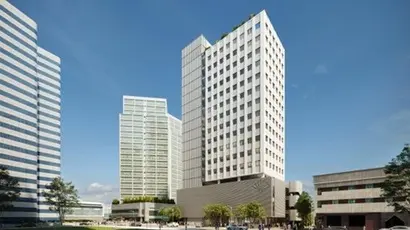
The Sunhwa-dong office, which Dongwha Pharmaceutical had used as its headquarters since 1966, was demolished in accordance with the "Jung-gu Sunhwa District 1-2 Urban Redevelopment and Maintenance Plan." Construction on the new headquarters began in September 2022, and it is scheduled to be completed next March as a structure with 5 basement levels and 16 ground levels (total floor area of 15,818㎡, 4,785 pyeong). Shortly after construction began, some residents of the nearby Deoksugung Lotte Castle filed an injunction lawsuit in October 2022, and the first-trial ruling was issued this past July.