

[비즈한국] The night of the 3rd, when a 'self-coup and insurrection via martial law' took place, is one of those events that will long be remembered in the history of the Republic of Korea Armed Forces. What I find noteworthy is not so much the meticulous preparation and planning of the martial law forces themselves, but the causes of the failure of the martial law and the lessons to be learned from it. In particular, it is necessary to focus on the fact that the Counterintelligence Command (CIC) and the Defense Intelligence Command (DIC), which received actual operational instructions after the 'declaration of martial law,' acted in starkly different ways.
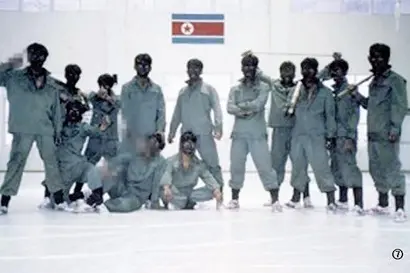
How exactly were they different on the 'Night of Martial Law'? To summarize briefly, the CIC risked its life to engage in foot-dragging and evade orders. In contrast, the DIC maintained a standby posture until the very end, as if it were ready to execute its actual mission and carry out the horrifying plan.
According to information confirmed so far, it appears that the CIC and the DIC were assigned almost identical operational areas during the martial law incident. It is currently being investigated that the CIC organized investigation teams to arrest prominent politicians, while the DIC was tasked with conducting military operations targeting those same politicians apprehended by the CIC. CIC agents were ordered to mobilize to the Gwacheon National Election Commission, and DIC agents received the exact same order.
However, the response methods of the two command agents differed greatly. The CIC arrest teams showed resistance to the high-pressure mobilization orders from above, and even though they equipped themselves with gear like stab-proof vests and telescopic batons after receiving the arrest orders, they effectively just wandered around the metropolitan area. They spent their time at highway rest stops, toll booths, and suburban roads under the pretext of refueling or eating, effectively performing no operations at all until the martial law was lifted.
On the other hand, while the CIC agents were staying at nearby convenience stores, the DIC agents actually entered the National Election Commission building, seized the facility, and engaged in behavior presumed to be preliminary work for hacking. Moreover, they acted with an attitude distinctly different from the CIC, entering the scene while carrying pistols for an operation against unarmed civilians.
The CIC, which despite being issued batons, chose to disobey orders and did not enter the election commission; and the DIC, which seized the facility and carried out operations while armed with pistols. Experts familiar with the field suggest that the differing experiences of these two commands were the decisive factor in this gap. Specifically, it was the 'Dissolution and Reorganization of the Defense Security Command (DSC)' incident and the 'DIC Black Agent Information Leak' incident.
The process of the DSC being reorganized into the Defense Security Support Command (DSSC) after causing controversy with the 'martial law document' incident in 2018 left indelible scars on soldiers performing counterintelligence duties. Experts explain that anyone in the CIC would be well aware of the reality that even the most powerful political authority will not protect them if they abandon their duty of political neutrality.
In other words, the fact that the CIC legal affairs office openly showed opposition bordering on insubordination was not merely a matter of individual will, but a collective belief in political neutrality ingrained throughout the organization's culture. This served as the foundation for the entire CIC to desperately resist unjust orders.
Conversely, in the case of the DIC, suspicions are being raised that they were placed in a situation where it was much more difficult for soldiers to maintain political neutrality by 'refusing unjust orders.' While some viewed the DIC's discipline as having loosened due to the insubordination incident between the DIC commander and the brigade commander last July, some believe the internal atmosphere at the DIC actually became more rigid after that event. There is an analysis that the military intelligence leak case involving a civilian employee of the DIC, uncovered last June, had a significant impact here.
Experts suspect that the intelligence leak by a civilian employee of the DIC was not a simple financial transaction but was linked to internal power struggles. This led to assessments that the identities of undercover intelligence operatives, known as 'black agents,' were exposed, causing our human intelligence (HUMINT) network to collapse, and in the process, current DIC Commander Moon Sang-ho's internal grip on power became even stronger. This is the point where suspicions are raised that the 'black agent' list leak case and this martial law incident are closely connected, and that some intelligence agents may have been sacrificed for the smooth operation of the DIC during martial law.
There are also claims that during the investigation and handling of the HUMINT leak case, it was difficult to discern the truth, and because the former intelligence brigade commander, who had served in the intelligence branch for a long time, could not effectively check Commander Moon Sang-ho, it eventually led to a situation where former DIC Commander Noh Sang-won exerted influence and spearheaded the martial law.
Of course, a thorough investigation into this incident is necessary, but unlike the CIC, which put political neutrality first and engaged in resistance bordering on insubordination, it seems an undeniable fact that the personnel on the DIC side failed to properly confront unjust orders.
Furthermore, the fact that former Minister of National Defense Kim Yong-hyun, who led the martial law, retained the current DIC commander in the November personnel reshuffle despite the internal strife and lawsuits with the former intelligence brigade commander, adds weight to these suspicions.
Going forward, it is urgent not only to thoroughly uncover the truth of this incident but also to create an institutional and cultural environment where our military's precious intelligence and counterintelligence resources are operated based on a correct view of the state, and where personnel can firmly stand against unjust orders. This can be called an essential task for the military to ensure it is never again forced to compromise its political neutrality and can re-establish itself as an organization faithful to its inherent duties.