

[비즈한국] Since the beginning of the discussions on expanding medical school admissions, the issue of a shortage of cadavers for anatomy has been consistently raised. The concern is how to manage the already insufficient supply of cadavers if the number of students increases. As the discussion progressed, facts about the lack of proper management of cadavers were revealed, leading the National Assembly to propose several bills regarding the "use and provision of human bodies." However, even if these bills are enacted, the issue of "sharing" cadavers still faces the hurdle of "bereaved family consent," and experts point out that the policy lacks effectiveness unless the number of professors responsible for education is also increased.
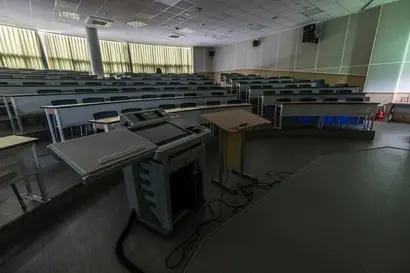
The Korean Medical School Parents' Union issued a statement on the 17th criticizing Go Chang-seop, president of Chungbuk National University, for his "parking lot lecture" remarks. Previously, during a parliamentary audit, President Go responded to a question about educational plans following the expansion, saying, "It was decided considering that this region has the lowest number of doctors relative to its population, and a sufficient plan to educate 200 students has been prepared. Education will be fully possible once the planned medical school buildings No. 4, 5, and 6 and the anatomy practice building are constructed. Until these facilities are completed, we plan to hold classes by setting up temporary classrooms in the parking lot area," which sparked controversy.
The parents' union stated, "With the medical school quota at Chungbuk National University increasing threefold, 40 additional cadavers are needed per year. Now, students will have to gather 20 to 30 people around a single cadaver just to watch, or learn anatomy only through books and 3D materials." They added, "The government's reckless medical school expansion policy shows no respect for donors and is an act that directly challenges human dignity. President Go Chang-seop must now take responsibility for the crippled medical education that will fail to even pass the accreditation by the Korean Institute of Medical Education and Evaluation."
"Cadaver shortages" are a long-standing issue. The numbers are small, and the disparities between universities are severe. According to a report on "Research for Revitalizing Body Donation" released by the Ministry of Health and Welfare in February of last year, the annual average supply of cadavers for 37 medical schools over the five years from 2018 to 2022 was 23.9 bodies. The Catholic University of Korea, which had the highest supply, received 318.6 bodies, more than five times that of the second-highest, Kyung Hee University's medical, dental, and traditional medicine schools combined (62.2 bodies). Comparing the top three universities (Catholic University, Kyung Hee University, Korea University) to the bottom three (Dongguk University, Eulji University, Kwandong University), the gap is 29 times. Regionally, the average annual supply of bodies over the last five years was 54.76 for the 10 medical schools in the capital area, while the 27 schools in other regions received only 12.5.
As concerns emerged that the lack of specific management and oversight measures for cadavers hinders body donation, the 22nd National Assembly has poured out several related bills since the session began. The "Partial Amendment to the Act on the Dissection and Preservation of Human Bodies," proposed by Representatives Park Hae-cheol and Kim Ye-ji, focuses on restricting observers during autopsies. Representative Park's bill requires those wishing to observe an autopsy to obtain permission from the head of the medical school, while Representative Kim's bill requires the head of the medical school to decide on whether to allow observation after review by the Institutional Review Board (IRB). Representative Jang Jong-tae's bill requires the heads of medical schools and general hospitals to report on research involving parts of human bodies.
Representative Han Ji-ah proposed an amendment last month that allows the use of donated bodies at other medical schools if the donor and bereaved family agree. This is the so-called "cadaver sharing." The amendment also includes provisions to establish an anatomy review committee at medical schools or general hospitals to oversee dissections and requires periodic submission of data on the status of body collection and use.
However, there are many voices saying that obtaining "bereaved family consent" could be difficult. The argument is that since people often donate their bodies out of gratitude toward the medical staff, it is not easy for them to consent to sharing the body with other institutions. A professor at a medical school in the capital area explained, "Body donation is often done to express gratitude toward the medical staff and hospital that cared for the donor without giving up on them."
Even if cadavers are secured, experts point out that the number of "professors" is woefully insufficient. According to a paper titled "Past, Present, and Future of Anatomy Education in Korea," published in the Journal of Korean Medical Science (JKMS) last May by Professor Song Chang-ho of Chonbuk National University Medical School and Professor Kim In-bum of the Catholic University of Korea College of Medicine, an increase of 500 medical students would require 20 more anatomy professors and 68 more cadavers. An increase of 1,000 students would require 41 more professors and 135 more cadavers, and an increase of 2,000 students would require 82 more professors and 270 more cadavers.
The research team noted, "There are currently a total of 30 teaching assistants responsible for anatomy education. If the medical school quota is increased by 2,000, even if all 30 assistants are promoted to professors, there will be a shortage of 52 professors. A greater challenge is that many of the current 23 professors in charge of anatomy education are expected to retire within the next five years." They emphasized, "There is a serious shortage of qualified anatomy educators in Korea, and in such a situation, an increase in the number of incoming medical students will further exacerbate the deficit in anatomy education."
Meanwhile, the Ministry of Health and Welfare stated at a recent parliamentary audit, "Institutional supplementation is needed, such as prohibiting the use of human bodies for profit and brokering them." The Ministry added, "It is necessary to take parallel measures to respect the noble will of donors and their families, such as allowing the provision of bodies to other medical schools only by institutions that can manage the bodies more strictly."