

[비즈한국] A new fraudulent scheme in which unsolicited credit cards are delivered via registered mail has recently emerged, prompting calls for caution. The cards, labeled as "SHIFT" cards, have been sent randomly regardless of the recipient's region. With large-scale personal information leaks suspected, recipients are urged to be careful, as contacting the activation phone number printed on the card could lead to secondary victimization.
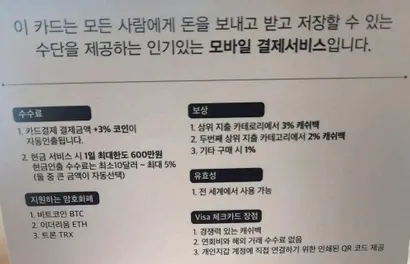
Recently, posts have appeared in various local online communities about receiving "Shift cards" via registered post. The cards have been sent to various regions, including Chungcheong and Gyeonggi provinces. The registered mail contains the card and a brochure featuring awkward phrasing, such as, "This card is a popular mobile payment service that provides a means for everyone to send, receive, and store money." It also claims that 3% of card transaction amounts are automatically deducted as a coin fee, or that it supports virtual assets like Bitcoin, Ethereum, and Tron.
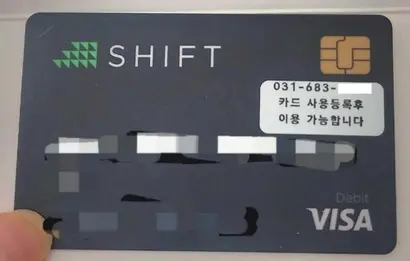
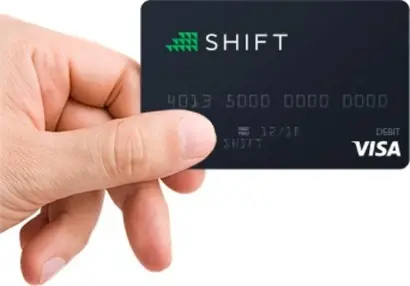
The enclosed physical card is a non-existent product. The Shift card was a cryptocurrency debit card issued in the U.S. in 2015 that terminated operations in April 2019. It appears the fraudsters are exploiting the fact that the card is not well-known in Korea to create forgeries. Furthermore, the enclosed card is poorly manufactured, with the IC chip located in the top right corner—unlike standard cards—and the recipient's English name spelled incorrectly.
The problem is that calling the phone number listed on the card or the brochure could lead to voice phishing scams. A sticker attached to the card includes the phrase "Available after registering for card use" along with a phone number, which is presumed to be a tactic to entice the recipient to make contact.
Smishing (SMS + phishing) scams, which induce contact by sending text messages claiming an unsolicited card has been activated, and "letter phishing," where fake registered mail delivery notices are placed at front doors to encourage phone calls, have occurred frequently in the past. Now, however, the fraud methods have evolved further, with the emergence of a scheme that sends forged cards via registered mail.
Mr. A, who received a Shift card on December 11, said, "I thought my personal information had been leaked, so I reported it to the police. The police called the number on the card and were told it was the 'NongHyup Card Customer Center'." He added, "But the police advised me that it seemed like voice phishing because the call quality was poor and the person had an unusual way of speaking. The police also said it was the first time they had seen such a case." Upon verification, the contact number on the card was completely different from the actual NongHyup Card Customer Center number.
As reports continue to come in, the police are aware of the Shift card issue. An official from the Economic Crime Investigation Division of the National Office of Investigation of the National Police Agency stated, "We have confirmed that there are several numbers used on the cards, starting with 070 or 031. You must never use the card or make a call to those numbers first." They advised, "If you receive such a card, take it to the nearest police station to report it and check if your personal information has been stolen."
Those who received these cards expressed anxiety over potential personal information leaks. Mr. A pointed out, "I don't do virtual asset trading or stocks, yet I received this card at my home address. It's unsettling, as it feels like a lot of my personal information has been leaked. Voice phishing tactics seem to be getting more sophisticated." The current problem is that while the leaked information is limited to names and addresses, it is unknown how much other personal information the perpetrators have obtained.
Companies whose names were stolen as the sender of the cards are also experiencing difficulties. When contacted after finding the phone number of Company P, which was listed as the sender of the Shift card, a company representative said, "We have been plagued by card inquiries for three weeks. We have absolutely nothing to do with the Shift card. The police also contacted us and asked several questions. Please dispose of or report the card you received."
The sender's address written on the registered envelope belongs to a large building near Gwanghwamun in Jongno-gu, Seoul, which houses the headquarters of KB Kookmin Card000000 and the Naesu-dong Post Office. Company P was not among the tenants of this building.
The police are instructing those who received the Shift card to report it to prevent further criminal damage. The National Office of Investigation official explained, "Since your identity has been stolen, it could lead to crimes such as opening burner phones or illegal loans. You must report it to the nearest police station and, at the same time, take measures through financial institutions to prevent identity theft."
The official recommended preventive measures including: recommending the reissuance of any exposed identification documents; registering with the Financial Supervisory Service's "Personal Information Leakage Accident Prevention System" (which shares the registration with financial companies to restrict financial transactions such as account opening, card issuance, guarantee insurance enrollment, and open banking); and visiting financial institutions to apply for the "Credit Transaction Blocking Service" to prevent additional loans.