

[비즈한국] The medical community’s attention is focused on the ‘injunction to suspend the approval of changes to university admission plans’ filed by medical students and exam candidates against the Korean Council for University Education (KCUE). Following dismissals in both the first and second trials, the case was appealed to the Supreme Court in August, where it currently remains pending. The medical community has issued a series of statements urging the Supreme Court to make a swift ruling before the admissions process proceeds any further. Amid this, the Ministry of Education reaffirmed its existing stance at a regular briefing the previous day, stating, “We ask for understanding that it is impossible to change the quotas for the 2025 academic year.”
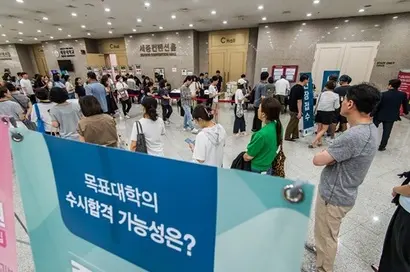
In June, eight individuals, including medical school applicants and first-year medical students, filed for an injunction against the KCUE for approving the changes to medical school quotas. As this is a time-sensitive matter regarding university admissions, the applicants have submitted an ‘application for urgent deliberation and decision’ 12 times and ‘reference documents’ 8 times to the Supreme Court, yet a ruling has yet to be issued. Consequently, local medical associations—led by the Daegu Medical Association and including those from Gyeonggi, Seoul, Gangwon, and North Gyeongsang Province—along with candidates for the presidency of the Korean Medical Association, have released statements demanding a prompt decision.
The Daegu Medical Association stated on the 15th, “Considering that it is customary for courts to reach a decision on university admission cases before the College Scholastic Ability Test (CSAT), it is procedurally highly unusual that the Supreme Court has not yet made a decision on this matter, even now that the CSAT has passed, the test results have been released, and universities have finished announcing their initial successful candidates for early admission.” The statement continued, “We once again urgently and strongly urge the Supreme Court to reach a just and fair decision quickly in accordance with legal principles.”
According to the ruling documents from the first and second trials released by the medical association, the core issue of this litigation is the concept of ‘university structural reform,’ which serves as an exception to the university pre-announcement system for admissions. The Higher Education Act recognizes ‘cases involving reorganization of departments, etc., and quota adjustments for university structural reform’ as exceptions to the pre-announcement system. The applicants argued that since structural reforms by previous governments have historically been implemented to reduce university quotas in response to a declining school-age population, this recent decision to increase quotas does not constitute ‘university structural reform.’
In the gist of their application, the applicants stated, “The ‘university structural reform’ defined as an exceptional reason for change in the statutes refers only to ‘reducing student quotas to respond to a declining school-age population’; therefore, this increase cannot be considered an exceptional reason for change.” In other words, they argue that it is not a response to a declining population, and increasing the total university quota does not qualify as ‘university structural reform.’ They explained through reference documents that various court rulings have treated this concept as a ‘fundamental fact’ or ‘recognized fact’ in their reasoning.
According to the applicants, since 2004, the government’s university structural reform has been pushed in the direction of reducing quotas in connection with financial support projects. They cited the Roh Moo-hyun administration’s ‘university mergers,’ the Lee Myung-bak administration’s ‘universities with restricted government financial support,’ the Park Geun-hye administration’s ‘university structural reform evaluation,’ and the Moon Jae-in administration’s ‘university basic competency diagnosis,’ claiming that a trend of quota reduction has been maintained. Regarding the government’s mention of quota increases in the health and advanced technology fields as precedents, they countered, “Increases in advanced technology fields are unrelated to the decline in the school-age population, and since the overall quota has increased, they do not qualify as ‘university structural reform.’”
Previously, when the Korean Association of Medical Colleges raised similar arguments, the Ministry of Education issued an explanatory document stating, “The Ministry of Education has pursued as part of ‘university structural reform’ not only policies aimed at ‘reducing the scale of universities,’ such as university mergers and admission quota reductions, but also a series of policies involving internal structural changes, including quota adjustments within universities, securing faculty, and revising curricula in fields requiring talent cultivation.” The ministry added, “The KCUE has consistently approved changes to university admission plans based on the enforcement decree of the Higher Education Act while supporting university quota adjustments, such as expanding recruitment units in advanced fields and increasing nursing department quotas.”
The court also dismissed the case in both the first and second trials, judging that “it is difficult to view ‘university structural reform’ as necessarily meaning only ‘reducing student quotas to respond to a declining school-age population.’” The court further noted, “There have been cases where the debtor (KCUE) approved changes to admission plans for department-specific quota adjustments based on the premise that quota adjustments for health and medical fields or the establishment/expansion of advanced departments constitute university structural reform. Therefore, increasing medical school quotas to restore essential and local medical care, as in this case, also has room to fall under this category.”
Since the government’s announcement of the medical school quota increase, the medical community has been locked in legal battles against the Ministers of Health and Welfare and Education, as well as university presidents. However, the situation reached a temporary impasse last June when the Supreme Court dismissed the appeals for stay of execution filed by medical students, professors, and residents, allowing the admissions process to resume as scheduled. At the time, the court determined that the concern of harming public welfare by suspending the execution of the quota increase outweighed the damage that medical students would suffer. As the nation enters a period of political turmoil surrounding the potential impeachment of President Yoon Suk-yeol, the medical community views this Supreme Court ruling as effectively the last remaining path to stop the medical school quota increase.
However, the admissions industry and educational authorities view the possibility of the increase being halted as low. An official from the admissions industry stated, “If the admissions requirements are not followed, legal disputes for the universities would be inevitable, so it appears unlikely that the increase will be overturned.” The Ministry of Education also stated at its regular briefing held at the Government Complex Sejong the previous day regarding the 2025 medical school quota, “As we have consistently said, it is currently impossible to change.”