

[비즈한국] With the impeachment motion against President Yoon Suk-yeol passed by the National Assembly on the 14th, Prime Minister Han Duck-soo has assumed the role of Acting President. Prime Minister Han will now manage state affairs in his capacity as Acting President. Following the passage of the impeachment motion, he stated, "We will strengthen the emergency economic response system to ensure that financial and foreign exchange markets function smoothly." Attention is now focused on the future policy direction of this veteran high-ranking official and economic expert who has served under five different administrations since the civilian government.
Character
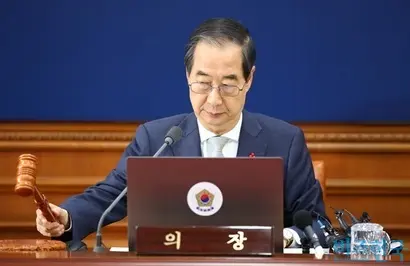
Acting President Han Duck-soo was born in 1949 in Jeonju, North Jeolla Province. A quintessential elite career bureaucrat, he graduated from Gyeonggi High School and Seoul National University's Department of Economics in 1971 before earning his master's and doctoral degrees in economics from Harvard University in the United States. He began his public service career after passing the Civil Service Examination in 1970. Known for his mild personality, he has been regarded as a pragmatic, hands-on bureaucrat who avoids revealing specific political leanings. With Lee Jae-myung, leader of the Democratic Party of Korea, stating on the 15th that they "decided not to proceed with the impeachment of the Acting President," Han's political presence is expected to become even more prominent.
Career
Acting President Han Duck-soo possesses a career history unprecedented in modern Korean history. He has served in high-ranking positions across five different administrations: the Kim Young-sam civilian government, Kim Dae-jung’s administration, Roh Moo-hyun’s Participatory Government, the Lee Myung-bak administration, and the Yoon Suk-yeol administration.
After starting his public service career as an official at the Korea Customs Service in 1970, he became the Director-General of Industrial Policy in 1992. Beginning as an economic secretary to the President during the Kim Young-sam administration, he served as the Minister for Trade under the Kim Dae-jung administration and as Deputy Prime Minister and Minister of Finance and Economy under the Roh Moo-hyun administration. At that time, Deputy Prime Minister Han pushed for the opening of the rice market and the abolition of the government’s direct grain purchase system. He later served as the final Prime Minister of the Roh Moo-hyun administration.
In the Lee Myung-bak administration, he served as the first Ambassador to the United States. During the Park Geun-hye administration, he was the Chairman of the Korea International Trade Association (KITA). In April 2022, he was nominated once again as Prime Minister following the inauguration of President Yoon Suk-yeol.
Capability
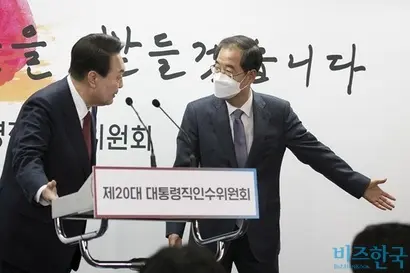
Acting President Han Duck-soo’s strengths are his expertise as an economist and his international perspective. He notably gained recognition for leading the Korea-US FTA negotiations as chairman of the committee during the Roh Moo-hyun administration in 2006. While serving as Deputy Prime Minister, he also oversaw the revision of the Financial Industry Restructuring Act, which separates industrial and financial capital. Being "overseas-educated," he is also evaluated as having a deep understanding of international economic trends.
Having served in high-ranking positions regardless of the administration, he is also considered a symbol of "cooperative governance." After his appointment as Prime Minister in 2022, Acting President Han showed a willingness to communicate with the opposition party by paying a courtesy call to former President Moon Jae-in. He also acted proactively on the diplomatic stage, meeting with Japanese Prime Minister Fumio Kishida and US Vice President Kamala Harris following the assassination of former Prime Minister Shinzo Abe.
Critical
Acting President Han Duck-soo served as an advisor at the law firm Kim & Chang from 2017 to 2022, facing criticism that he violated the Attorney-at-Law Act by working without filing the required reports. He also stirred controversy when it was revealed that he received a high salary during his tenure as Chairman of the Korea International Trade Association. The fact that his wife, an artist, sold her paintings at high prices to Hyosung Group and Booyoung Housing was also a point of criticism. There is also controversy regarding his stance toward Japan, as he attended the Japanese Emperor's birthday celebration hosted by the Japanese Embassy in Korea in 2013.
Beyond ethical issues, questions remain about his policy capabilities. As Deputy Prime Minister under the Roh Moo-hyun administration, Acting President Han revised the enforcement decree of the Savings Bank Act, allowing for unlimited loans. When savings banks collapsed sequentially in the 2011 financial crisis, Acting President Han was pointed to as one of the causes of the situation.
Critics also argue that he has failed to demonstrate exceptional competence. In fact, while serving as Prime Minister under the Yoon Suk-yeol administration, he has been criticized for failing to provide clear answers during parliamentary questioning. His remarks, such as making inappropriate comments regarding the Itaewon tragedy or stating "Isn't the taxi base fare around 1,000 won?", have come under fire several times. Compared to this, there are no visible achievements where Acting President Han has stood out during the Yoon Suk-yeol administration.
Challenges
The tasks facing Prime Minister Han Duck-soo as Acting President are immense. His primary mission is to ensure the continuity of state affairs amidst the impeachment crisis and to minimize political turmoil. He must also overcome the economic crisis. On the 15th, the Bank of Korea released a report on the "Assessment and Response to Financial/Economic Impact Following Emergency Martial Law." The Bank of Korea noted, "We have held emergency response TF meetings every day since the martial law declaration," adding, "If the conflict period lasts longer than past cases during the future political transition, the impact on the economy could expand."
Lee Eun-hyung, a research fellow at the Construction Economy Research Institute of Korea, analyzed, "Market uncertainty is ongoing. Depending on whether the passage of the impeachment motion leads to a by-election and how the government changes, there is significant room for related policy directions to shift." As an economic expert, Acting President Han faces the situation of having to overcome domestic and international economic crises simultaneously.
Political responsibility also appears difficult to avoid. Initially, there were calls to impeach Acting President Han for his alleged involvement in the insurrection, but with Lee Jae-myung stating that "for now, we will not impeach," it appears the Han Duck-soo system will continue for the time being. However, his political position is precarious. He faces a situation where he must clarify his stance on issues such as the "Special Counsel Act for Kim Keon-hee," over which President Yoon Suk-yeol exercised his veto, or the special counsel act related to the insurrection. While the Democratic Party of Korea has proposed the formation of a state stability council to Acting President Han, they have also hinted at the possibility of impeachment if he exercises a "veto."
Acting President Han Duck-soo said in a national address on the 14th, "To ensure that the people's safety and daily lives are not shaken, we will do our utmost to manage state affairs stably, in strict accordance with the Constitution and the law."